Headline: Tear Gas Use Limited by Federal Judge at Portland Protests
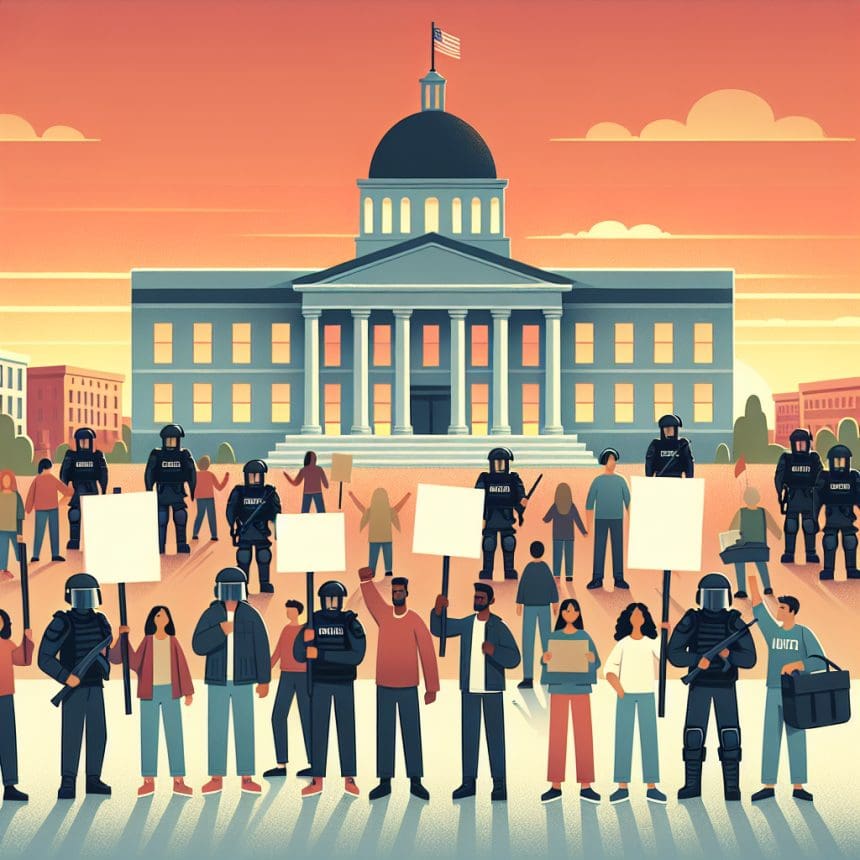
A federal judge has ruled to restrict the use of tear gas by federal agents during protests outside the Immigration and Customs Enforcement (ICE) building in Portland, Oregon. The ruling, delivered on Friday, aims to address the ongoing tensions between demonstrators and law enforcement, particularly in light of increased confrontations over immigration policies and civil rights. This legal decision comes amidst a backdrop of heightened scrutiny of federal law enforcement tactics during civil unrest across the United States.
The court’s decision stems from a lawsuit filed by the American Civil Liberties Union (ACLU) on behalf of protesters challenging what they describe as excessive violence used by federal agents. The ruling has sparked a debate over the balance between maintaining order and protecting the rights of citizens to protest peacefully. The protests, which have seen a mix of peaceful demonstrations and confrontations since last summer, are partly fueled by broader national controversies surrounding immigration enforcement and systemic racism.
During the legal proceedings, Judge Marco Hernandez expressed concern about the potential harm caused by tear gas as a crowd control method, particularly in a community already grappling with various public health issues, including the COVID-19 pandemic. The ruling specifies that federal agents can only employ tear gas in "exigent circumstances," a term that refers to situations where immediate action is necessary to prevent injury or significant property damage.

“This ruling is a crucial step in reaffirming the constitutional rights of individuals to protest without fear of excessive force,” said Jann Carson, interim executive director of the ACLU of Oregon. Carson highlighted the detrimental effects of tear gas, asserting that its use disproportionately impacts vulnerable populations, including children and individuals with pre-existing health conditions. The ACLU has long advocated for more humane policing practices, and this ruling aligns with their ongoing efforts to promote civil liberties.
Reactions to the judge’s ruling have been mixed, with supporters viewing it as a much-needed check on federal power, while others argue that the limitations could hinder law enforcement’s ability to manage chaotic situations effectively. Local law enforcement agencies, including the Portland Police Bureau, have previously faced criticism over their handling of protests and crowd control tactics, leading to calls for reforms and a re-evaluation of their operational procedures.
Local activists have already hailed the decision as a victory for peaceful protestors, who have increasingly used social media and community organization to mobilize against federal immigration policies. “This is about ensuring that our voices are heard, not silenced by gas and violence,” said Mia Rodriguez, a local activist who has participated in several ICE building protests.
In contrast, arguments from some law enforcement representatives suggest that limitations on crowd control can embolden protesters to engage in more aggressive behavior. “Restricting tear gas could lead to more dangerous confrontations, putting both officers and protesters at risk,” said a representative from a local law enforcement agency who wished to remain anonymous. The ongoing debates surrounding policing practices continue to resonate deeply within communities and among stakeholders nationwide.
Attorney General Ellen Rosenblum of Oregon expressed her support for the ruling, noting that the excessive use of tear gas by federal agents has escalated tensions and exacerbated the risk of violence. “We need to find ways to de-escalate tensions rather than exacerbate them,” she stated. This viewpoint reflects a growing call for reform not only in Oregon but also across other states grappling with similar issues.
As the ruling takes effect, it remains unclear what immediate changes will be implemented at the federal level. The Department of Homeland Security and the ICE have not released official statements regarding how they intend to adapt their crowd control measures in light of the new court restrictions.
While the ruling could lead to a shift in tactics used by federal agents in Portland, it highlights larger national trends regarding the use of force by federal law enforcement. Analysts suggest that the outcome of this legal decision could influence how protests are managed across the United States, particularly in cities that have witnessed similar unrest.
Experts maintain that the challenges facing law enforcement in the wake of civil rights protests require a more comprehensive approach to crowd management. This could involve training officers in de-escalation techniques and adopting non-lethal alternatives to crowd control that prioritize public safety while respecting civil liberties.
Looking forward, the ongoing protests at the Portland ICE building are likely to continue, with activists asserting that they will not back down until substantive changes are made to immigration policy and law enforcement practices. The court’s restrictions on tear gas may be only the first step in a series of alterations that could potentially reshape how protests are policed in the future.
In conclusion, the federal judge’s ruling to limit the use of tear gas at protests outside the Portland ICE building marks a pivotal moment in the ongoing debate surrounding federal policing practices and citizens’ rights. As legal battles continue and community voices demand change, the implications of this decision will resonate beyond Oregon, echoing through the fabric of national discourse on justice, rights, and public safety.