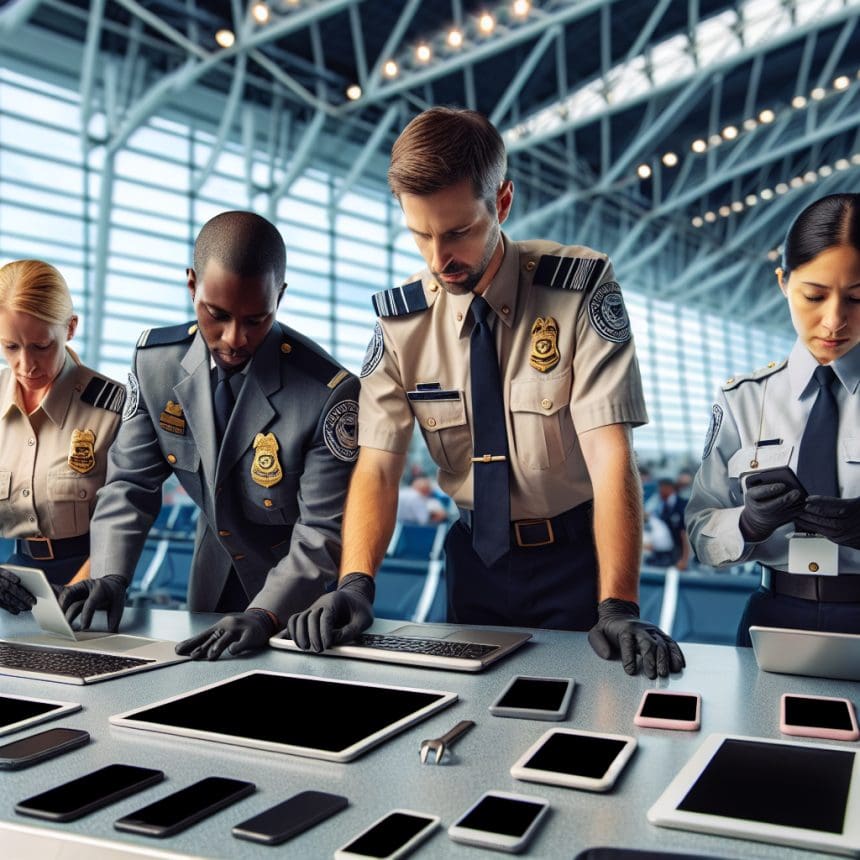
Headline: U.S. Customs Sets New Record for Device Searches in 2022
In 2022, U.S. Customs and Border Protection (CBP) announced a significant increase in the number of electronic devices searched at borders and ports, reaching a record high of over 45,000 inspections, up from 33,000 the previous year. This surge in searches, attributed to heightened security protocols and evolving threats, has raised concerns about privacy and the extent of government surveillance. The data reflects broader trends in national security practices and the challenges posed by digital privacy in an increasingly connected world.
Record High Searches Underline Tension Between Security and Privacy
As the digital landscape expands, so too does the complexity of border security. The rise in electronic device searches comes in the wake of heightened national security threats and an emphasis on maintaining safety at U.S. borders. In 2022, CBP reported searching approximately 0.5% of travelers’ electronic devices, a rise that has drawn attention from civil liberties groups and legal experts alike. Activists argue that these practices could infringe on individual rights, particularly concerning the Fourth Amendment, which guards against unreasonable searches and seizures.
The CBP utilizes this extensive search capability not just for contraband but also as a means to uncover potential security risks. The increase in device inspections comes as global tensions rise and incidents of cybercrime become more prevalent, alerting authorities to the necessity of scrutinizing technological possessions. In a world where critical information can be stored on personal devices, the boundary between protecting national security and respecting personal privacy becomes increasingly blurry.

Legal and Civil Liberties Concerns
The exponential growth in electronic device searches has prompted a vocal response from legal and civil liberties advocates. Critics argue that the randomness of these searches disproportionately targets specific groups, raising questions about discrimination and profiling at the borders. The American Civil Liberties Union (ACLU) has been particularly vocal, emphasizing the importance of clear and fair guidelines for conducting such searches.
In their critiques, advocacy groups underscore that a blanket approach to electronic searches might contravene not only foundational privacy rights but also curtail international travel for those concerned about unjust scrutiny. A central concern involves the potential for CBP to access sensitive data, including emails, photos, and proprietary business information, during these searches, which some argue should require probable cause.
Government’s Justification for Increased Searches
From the government’s perspective, the increasing reliance on technology among travelers necessitates more thorough checks to mitigate risks. CBP officials assert that device searches are critical for identifying potential threats, including human trafficking, drug smuggling, and cyber-enabled crimes. In a statement, CBP reaffirmed its commitment to balancing security needs with respect for the privacy of travelers, indicating that the growing number of device searches aligns with evolving security strategies.
“Protecting our homeland security is paramount, and as technology evolves, so do our methods,” CBP Commissioner Chris Magnus stated. “We are committed to ensuring that we enforce the law while respecting the rights of travelers. The vast majority of encounters are compliant and respect individuals’ privacy.”
Clear Guidelines and Proposed Reforms
Recognizing the growing tensions surrounding electronic device searches, some lawmakers and advocates are pushing for stricter regulations. They are calling for clearer guidelines that define the protocols and justifications required for CBP to search electronic devices. Proposed reforms have ignited discussions not only in legal circles but also among technology professionals concerned about the implications of increased scrutiny.
Proponents assert that establishing these guidelines can help explicitly outline circumstances under which searches can occur, thereby safeguarding against arbitrary or discriminatory practices. Suggested measures include limiting the scope of searches and requiring a warrant or probable cause for invasive searches that would access private data.
Travel Industry Implications
The increase in device searches has broader implications for the travel industry as well. Travelers may become more cautious about carrying electronic devices that hold sensitive information while traveling internationally. Reports suggest that a growing number of business travelers are opting to use "burner" phones or laptops – devices specifically designed for short-term use that hold minimal personal data.
Travel agencies have taken notice of these trends, adjusting their recommendations to provide travelers with useful tips for navigating increased scrutiny. Many travelers are now encouraged to back up sensitive data offline and consider using virtual private networks (VPNs) for secure communications.
The Future of Electronic Searches
As the number of electronic devices searched continues to rise, the ongoing conversation about surveillance and rights will likely intensify. Both CBP and advocacy groups seem to agree that the discussions will shape the practices and policies surrounding searches in the future, particularly amidst a backdrop of rapid technological evolution. Balancing effective border security with the privacy rights of individuals is a challenging but necessary endeavor.
The trend toward increased electronic device searches highlights the intersection of technology, security, and personal rights, necessitating ongoing dialogue and potential legislative action. While authorities like CBP maintain that these searches are vital for national security, it remains an essential responsibility for all stakeholders, including travelers and advocates, to continue advocating for transparency and fairness in border practices.
In conclusion, as the U.S. Customs and Border Protection grapples with national security challenges, the record number of device searches serves as a pivotal point in the larger conversation surrounding privacy, civil liberties, and national security. The outcome of this discourse will undoubtedly shape the relationship between travelers and border authorities in the coming years, emphasizing the urgent need for a balanced approach that reflects both security requirements and the fundamental rights of individuals.