SWAT Sniper Shoots Hostage-Taker in Baltimore Standoff
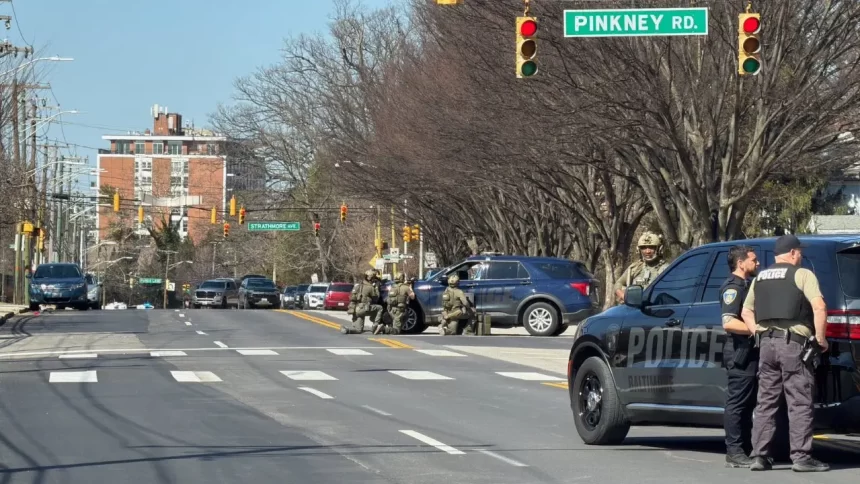
In a dramatic turn of events in Baltimore on Tuesday morning, a suspect holding a woman hostage inside a residential building was shot and killed by a SWAT sniper. The incident unfolded at approximately 8 a.m. in the neighborhood of West Baltimore, prompting a large-scale response from law enforcement agencies. The hostage, whose identity and condition remain undisclosed, was safely rescued following the tense standoff.
Authorities responded swiftly to reports of the hostage situation, arriving on the scene to find a barricaded suspect threatening the life of the woman inside the home. After unsuccessful negotiations with the suspect, officers from the SWAT team took strategic positions around the building, assessing the risk to the hostage and preparing to intervene.
Witnesses described hearing loud shouting from within the residence, followed by the sounds of police commands echoing through the neighborhood. Local residents, many of whom were unaware of the escalating situation, were initially concerned about the commotion outside their homes. Eyewitness accounts reveal a tense atmosphere as law enforcement worked to contain the situation and prioritize the safety of the hostage.

As the hours passed without a resolution, police decided to escalate their response, fearing for the hostage’s life and well-being. In a news briefing later in the day, Baltimore Police Chief, Michael Harrison, provided an update on the standoff. "We make every effort to negotiate a peaceful resolution in situations like this," he explained. "However, when the threat to life escalates, our officers have to act decisively."
Negotiators attempted to communicate with the suspect throughout the morning, but their efforts were met with hostility. Disheartened by the lack of cooperation and the increasingly volatile situation, SWAT operatives assessed the need for immediate action. Information about the suspect’s history, including prior criminal offenses as well as recent reports of erratic behavior, influenced the decision-making process.
Around 10 a.m., the situation reached a breaking point. Concern grew for the hostage’s safety, leading SWAT team members to deploy a sniper with the intent to neutralize the threat. The tactical decision was taken with the utmost caution, as officers evaluated both the immediate danger the woman faced and the potential for collateral harm.
Just before the decisive shot was fired, police reported that they could hear conflicting noises from inside the home, including shouting and objects being thrown. Officers on the scene remarked that the atmosphere felt chaotic and uncertain, heightening the stress levels for the team.
The lethal shot from the sniper struck the suspect precisely, and authorities quickly entered the residence to secure the situation. Following the entry, they located the woman, who appeared shaken yet unharmed, and successfully evacuated her from the dangerous environment.
In the aftermath of the incident, community members expressed a mix of relief and sorrow. "I’m just thankful she made it out alive," said one neighbor who wished to remain anonymous. "This is usually a peaceful neighborhood, and it’s hard to believe something like this could happen here." Residents gathered outside the scene, sharing their shock and disbelief at the sequence of events that unfolded before their eyes.
Investigators began to piece together the narrative surrounding the hostage-taking. They confirmed that the suspect had been known to law enforcement prior to this incident, with a history involving domestic disputes and substance abuse. Authorities will conduct thorough investigations, including a review of past interactions with the suspect and any warning signs that could have foreseen the escalation of violence.
While the hostage situation concluded without injury to the woman, it raised important questions about emergency response protocols, community safety, and the mental health issues that often accompany such standoffs. Baltimore authorities have committed to working with mental health professionals to develop a better framework for addressing similar incidents going forward.
In light of Tuesday’s events, Baltimore City Mayor, Brandon Scott, issued a statement expressing gratitude to the law enforcement officers for their bravery and quick response. "Today’s events remind us of the courage and commitment our men and women in blue show every day to protect our community," he stated. "Their actions today saved a life and prevented a greater tragedy."
The incident has drawn attention not only to the safety measures employed by law enforcement but also to the underlying social issues that may contribute to such crises. City officials are now facing pressure to explore comprehensive approaches that address both public safety and mental health.
As Baltimore continues to reflect on this unsettling standoff, community leaders are advocating for more community outreach and engagement programs aimed at addressing the root causes of distress that can lead to violent situations. Residents are hopeful that through awareness and proactive measures, their neighborhoods can foster a safer environment for everyone.
In conclusion, the standoff in West Baltimore serves as a poignant reminder of the complexities surrounding issues of mental health, public safety, and law enforcement. As investigations continue and the community seeks healing, many hope that this incident will prompt meaningful discussions on how to prevent future crises.
The Baltimore Police Department urges anyone needing support or assistance to reach out to local mental health services. Counseling and resources are available to ensure that the community can recover and rebuild in the aftermath of this traumatic event.