Rubio Urges Europe to Defend Western Civilization 2026 Munich
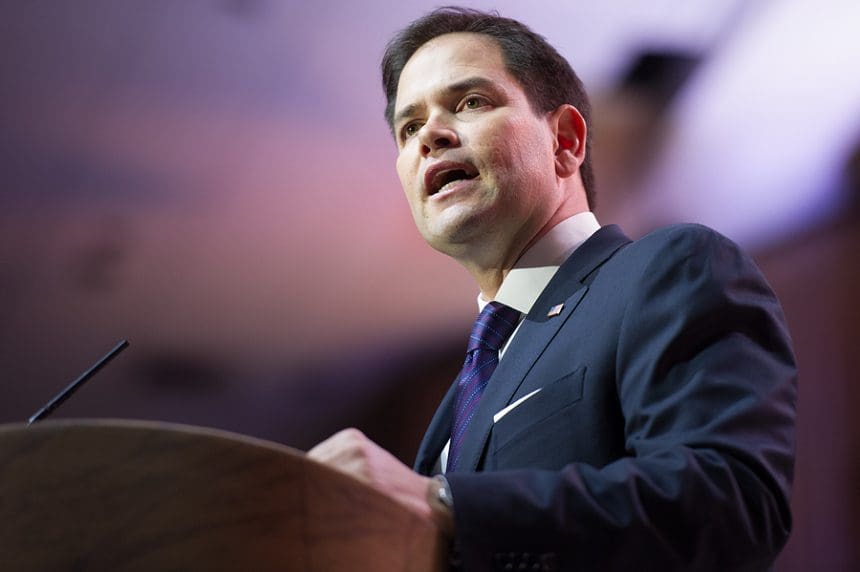
MUNICH, Germany (STL.News) U.S. Secretary of State Marco Rubio called on European leaders to defend Western civilization during a high-profile address at the Munich Security Conference, arguing that the transatlantic alliance must be rebuilt on sovereignty, industrial strength, and border security to remain globally competitive.
Speaking before defense officials, diplomats, and global policymakers, Rubio positioned the United States and Europe as inseparable partners bound by history, culture, and shared values. However, he made clear that the next phase of cooperation would require what he described as difficult political and economic reforms.
A Call for Western Renewal
Rubio framed his remarks as both reassurance and warning. He stressed that America remains deeply connected to Europe, describing the relationship as civilizational rather than merely strategic. At the same time, he argued that the West has drifted from the principles that once made it strong.
He suggested that decades of economic globalization, energy dependency, and weakened borders have undermined confidence in Western governments. To defend Western civilization, he said, leaders must confront those policy decisions directly rather than avoid politically sensitive debates.

“For us Americans, our home may be in the Western Hemisphere, but we will always be a child of Europe.”
The quote drew attention as one of the most personal and culturally framed moments of the speech.
Reindustrialization as a Security Strategy
A major theme of Rubio’s address was economic sovereignty. He argued that Western nations cannot maintain military and geopolitical strength if they rely heavily on foreign rivals for manufacturing capacity, critical minerals, or advanced technologies.
Rubio described deindustrialization as a political choice rather than an economic inevitability. He called for coordinated Western efforts to rebuild supply chains, restore domestic production, and reduce vulnerability to external economic pressure.
According to Rubio, the effort to defend Western civilization must include industrial revival alongside defense cooperation.
Border Control and National Sovereignty
Another central focus of the speech was migration policy. Rubio said border control is not simply an administrative matter but a foundational act of sovereignty. He warned that unmanaged migration flows risk destabilizing social cohesion and fueling political division across Europe and North America.
He framed border security as a necessary step if governments are serious about defending national identity and preserving public trust. In his view, protecting borders is part of the broader responsibility to defend Western civilization amid rapid demographic and geopolitical change.
Technology and the “New Western Century”
Looking forward, Rubio outlined what he described as a shared technological mission for the West. He highlighted commercial space, artificial intelligence, advanced manufacturing, automation, and critical minerals as defining industries of the 21st century.
He urged European partners to align closely with Washington in building resilient supply chains and technological leadership. The West, he argued, must not surrender emerging sectors to strategic competitors.
This forward-looking section of the speech suggested that defending Western civilization is not about nostalgia, but about preparing for the next era of global competition.
Reforming Global Institutions
Rubio also addressed international institutions, arguing that reform — rather than abandonment — should guide Western engagement. He suggested that global organizations have often proven ineffective at resolving urgent crises and that stronger, interest-driven action may be necessary at times.
While he reaffirmed alliance commitments, his tone reflected a more assertive posture toward how Western nations exercise power on the world stage.
European Reaction and Strategic Implications
Rubio’s speech was closely watched across European capitals. Many leaders have sought clarity about the long-term direction of U.S. foreign policy and the durability of NATO commitments.
While his remarks reassured audiences that the United States sees Europe as indispensable, his emphasis on sovereignty, migration control, and industrial realignment signaled a clear shift toward a more national-interest-driven framework for cooperation.
The broader question now facing European governments is whether they will fully embrace the reforms Rubio outlined — or pursue a different model for securing prosperity and stability.
The Strategic Moment in 2026
The Munich Security Conference speech arrives at a time when global power balances are shifting rapidly. Ongoing geopolitical tensions, economic realignment, and technological competition are redefining alliances and priorities.
Rubio’s core message was consistent: to defend Western civilization, the alliance must move beyond symbolic unity and pursue structural renewal. He argued that Western nations must rebuild confidence at home while coordinating strategy abroad.
Whether Europe adopts that agenda will shape not only the future of the transatlantic partnership but also the trajectory of global politics in the years ahead.
Other Political News published on STL.News:
- U.S. Congratulates Barbados Prime Minister Mia Mottley on Reelection
- Is St. Louis at Risk of Losing Federal Funding
- Texas Special Election Win Narrows GOP Majority
- Minnesota Governor’s Call for Protests Raises Questions
- United States and Greenland Relations Draw Global Attention
© 2026 – St. Louis Media, LLC d.b.a. STL.News. All Rights Reserved. Content may not be republished or redistributed without express written approval. Portions or all of our content may have been created with the assistance of AI tools, such as Gemini or ChatGPT, and are reviewed by our human editorial team. For the latest news, head to STL.News.