


Understanding Gaza: The Truth About the Gaza Strip and Its Political Reality – Introduction
(STL.News) Gaza Strip – The Gaza Strip has long stood at the crossroads of politics, conflict, and compassion. While many people around the world hear about Gaza in the news, few truly understand what it is — or isn’t. Gaza is not a country, nor is it simply a city caught in turmoil. It is a small but densely populated territory that has become a global symbol of endurance, political complexity, and human struggle. To comprehend Gaza’s place in the modern world, one must look beyond the headlines and into its geography, governance, and historical circumstances that have shaped the region as it is today.
Geography and Demographics
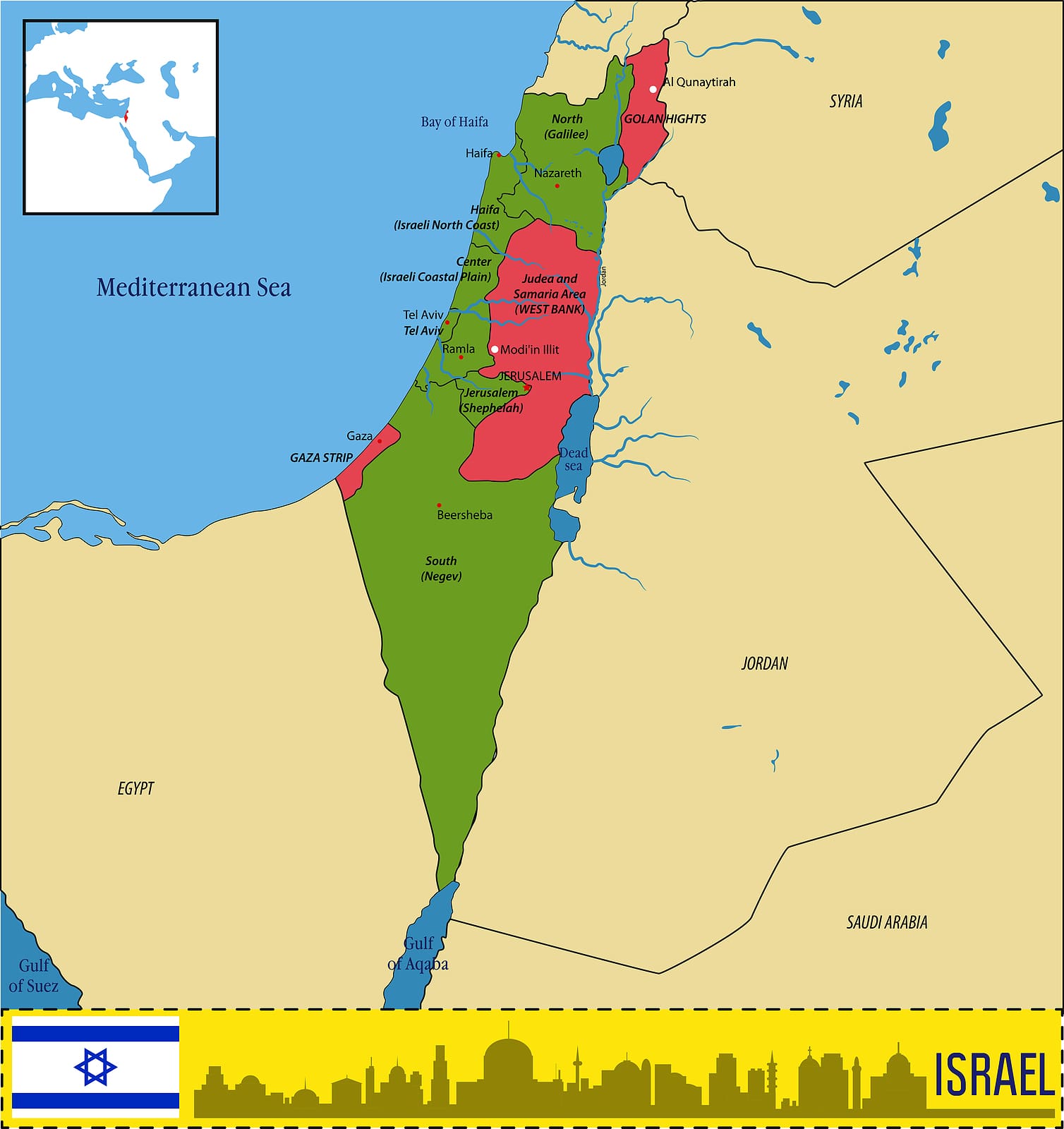
The Gaza Strip lies along the southeastern coast of the Mediterranean Sea. It is bordered by Israel to the north and east and Egypt to the south, with the Mediterranean Sea forming its western edge. Despite its small size — roughly 25 miles long and 4 to 7 miles expansive — it houses approximately 2 million residents, making it one of the most densely populated territories in the world.
The region’s geography is deceptively simple, yet politically significant. Its narrow shape and limited natural resources create constant pressure on housing, agriculture, and infrastructure. What Gaza lacks in physical size, it compensates for with global attention, as every development within its borders tends to ripple across international headlines.
Historical Background
The modern identity of Gaza cannot be understood without revisiting its past. The territory’s history stretches back thousands of years, with ancient civilizations such as the Egyptians, Philistines, Romans, Byzantines, and Ottomans leaving their marks. But its modern political status is rooted in the 20th-century conflict that reshaped the Middle East.
After World War I and the collapse of the Ottoman Empire, Britain took control of what was known as Mandatory Palestine. Following decades of tensions between Jewish and Arab populations, the United Nations proposed partitioning the land into separate Jewish and Arab states in 1947. While Jewish leaders accepted the plan, Arab leaders rejected it, leading to war after Israel declared independence in 1948.
During that war, Egypt took control of the Gaza Strip. For nearly two decades, Gaza remained under Egyptian administration, but its residents were not granted Egyptian citizenship. In 1967, during the Six-Day War, Israel captured Gaza along with the West Bank, East Jerusalem, and other territories. From that moment, Gaza’s political and humanitarian complexity deepened.
The Oslo Accords and the Palestinian Authority
The 1990s brought a new chapter when Israel and the Palestine Liberation Organization (PLO) signed the Oslo Accords, creating a framework for Palestinian self-rule in Gaza and parts of the West Bank. Under this agreement, the Palestinian Authority (PA) was established to govern the territories, with the hope of progressing toward a two-state solution.
For a short period, optimism prevailed. Gaza saw development projects, new infrastructure, and even the construction of an international airport. However, the peace process stalled as violence and mistrust resurfaced. The continued presence of Israeli settlements within Gaza and disputes over sovereignty led to growing frustration among Palestinians.
The Rise of Hamas
In 2005, Israel unilaterally withdrew its troops and settlers from the Gaza Strip, ending a 38-year occupation. But the withdrawal did not bring peace. In 2006, the Islamic political group Hamas won legislative elections across the Palestinian territories, defeating the Fatah party, which had dominated the Palestinian Authority.
A year later, violent clashes erupted between Hamas and Fatah forces. Hamas ultimately seized complete control of Gaza in 2007, expelling PA officials and establishing its own de facto government. Since then, the Palestinian territories have been politically divided — with Hamas ruling Gaza and the Palestinian Authority administering the West Bank.
Hamas is considered a militant organization by the United States, Israel, and the European Union, primarily due to its history of armed conflict with Israel. While it governs civil life in Gaza — overseeing health, education, and municipal services — its ongoing hostilities with Israel have made Gaza a flashpoint of regional instability.
Blockade and Humanitarian Conditions
Following Hamas’s takeover, Israel and Egypt imposed a blockade on Gaza to control the movement of goods and people. The blockade, now in place for more than a decade, was intended to prevent the flow of weapons and materials that could be used for military purposes. However, it also heavily restricted trade, construction materials, and humanitarian supplies, leading to severe economic hardship.
Electricity shortages, limited clean water, and unemployment rates exceeding 40 percent have made life extremely difficult for ordinary residents. Humanitarian organizations frequently describe Gaza as “an open-air prison,” as few residents are allowed to leave for work, education, or medical care.
Despite these challenges, Gazans display remarkable resilience. Markets remain open, schools operate, and small businesses continue to adapt under challenging conditions. Local entrepreneurs have built technology startups, art collectives, and small industries that strive to offer hope amid hardship.
Governance and International Recognition
Gaza is not recognized as an independent country. It is considered part of the State of Palestine, a political entity recognized by more than 130 countries and the United Nations General Assembly. However, the State of Palestine has limited control over Gaza, since Hamas operates independently from the Palestinian Authority.
Israel controls Gaza’s airspace, maritime borders, and most crossings. Egypt controls the southern Rafah crossing, which it occasionally opens for humanitarian or diplomatic purposes. The United Nations and several international organizations operate humanitarian missions inside Gaza, but the political and security environment constrains their reach.
Conflict and Escalations
The Gaza Strip has been the epicenter of several major conflicts in the past two decades. Periodic clashes between Israel and Hamas have resulted in widespread destruction and thousands of casualties on both sides. The most intense confrontations often follow rocket attacks launched from Gaza and Israeli airstrikes in retaliation.
These cycles of violence typically end in fragile ceasefires brokered by regional powers such as Egypt or Qatar. However, without a lasting political solution, peace remains elusive. Each new flare-up not only devastates Gaza’s infrastructure but also deepens the humanitarian crisis and widens the political rift between the Palestinian factions.
Life Inside Gaza
Despite the ongoing hardships, life in Gaza continues with remarkable perseverance. Families gather for meals, children attend schools operated by the United Nations, and community leaders organize cultural and sports activities. Many Gazans have learned to rebuild repeatedly after each round of conflict, demonstrating a spirit of survival that inspires global empathy.
The local economy relies heavily on aid, remittances, and small-scale trade. Fishing, agriculture, and construction are vital but limited by restrictions. Gaza’s youth population — nearly half under 18 — faces enormous challenges, including high unemployment and limited access to higher education abroad.
Still, social media and digital technology have provided young Gazans with new opportunities to communicate with the outside world, share their stories, and advocate for change. Artists, journalists, and activists in Gaza continue to shed light on their daily lives, hoping the international community will see them as more than victims of conflict.
International Perspectives
Globally, Gaza remains a core issue in Middle Eastern diplomacy. While some nations advocate strongly for Palestinian statehood, others focus on Israel’s right to security. This tension shapes nearly every regional negotiation and international peace effort.
The challenge lies in balancing humanitarian concerns with security realities. Countries that contribute to humanitarian aid often find their efforts undermined by renewed hostilities. Meanwhile, political divisions within Palestine — between Hamas and the Palestinian Authority — complicate talks aimed at creating a unified government.
The broader international community recognizes that lasting peace in Gaza requires more than ceasefires. It demands political reconciliation, sustainable development, and mutual recognition between Israel and a future Palestinian state.
Misconceptions About Gaza
A common misunderstanding is that Gaza is an independent country. In reality, Gaza is one part of the Palestinian territories. Its lack of international recognition as a sovereign state means it has no seat in global organizations such as the United Nations.
Another misconception is that Gaza operates independently of foreign influence. In truth, its economy, border access, and daily life are deeply affected by decisions made in Israel, Egypt, and by international donors. Gaza’s internal government manages local affairs, but under extraordinary constraints.
The Future of Gaza
The path forward for Gaza is uncertain but not hopeless. Many international observers believe that long-term peace depends on three key factors: political unity, economic opportunity, and security guarantees for both Palestinians and Israelis.
If Palestinian political factions could reconcile their differences, they could present a unified position in future negotiations. Economic development, if supported by international investment and relaxed border controls, could provide jobs and stability. Meanwhile, mutual recognition of rights and responsibilities could help both sides escape the endless cycle of retaliation.
For now, the people of Gaza continue to wait — not passively, but with determination. They work, study, raise families, and dream of a future where borders are open, opportunities are real, and peace is possible.
Conclusion
Gaza is not a country, but its story embodies the struggles of a people seeking dignity, sovereignty, and stability. It is a land marked by ancient history, modern politics, and enduring hope. The Gaza Strip remains a small strip of land with an outsized impact on world affairs, symbolizing the urgent need for understanding, empathy, and lasting peace.
While the headlines may focus on conflict, the reality of Gaza is deeper — a testament to humanity’s resilience in one of the world’s most challenging places. Whether peace will come soon remains unknown, but one truth endures: the people of Gaza deserve a future defined not by borders or war, but by freedom, prosperity, and the chance to live with dignity.
© 2025 STL.News/St. Louis Media, LLC. All Rights Reserved. Content may not be republished or redistributed without express written approval. Portions or all of our content may have been created with the assistance of AI technologies, like Gemini or ChatGPT, and are reviewed by our human editorial team. For the latest news, head to STL.News.



