Two Major Marketing Firms Exit Downtown St. Louis as Office Vacancy Hits Record Highs
ST. LOUIS, MO (STL.News) Downtown St. Louis is facing a stark new reality: office vacancy rates have climbed to levels not seen in decades, and the departure of two major marketing firms has become a focal point for business leaders, economic developers, property owners, and residents alike.
In a metropolitan region long defined by a resilient economy and a thriving central business district, the loss of prominent tenants highlights an ongoing transformation — and underscores broader structural challenges reshaping urban cores across the United States.
A Turning Point for Downtown St. Louis, MO
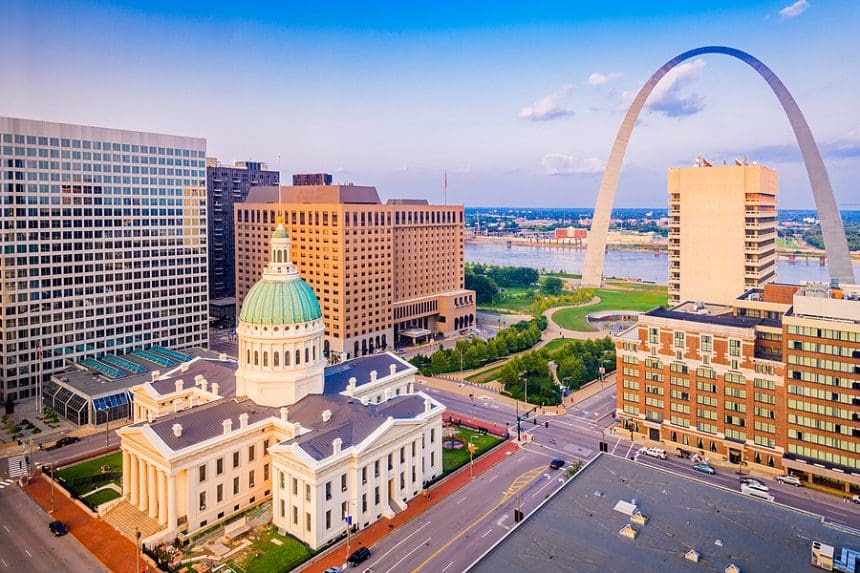
Historically, downtown St. Louis served as the beating heart of the region’s business and cultural life. Its iconic skyline was dotted with corporate headquarters and professional offices, and its bustling streets drew workers from across the region each weekday.
Over the past several years, however, downtown has undergone dramatic changes. Factors such as remote work adoption, shifting commercial real estate demand, and changes in corporate real estate strategies have all played a role in altering how companies view and use office space.

In this context, the announced departures of two well-known marketing firms — long considered pillars of the downtown business landscape — have drawn significant attention. These firms, which had maintained prominent office footprints in the heart of the city, represent more than just tenants; they were symbolic of downtown’s appeal to creative professionals and knowledge-based industries.
The Impact of Departures from Downtown St. Louis, MO
While corporate relocations are not uncommon in any city, the exit of two such firms from downtown St. Louis carries outsized significance due to timing and scale.
Both companies occupied premier office space and were regarded as substantial contributors to foot traffic, weekday economic activity, and the vitality of nearby restaurants, retail stores, and service businesses. Their departures — one to a suburban campus and the other to an entirely different market — have left sizable vacancies that, when combined with broader office market trends, have pushed vacancy rates to historic highs.
For property owners and commercial brokers, this is not just about the square footage left empty; it’s about what it signals regarding demand for traditional office space in downtown environments post-pandemic.
Vacancy Rates at Historic Levels in Downtown St. Louis, MO
Recent market data tracking downtown office occupancy shows vacancy rates climbing to figures not seen in decades. This trend does not exist in isolation: cities nationwide are grappling with similar challenges as companies rethink office footprints, hybrid work becomes more entrenched, and long-term leases mature.
In St. Louis, however, the effect has been magnified by several key dynamics:
- A concentration of large office buildings: Several older, high-profile towers remain largely unoccupied or underutilized, contributing disproportionately to vacancy totals.
- Shifting corporate strategies: Employers across sectors are reducing space needs, adopting hybrid work models, or relocating to suburban hubs with lower costs and larger campuses.
- Competitive markets elsewhere: Cities that have invested heavily in amenity-rich office environments and mixed-use districts are drawing tenants that might once have considered downtown St. Louis.
The result: an overall office vacancy rate downtown that stands among the highest in recent memory.
What the Departures Reveal
The loss of the two marketing firms is a vivid example of how individual tenant decisions can illuminate broader market forces. These firms, known for their creative talent and regional presence, had been downtown anchors, contributing to the district’s reputation as a hub for innovation and business services.
Their decisions to relocate reflect both internal company strategies and external market pressures. For one, access to employees — especially those seeking modern amenities, flexible work options, and shorter commutes — weighed heavily in the calculus. For the other, the move was part of a broader operational realignment aimed at positioning the company for future growth.
Critically, neither departure was explicitly about downtown St. Louis lacking value or cultural appeal. Instead, it highlights how rapidly the calculus for office space has changed for companies of all sizes and industries.
Broader Economic Implications for St. Louis, MO
The immediate economic impact of these moves is tangible: downtown businesses that relied on weekday foot traffic are feeling the strain, and commercial landlords are facing heightened pressure to fill large, vacant spaces.
But beyond that, the departures feed into a larger narrative about downtown’s role in the region’s economic future. For civic leaders and economic development officials, the challenge now is twofold:
- Address market realities: Recognize that demand for traditional office space has shifted, and that the downtown ecosystem must adapt accordingly.
- Reimagine downtown’s value proposition: Build a vision that attracts not just tenants seeking office space, but talent and activity that sustain a vibrant downtown over the long term.
Responding to the Vacancy Challenge
Several strategies have begun to emerge as potential responses to the current vacancy landscape:
Adaptive Reuse and Mixed-Use Development
Cities across the country have increasingly turned to adaptive reuse to address underutilized office buildings. By converting office towers into residential units, hotels, co-living spaces, or mixed-use developments, urban cores can inject new life into structures that would otherwise remain empty.
In downtown St. Louis, this approach could help diversify the central business district’s mix of uses, bringing in residents who live and play in the area where they previously worked.
Incentives for Innovation Hubs
To attract companies — especially creative, technology, and marketing firms — downtown needs to offer more than just square footage. Incentives tied to innovation districts, incubators, workforce development programs, and university partnerships could make the area more appealing to employers seeking to tap into emerging talent.
Enhanced Transit and Connectivity
Accessibility remains a key factor in where companies choose to locate. Investments in transit, pedestrian-friendly infrastructure, and connections to surrounding neighborhoods can make downtown more attractive to both employers and employees.
Supporting Local Businesses
With fewer workers downtown during weekdays, many small businesses have reported reduced patronage. Initiatives aimed at stimulating economic activity — from pop-up markets to cultural events and outdoor dining expansions — can help keep downtown lively even as office occupancy patterns evolve.
Voices from the Community
While the departure of the two marketing firms has dominated recent conversations, opinions about what comes next are varied and passionate.
Some business owners see this moment as a catalyst for innovation — an opportunity to rethink downtown’s identity and purpose. They argue that cities that embrace change and diverse uses tend to thrive, even amid significant market shifts.
Others express concern about the short-term economic pain and the potential for a downward spiral if vacancies continue to rise without a clear plan for activation and reinvestment.
What unites these voices is a shared belief in downtown St. Louis’s potential — but also a recognition that the path forward will require bold and coordinated effort.
Looking Ahead
The office vacancy challenge in downtown St. Louis is not an isolated phenomenon, nor is it a problem without precedent. Cities with historic commercial cores have faced similar crossroads, and those that have successfully navigated these transitions did so by embracing new ideas while honoring their unique identities.
For St. Louis, the departure of two major marketing firms is a significant marker — not necessarily a defining one. It reflects how the commercial real estate landscape has changed and underscores the need for innovative thinking in how downtown spaces are used, marketed, and maintained.
As vacancy rates remain high, the region’s leaders, business community, and residents have an opportunity to shape a downtown that is resilient, inclusive, and future-ready.
Whether through adaptive reuse, creative placemaking, technological investment, or strengthened collaboration between the public and private sectors, downtown St. Louis has the assets and ambition necessary to chart a new chapter. The question now is not whether downtown will evolve — but how and how quickly.
© 2025 – St. Louis Media, LLC d.b.a. STL.News. All Rights Reserved. Content may not be republished or redistributed without express written approval. Portions or all of our content may have been created with the assistance of AI technologies, like Gemini or ChatGPT, and are reviewed by our human editorial team. For the latest news, head to STL.News.