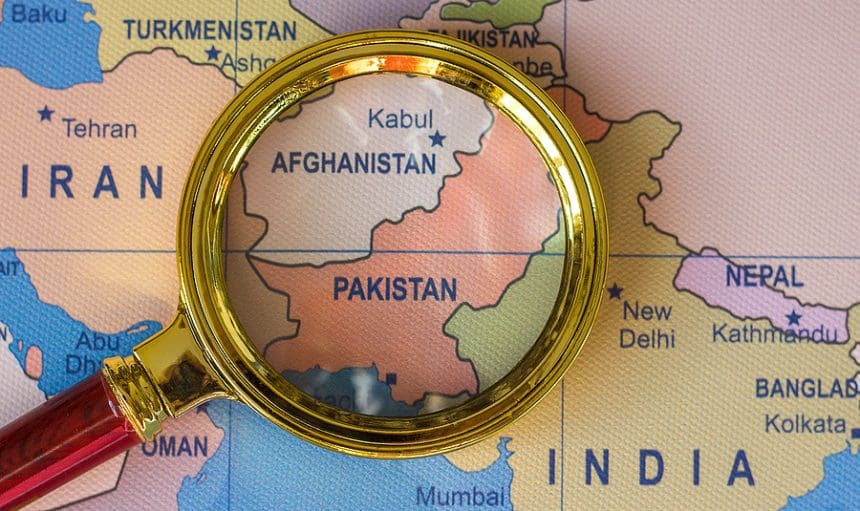
Military conflict between Afghanistan and Pakistan has escalated sharply in early 2026, with airstrikes, artillery exchanges, and drone operations reported along the shared border. Pakistan has described the confrontation as “open war,” while Afghanistan has vowed retaliation following strikes near Kabul and other provinces. International leaders are urging restraint as civilian casualties and regional instability mount.
(STL.News) Tensions between Afghanistan and Pakistan have intensified into one of the most serious military confrontations in years. What began as cross-border accusations and sporadic clashes has evolved into sustained air and ground operations, raising fears of broader regional instability.
Both governments are publicly defending their actions while blaming the other for initiating hostilities. The situation remains fluid, but the scale of recent strikes marks a significant shift from past border skirmishes.
Airstrikes and Expanding Military Operations
In late February 2026, Pakistan launched a series of air operations targeting locations inside Afghanistan, including areas near Kabul and in eastern provinces. Pakistani officials stated that the strikes were aimed at dismantling militant infrastructure allegedly linked to attacks inside Pakistan.

Afghan authorities strongly rejected that narrative, claiming that the airstrikes struck residential neighborhoods and caused civilian casualties. Afghan defense forces reportedly responded with artillery and cross-border fire, further escalating the confrontation.
The intensity and geographic spread of the strikes have distinguished this round of fighting from previous limited exchanges along the border.
Retaliation and Cross-Border Engagement
Following the initial air raids, Afghan forces launched retaliatory operations, targeting what they described as Pakistani military positions near key border crossings. Clashes have been reported in multiple areas along the Durand Line, the disputed border separating the two countries.
Reports also indicate the use of drones by both sides, suggesting a shift toward more technologically advanced forms of engagement. Claims and counterclaims continue to emerge regarding aircraft losses, troop casualties, and damage to infrastructure.
Neither side has provided independently verified casualty figures, but both acknowledge that losses have occurred.
The Border Dispute at the Core
At the center of the conflict lies the long-standing dispute over the Durand Line, a boundary drawn during the colonial era that Afghanistan has historically refused to formally recognize. Pakistan considers the border settled and internationally valid, while Afghan leaders have periodically challenged its legitimacy.
Border fencing, military checkpoints, and cross-border militant activity have repeatedly triggered tensions. However, this latest escalation appears more intense than previous confrontations.
Militant Groups and Security Accusations
Pakistan has consistently accused Afghan authorities of failing to control militant groups that conduct attacks inside Pakistani territory. In particular, Islamabad has blamed insurgent networks for suicide bombings and assaults on security forces in its northwest regions.
Afghanistan’s Taliban-led government denies formally supporting such groups but acknowledges the challenges of maintaining security across mountainous and remote terrain. The dispute over responsibility for cross-border militancy remains a central driver of hostilities.
Civilian Impact and Humanitarian Concerns
Civilians are bearing the brunt of the violence. Residents near targeted areas have reported panic, displacement, and destruction of homes. Cross-border trade routes have been disrupted, straining local economies already facing financial hardship.
Afghanistan continues to struggle with poverty, food insecurity, and limited access to international funding. Pakistan, meanwhile, faces inflation and economic pressure that complicate sustained military engagement.
Humanitarian organizations are expressing concern that prolonged fighting could lead to increased displacement and a worsening refugee situation.
Regional Implications
The escalation has drawn attention from neighboring countries and global powers. Regional governments are concerned that prolonged instability could destabilize trade corridors and create opportunities for extremist groups to exploit the chaos.
China, which has significant economic investments in Pakistan, is closely monitoring developments. India is also watching carefully, as any prolonged conflict could alter regional security dynamics.
Diplomatic efforts are reportedly underway to prevent further escalation, though no formal ceasefire has been announced.
Is This a Formal War?
Pakistan has characterized the situation as an “open war,” signaling the seriousness of the confrontation. However, neither side has issued a traditional declaration of war in the legal sense.
The fighting currently consists of airstrikes, artillery exchanges, and cross-border engagements rather than a full-scale ground invasion. Whether the conflict expands further will depend on military calculations and diplomatic intervention in the coming days.
What Happens Next?
The trajectory of the Afghanistan–Pakistan conflict remains uncertain. Several factors will influence the outcome:
- Whether additional large-scale airstrikes occur
- Whether civilian casualties increase significantly
- Whether international mediation gains traction
- Whether militant attacks inside Pakistan continue
If cooler heads prevail, negotiations could prevent a broader war. If retaliatory cycles continue, however, the region may face sustained instability.
Conclusion
The military conflict between Afghanistan and Pakistan entered a dangerous phase in 2026. Airstrikes near Kabul, retaliatory border engagements, and rising casualties signal a serious deterioration in relations between the two neighbors.
While not yet a full conventional war, the scale and intensity of the fighting represent a major escalation. With civilians at risk and regional stability hanging in the balance, diplomatic intervention may be the only path to de-escalation.
Other news stories published on STL.News:
- BREAKING NEWS: U.S. Launches Military Strikes on Iran
- Creating Positive Rental Experiences: A Guide for Property Owners
- 335 Motorcycle Fatalities in 5 years: Missouri Ranks #4
- St. Louis Mayor Warns of a Decimated Budget Battling with the State
- What To Look For When Choosing A Kindergarten Program
© 2026 St. Louis Media, LLC d.b.a. STL.News. All rights reserved. No content may be copied, republished, distributed, or used in any form without prior written permission. Unauthorized use may result in legal action. Some content may be created with AI assistance and is reviewed by our editorial team. For official updates, visit STL.News.