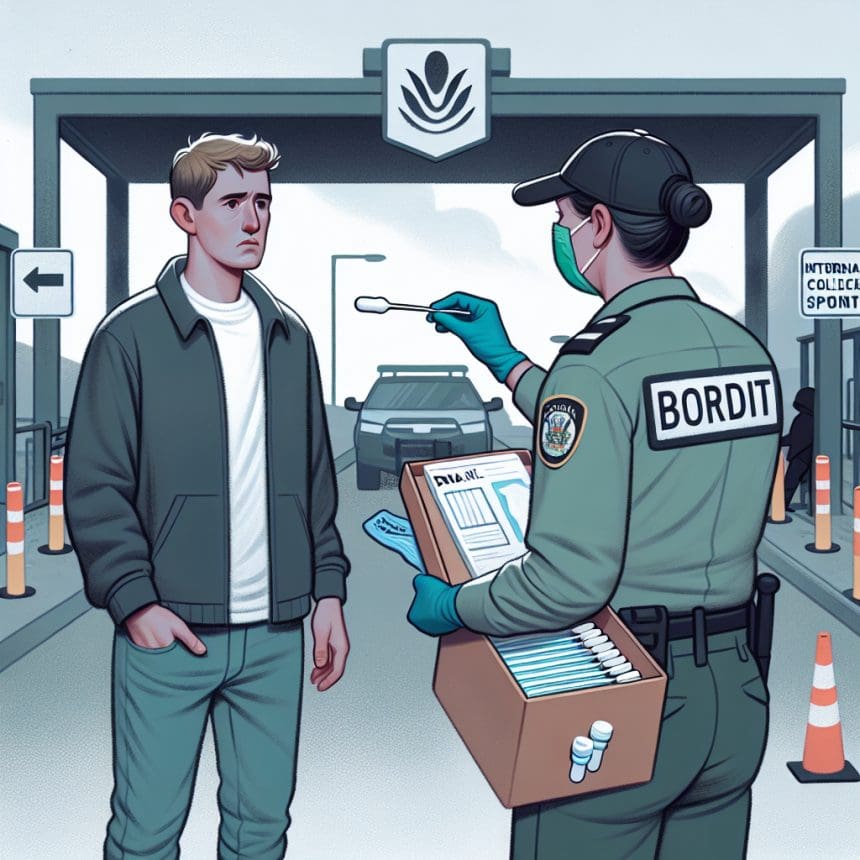
Headline: Lawmakers Press for Clarity on DNA Collection at U.S.-Canada Border
In a striking incident at the U.S.-Canada border, U.S. lawmakers are demanding answers following claims by a Canadian man who alleges that border officers forced him to provide a DNA sample during a routine inspection on September 15, 2023. The case has raised serious ethical and legal questions regarding the policies and practices of border enforcement agencies, prompting scrutiny from various congressional representatives who are concerned about potential overreach and violations of individual rights.
The alleged incident has ignited a firestorm of debate across both sides of the border, as it brings to the forefront issues of privacy rights and governmental authority in the context of national security. The Canadian man, who identified himself only as “John,” claims he was subjected to coercive tactics when he attempted to cross into the United States for a business trip. According to John, border officers cited concerns over an unspecified investigation as the reason for demanding the DNA sample, leaving him feeling both bewildered and vulnerable.
Border officials have stated that protocols are in place for handling border security and immigration enforcement but have faced backlash over transparency in their operations. Questions regarding the legality of collecting DNA samples from individuals who have not been formally charged with a crime are central to the discussion. U.S. lawmakers, particularly those representing border states, have expressed deep concern over the implications of these practices on civil liberties.

Prominent representatives, including Senator Mark Kelly (D-AZ) and Representative Veronica Escobar (D-TX), have called for an immediate inquiry into the techniques employed by Customs and Border Protection (CBP) officers. They argue that forcing individuals to provide DNA samples without consent or clear justification not only violates ethical standards but could also lead to broader abuses of power. Senator Kelly remarked, “We must ensure that citizen’s rights are protected at the border, and that any actions taken are in accordance with the law.”
This incident raises important questions about how data collected at the border is used and stored. Are border officials collecting DNA samples for investigative purposes, or is this a new standard practice being implemented without public knowledge? Attorney General Merrick Garland has indicated that he is reviewing the policies in place but has yet to publicly comment on this specific allegation.
Privacy advocates are also voicing their concerns, noting that this event could set a dangerous precedent if left unchecked. Organizations like the American Civil Liberties Union (ACLU) have issued statements urging transparency and accountability from border agencies. “DNA is the most personal type of information we can possess, and to demand it without proper protocols in place undermines our fundamental human rights,” said ACLU spokesperson Emily Tatum.
Further complicating the matter is the growing reliance on forensic evidence in criminal investigations. While DNA sampling has become a critical tool in solving crimes, the application of such methods at border crossings presents unique challenges and risks, particularly regarding personal privacy. Critics argue that expanding the scope of law enforcement powers at the border can lead to unchecked surveillance and erosion of civil liberties.
To address these growing concerns, various members of Congress have proposed new legislation aimed at increasing oversight of border enforcement practices. This would involve stricter guidelines on evidence collection at the border, including a review of DNA sampling protocols. Representative Escobar stated, “It’s not just about the safety of our borders; it’s also about ensuring that we do not sacrifice our rights in the name of security.”
Moreover, the incident has sparked conversations about international relations between the U.S. and Canada. Officials from the Canadian government are closely monitoring the situation, as the framework for border security between the two nations relies heavily on mutual respect for each other’s sovereignty and law enforcement strategies. Canadian diplomats have emphasized their commitment to ensuring that their citizens’ rights are respected during cross-border interactions.
Public opinion appears to be mixed regarding the use of DNA samples at the border. While some argue that strict measures are necessary for national security, many express unease about the potential for overreach by government agencies. Online polls and social media discussions reflect a growing awareness and debate about civil liberties and the limits of government authority.
To mitigate fears, CBP has previously stated its commitment to responsible data collection practices, emphasizing that any DNA collected would strictly adhere to guidelines established to protect individual rights. However, after John’s incident, significant skepticism towards these assurances has emerged, highlighting the urgent need for improved oversight and accountability measures.
As the investigation unfolds, lawmakers are set to hold hearings that will aim to clarify not only the specific details surrounding John’s case but also broader national policies regarding DNA collection at the border. The outcome of these hearings may have lasting implications for how border enforcement agencies operate and the rights afforded to individuals crossing international borders.
In conclusion, the incident involving a Canadian man allegedly coerced into providing a DNA sample at the U.S.-Canada border has sparked a vital dialogue about privacy, ethics, and government authority. With lawmakers demanding answers and advocacy groups rallying for civil liberties, the future of DNA sampling practices at the border remains uncertain. As the public awaits further developments, the conversation around individual rights, security measures, and ethical law enforcement continues to evolve, reflecting a growing concern over the balance between safety and freedom.