


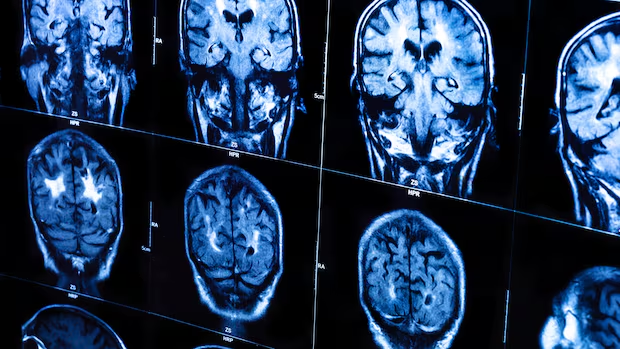
Headline: Mobile Brain Scanners Revolutionize Patient Care in Canada
In a groundbreaking advancement for medical technology, Canadian researchers have developed mobile brain scanning devices that promise to revolutionize patient care across the nation. Launched in early 2023, these portable devices allow for non-invasive brain imaging, providing valuable insights into neurological conditions such as epilepsy, traumatic brain injury, and other mental health disorders. This innovation enables practitioners to deliver timely diagnoses and personalized treatment plans in a variety of settings, from hospitals to remote communities.
The increasing demand for accessible healthcare solutions has set the stage for this innovative breakthrough in neuroscience. The mobile brain scanner, aptly dubbed the "BrainCart," was created by a collaborative effort involving leading universities and tech firms in Canada. This project aims to bridge the gap in service for patients living in rural and underserved areas where traditional imaging technology is not readily available.
Traditionally, patients requiring brain scans faced significant barriers, including long travel distances, extended waiting times, and high costs. The BrainCart addresses these issues by allowing imaging to occur right at the point of care. It streamlines the diagnostic process, reducing the time between initial consultation and treatment. Healthcare providers are now able to conduct scans in emergency rooms, outpatient clinics, and even in patients’ homes, enhancing the overall patient experience.
The use of these mobile devices is particularly crucial in Canada, where geography often separates patients from immediate healthcare services. For instance, a recent survey indicated that nearly 24% of Canadians have experienced delays in accessing diagnostic imaging due to travel concerns. The BrainCart aims to mitigate this issue, ensuring that individuals in remote areas receive timely interventions.
One noteworthy case highlighting the device’s impact involved a young woman living in Northern Ontario, diagnosed with epilepsy. Previous imaging techniques required her to travel over 300 kilometers to access conventional MRI services. However, with the introduction of the BrainCart, healthcare professionals were able to conduct a brain scan within her local community. The rapid results allowed for a quicker adjustment to her treatment plan, significantly improving her quality of life.
Clinical trials for the mobile brain scanner have demonstrated promising results, showing that the imaging quality is comparable to traditional machines. The device utilizes advanced technology, including machine learning and artificial intelligence algorithms, to analyze the brain’s structure and function in real-time. This ensures high-quality imaging without the logistical challenges associated with larger machines.
Moreover, the implications of mobile brain scanning extend beyond immediate diagnosis. Early findings suggest that regular monitoring through these devices can lead to better long-term outcomes for patients with chronic neurological conditions. Researchers believe that ongoing scans can help in tracking the progression of diseases, allowing for timely interventions and adjustments to treatment plans as needed.
The BrainCart initiative also aims to foster partnerships with local healthcare providers, promoting community engagement and education around neurological health. As part of this effort, workshops are being organized to train healthcare professionals on how to effectively use the mobile scanner and interpret its results.
Despite the revolutionary potential of mobile brain scans, there are still hurdles to overcome. Regulatory approvals for medical devices necessitate rigorous testing and validation to ensure patient safety and efficacy. As the BrainCart continues to receive attention from health authorities, developers are optimistic about speeding up this process in order to bring the technology to more healthcare providers.
Furthermore, as the healthcare landscape evolves to embrace digital solutions, it is crucial that education remains a priority. Patients and their families must be adequately informed about the technology and the implications of brain scanning, so they can actively participate in their healthcare decisions. To address potential concerns, outreach programs will be established to provide clear information and support.
The arrival of mobile brain scans in Canada marks a significant milestone in the quest for enhanced medical imaging technology. As these portable devices continue to integrate into healthcare systems, they have the potential to bridge the divide between urban and rural healthcare access. For Canadian patients, especially those facing barriers to traditional healthcare services, this innovation opens doors to timely and effective treatment for neurological conditions.
As the technology advances, Canadian researchers and healthcare professionals are not only setting a precedent for better patient care domestically but also positioning the country as a leader in global healthcare innovation. The successful implementation of mobile brain scanners could serve as a model for other countries looking to enhance their healthcare offerings.
In conclusion, mobile brain scans signal a transformative moment in medical technology, one that could reshape neurological healthcare in Canada and beyond. Through its capacity for immediate, high-quality imaging directly at the point of care, the BrainCart embodies the future of healthcare delivery—one that is more accessible, efficient, and patient-centered. As these devices roll out across various provinces, it is expected that the positive impact on patient outcomes will continue to grow, making previously insurmountable barriers a relic of the past. Future developments and trials will further refine and enhance this technology, making it an indispensable tool for healthcare providers nationwide.



