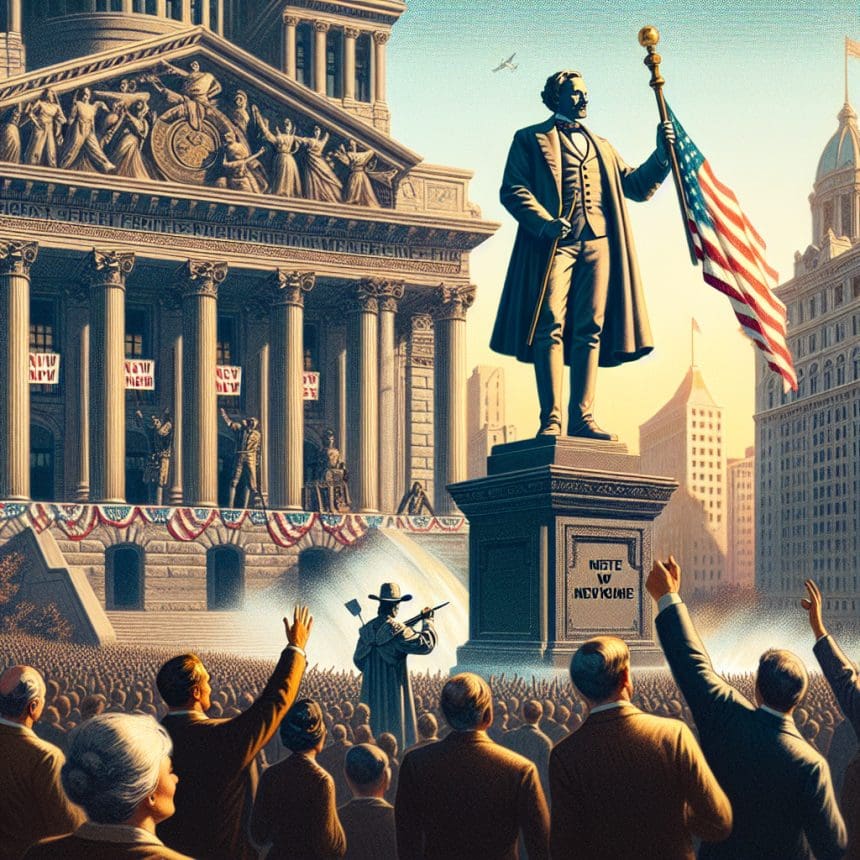
Headline: Trump Unveils Columbus Statue in White House Grounds
In a bold move during a recent rally, former President Donald Trump announced the installation of a new statue honoring Christopher Columbus near the White House. This monument, set to be unveiled on October 12, 2023, aims to celebrate Columbus’ historical significance amid the ongoing debate over his legacy. The statue is expected to be a focal point of contention as discussions about the figure’s place in American history continue, reflecting broader societal debates on race and heritage.
A Historic Announcement
The announcement was made in front of a cheering crowd in Washington, D.C., where Trump reiterated his commitment to preserving American heritage. "We cannot erase our history," Trump declared, amidst applause. The statue, crafted by renowned sculptor Angelo Prosperi, features Columbus in a classic pose, holding a scroll and accompanied by symbols reflecting European exploration. According to Trump, this installation "represents pride in our past and serves as a reminder of courage and exploration."
The Decision to Install the Statue
The decision to install the Columbus statue comes at a time when various cities and states across the U.S. have grappled with the legacy of Columbus, resulting in numerous removals and debates over similar monuments. With many advocating for the removal of such figures deemed controversial, Trump’s initiative seeks to reinforce a narrative of cultural heritage and patriotism.

An enthusiastic supporter at the rally, Maria Gonzalez, expressed her admiration, stating, "Columbus represents the spirit of discovery. We should celebrate those who dared to take risks." Conversely, detractors argue that honoring Columbus overlooks the impact of his voyages on Indigenous peoples, leading to the oppression and suffering of various tribes.
Public Reaction and Cultural Impact
Since the announcement, reactions to the statue have been polarized. Social media platforms have erupted in discussion, with hashtags like #ColumbusStatue and #HeritageVsHistory trending. Supporters argue that historical figures should be celebrated for their accomplishments rather than judged by contemporary values. However, critics warn that honoring Columbus can be seen as an endorsement of colonialism, which has deeply affected Indigenous communities in the Americas.
Local activist group Indigenous Voices issued a statement condemning the statue’s installation. "We cannot ignore the pain that Columbus’ actions have caused to countless Indigenous people," the statement read. "This statue is a step backwards in our journey toward reconciliation."
Legal and Political Dimensions
The statue’s installation is not without legal challenges. Various advocacy groups are reportedly preparing to file lawsuits aimed at halting the project, claiming it undermines efforts to honor and recognize Indigenous history. Speculation abounds regarding potential political ramifications for Trump, with some analysts suggesting that the move is a strategic attempt to rally his base as he gears up for the 2024 presidential election.
Notably, the statue’s design and funding have also come under scrutiny. It is reportedly financed through private donations, predominantly from individuals who support Trump’s political agenda. This aspect raises questions about the influence of private funding on public monuments, especially when it comes to controversial historical figures.
Broader Historical Context
To comprehend the significance of Trump’s announcement, it’s essential to delve into the historical context surrounding Columbus. Italy’s 15th-century explorer is credited with “discovering” the Americas in 1492, but this narrative has been challenged in recent decades, with scholars emphasizing the negative consequences of colonization for Indigenous populations.
Columbus Day, once celebrated with parades and festivities, has been transformed into a day of reflection in some states, with many choosing to honor Indigenous Peoples instead. The new Columbus statue, therefore, is not merely a representation of one person’s achievements; it embodies the ongoing debate surrounding national identity, collective memory, and the reevaluation of historical narratives.
The Future of Historical Monuments
As the unveiling date approaches, the conversation surrounding monuments in public spaces continues to evolve. Some historians suggest that rather than erasing controversial figures, it may be more beneficial to contextualize their achievements alongside the repercussions of their actions. Interactive installations and educational plaques could provide nuanced views of historical figures, fostering discussions around their legacies.
While Trump’s initiative seeks to bolster a particular narrative, it also opens the door to conversations about how we memorialize our past. The ongoing discourse surrounding the Columbus statue might pave the way for more inclusive approaches to historical commemoration, reinforcing the idea that understanding history is not simply about celebrating heroes but also recognizing the complexities that shape our collective identity.
Conclusion
The addition of the Columbus statue near the White House is a significant development, emblematic of the broader cultural and political tensions in contemporary America. As Trump seeks to solidify his stance on historical heritage, the public’s response reflects deep-seated divisions regarding the commemoration of historical figures. This monument is likely to serve as a flashpoint for discussions on race, history, and the ongoing impact of colonialism. As the nation moves forward, the future of such monuments will inevitably be a crucial element in how history is taught, remembered, and debated for generations to come.