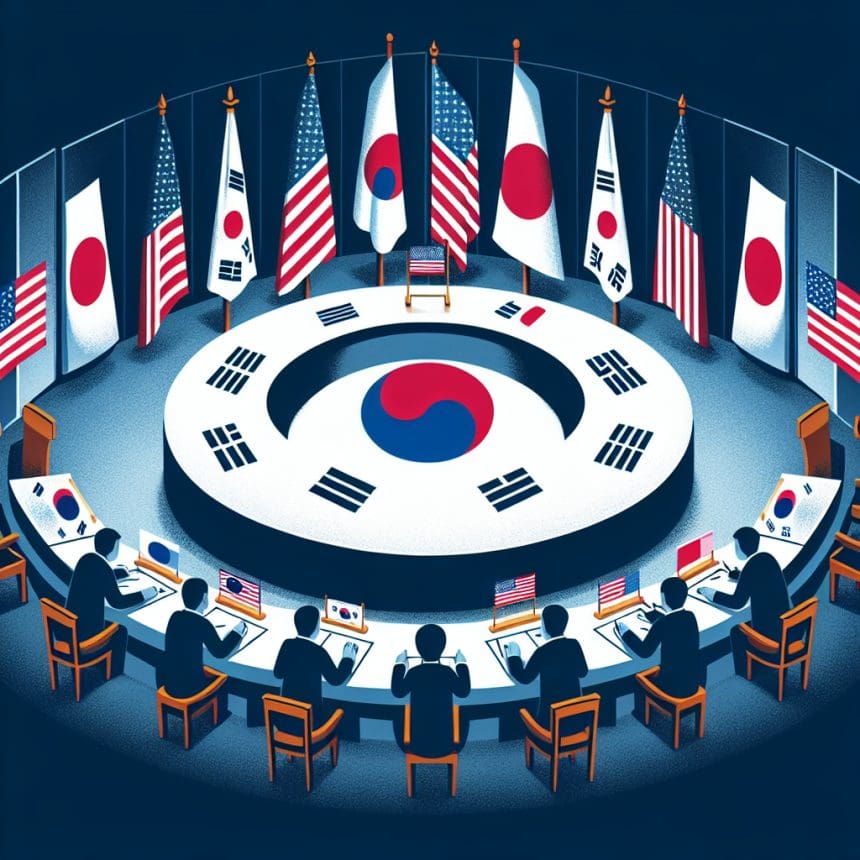
Readout of Under Secretary for War for Policy Elbridge Colby’s Visit to the Republic of Korea and Japan
Introduction
Under Secretary for War for Policy, Elbridge Colby, recently completed a significant diplomatic mission to the Republic of Korea and Japan. This visit aimed to strengthen bilateral relations, discuss regional security challenges, and enhance military cooperation between the United States and its allies in the Asia-Pacific region.
This readout highlights the key aspects of Colby’s trip, emphasizing the strategic implications of his discussions and the broader context of U.S. foreign policy in East Asia.
Objectives of the Visit
The primary objectives of Elbridge Colby’s visit included:
- Strengthening Bilateral Relations: Engaging with South Korean and Japanese officials to reinforce the historic alliances and address common concerns.
- Discussing Security Challenges: Exploring shared security threats in the region, particularly focusing on North Korea’s nuclear ambitions and China’s increasing military assertiveness.
- Enhancing Military Cooperation: Fostering closer military ties, which are essential for maintaining regional stability and deterrence.
Meetings and Discussions
Engagement with South Korean Officials
Colby’s itinerary included a series of high-level meetings with South Korean government officials and military leaders. Key points from these discussions included:

-
North Korean Threat: Colby expressed the U.S. commitment to uphold its defense obligations to South Korea amid ongoing provocations from North Korea. Enhanced coordination in intelligence sharing and military readiness was a focal point of the discussions.
-
Joint Military Exercises: The Under Secretary emphasized the significance of continued joint military exercises, which serve as both a deterrent to adversaries and a means to improve interoperability between U.S. and South Korean forces.
Discussions with Japanese Officials
In Japan, Colby met with senior government officials and defense leaders, focusing on several critical topics:
-
Regional Security Framework: Colby discussed the importance of a united front against regional threats, particularly addressing the challenges posed by China’s assertive foreign policy and North Korea’s nuclear proliferation.
-
QUAD Cooperation: The Under Secretary reaffirmed the United States’ commitment to the Quadrilateral Security Dialogue (QUAD), which includes Japan, India, and Australia, highlighting its role in promoting a free and open Indo-Pacific.
Key Takeaways
Strengthened Alliances
Colby’s visit successfully reaffirmed the strong alliances between the United States, South Korea, and Japan. All parties recognized the importance of unified action in response to evolving security dynamics in the region.
Increased Military Readiness
The discussions led to agreements on enhancing military readiness and fortifying defense capabilities. This includes stepping up joint training exercises, sharing advanced technology, and situational awareness to tackle imminent threats effectively.
Future Perspectives
Challenges Ahead
While the visit yielded positive outcomes, it underscored the complex security landscape in East Asia. The U.S., South Korea, and Japan must remain vigilant against North Korea’s nuclear developments and China’s strategic maneuvers.
Commitment to Peace and Stability
Under Secretary Colby reiterated the United States’ steadfast commitment to maintaining peace and stability in the region. He stressed that sustained dialogue and cooperative security measures are vital to counterbalance the threats facing the allies.
Conclusion
Elbridge Colby’s visit to the Republic of Korea and Japan marked a pivotal moment in U.S. foreign policy in Asia. By bolstering alliances, addressing security challenges, and enhancing military cooperation, Colby underscored the United States’ dedication to a peaceful and stable Indo-Pacific region.
As geopolitical tensions continue to evolve, these partnerships will play an increasingly critical role in ensuring national security and regional stability. The lessons learned from this trip will be essential as the U.S. navigates its role in the Asia-Pacific in the coming years.
SEO Optimization
This readout is structured to enhance its visibility on search engines, utilizing relevant keywords such as “Elbridge Colby,” “U.S. Department of War,” “Republic of Korea,” “Japan,” “security challenges,” and “military cooperation.” The headings are designed to provide clear, concise summaries that are easily digestible for readers and search engines alike, ensuring that this important diplomatic story reaches a broader audience.