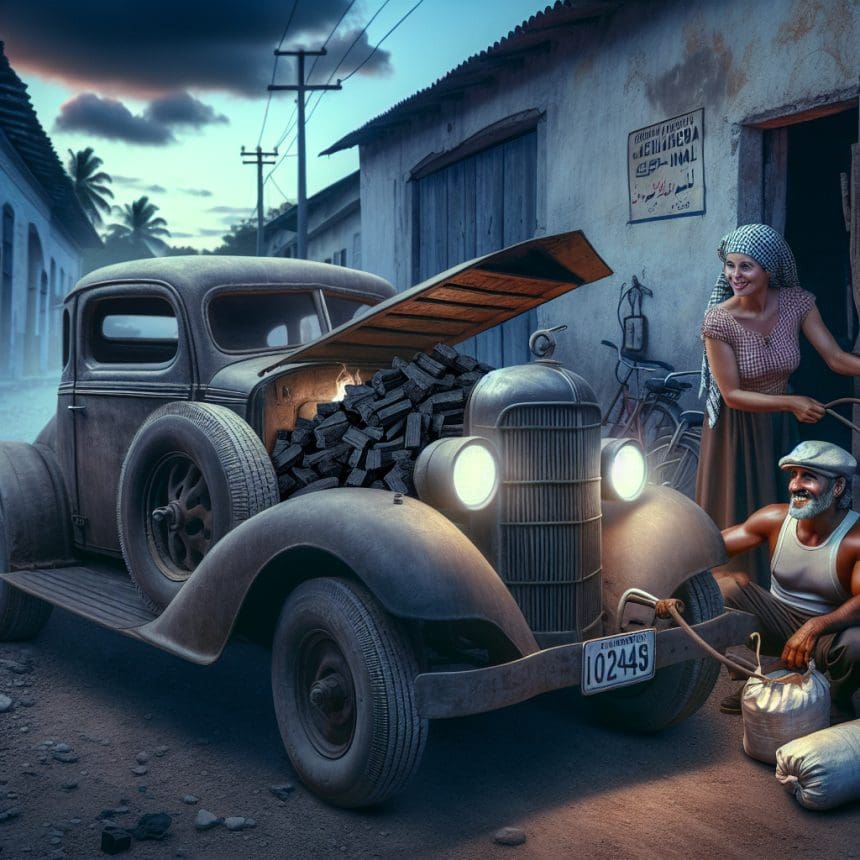
Cuban Mechanic Innovates Charcoal-Powered Car Amid Fuel Crisis
In a remarkable showcase of ingenuity, a mechanic in Havana, Cuba, has successfully converted a conventional gasoline-powered car to run on charcoal, addressing the ongoing fuel shortages that have plagued the island. This innovative project, completed last week, aims to provide a sustainable transportation alternative as the country grapples with severe fuel scarcity, spurred by economic sanctions and supply chain challenges.
As fuel shortages intensify in many parts of the world, Cuban citizens are particularly affected due to the nation’s reliance on imported oil. The current crisis has pushed many to rethink their transportation options, leading to a variety of creative solutions. Among them, the work of mechanic Aroldo Martínez stands out. His conversion project not only highlights resourcefulness but also underscores a larger struggle for energy independence in Cuba, a country historically vulnerable to external economic pressures.
The Charcoal Conversion Process

Martínez’s conversion process involves a series of innovative mechanical adjustments, where he has designed a biomass gasifier to convert charcoal into a combustible gas that powers the vehicle. This method harks back to World War II when many nations turned to charcoal and other alternative fuels due to fuel shortages. The gasification process allows the charcoal to burn efficiently while producing syngas (syngenic gas), which can be utilized by the engine.
“Creating a viable alternative to gasoline was a challenge, but I was determined to make it work,” said Martínez, who has been a mechanic for over 15 years. “With the current situation in Cuba, we must think outside the box and find solutions that don’t depend on outside resources.”
While many mechanics across the island are adopting similar alternatives, Martínez’s project has gained attention not only for its creativity but also for its potential implications in a society facing harsh logistical challenges. His efforts have captured the imagination of fellow citizens, as well as local authorities, sparking discussions on broader implications for sustainable transportation.
Cultural Context: Economic Factors at Play
Cuba has faced economic sanctions that have severely restricted its ability to import essential goods, including fuel. This has led to long lines at gas stations, rationing of fuel, and soaring prices in the black market. As a response, many Cubans are either seeking out fixes to existing vehicles or resorting to public transportation, which is often in disrepair.
The situation has not only affected daily commuting but has also hampered businesses, especially those dependent on transportation. Sectors such as tourism and agriculture have witnessed disruptions as energy reliability becomes increasingly volatile.
As the government grapples with these challenges, initiatives like Martínez’s conversion project may offer a glimpse of hope. Local entrepreneurs and mechanics are pioneering their own paths and, in the process, reaffirming their resilience in the face of adversity.
A Movement Toward Sustainability?
The success of Martínez’s charcoal-powered car has sparked interest beyond his neighborhood. Some environmentalists have hailed the project as a step toward sustainable energy alternatives. “While it may seem like a short-term solution, there are lessons to be learned here,” stated Miguel Guerrero, an environmental activist. “It prompts us to explore renewable energy sources in a context that has been heavily reliant on fossil fuels.”
The broader implications of such innovations may resonate historically in Cuba’s quest for sustainability. Many households are already turning to renewable sources such as solar and wind energy, though at a slower pace due to high costs and limited availability of technology.
Martínez’s success illustrates the potential for a grassroots movement driven by necessity. With public and governmental support, these early adapters could pave the way for a larger network of alternative fuel solutions. Moreover, the idea of transforming charcoal into a transportation fuel could, if scaled up, offer a practical solution not just to fuel shortages but also to decreasing reliance on foreign oil.
Public Response and Future Prospects
Since news of Martínez’s project spread, interest within the community has surged, leading many to inquire about the conversion process and the possibility of similar modifications to their own vehicles. Mechanics in neighboring towns have begun collaborating and exchanging ideas to adapt this innovative design for various car models.
“More people are looking for alternatives that don’t tie them to the fuel crisis,” shared local car owner, Ramiro Salazar. “We see Martínez as a pioneer, and his success motivates us to explore other solutions.”
In response to the community interest, Martínez has considered teaching workshops to share his knowledge and skills. His ambition goes beyond a single vehicle; it includes a vision of a future where Cuban mechanics can thrive by embracing renewable energy sources.
As the fuel crisis continues, Martínez’s charcoal-converted car serves as both a symbolic and practical solution amidst hardship. It represents a shift towards resilience and innovation as Cuba navigates its difficult energy realities.
Conclusion: The Road Ahead
While the idea of charcoal-powered vehicles may seem unconventional to some, the pressing need for alternatives in Cuba has birthed unique solutions. Aroldo Martínez’s innovative conversion serves as an inspiration and a practical model for many, demonstrating that even in the direst situations, creativity can prevail.
The path ahead may still be fraught with challenges, but with continued ingenuity and community collaboration, Cuba could carve a new niche in the realm of sustainable transportation. As more mechanics and inventors take cues from Martínez’s work, this adaptation could well be the beginning of a larger movement toward energy independence in Cuba. The future of transportation on the island may be less about oil and more about the things we can resourcefully create from what is available — including charcoal.