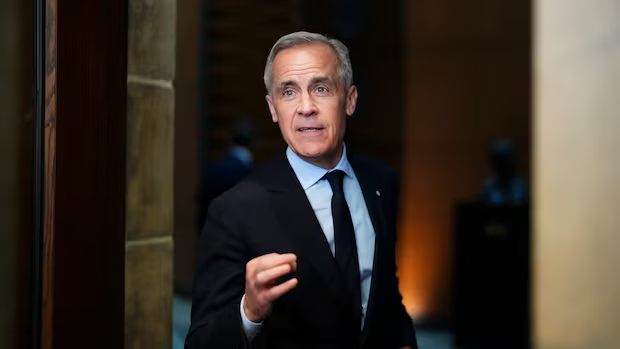
Headline: Calls for Apology After Indigenous Spying Program Exposed
In a recent statement, former Canadian Minister of Indigenous Services, Jane Carney, has called for a formal apology from the Canadian government regarding a controversial surveillance program that targeted Indigenous communities. This call to action follows revelations about a clandestine initiative aimed at monitoring Indigenous activism, disclosed in a report published on September 28, 2023. Carney emphasized the need for accountability in Ottawa as it seeks to reconcile with historically marginalized groups across Canada.
The issue of surveillance has deep roots in Canada’s tumultuous relationship with its Indigenous populations. For centuries, Indigenous communities have faced systemic discrimination and cultural erasure, and the uncovering of this spy program has reignited longstanding grievances. With increasing scrutiny on governmental practices, Carney’s statement reflects a broader demand for transparency and reparative measures within a system that has often placed Indigenous rights secondary to governmental interests.
Historical Context of Indigenous Surveillance

The history of surveillance against Indigenous peoples in Canada is rich with complexities, and understanding it requires delving into decades of colonial strategies aimed at controlling Indigenous populations. Historically, the Indian Act and other legislative measures were employed to impose restrictions on Indigenous rights and movements. The recent uncovering of a surveillance program echoes these past injustices, illustrating how the government continues to cast a shadow over Indigenous activism.
Indigenous communities have historically organized for self-determination, land rights, and cultural preservation. These movements often challenge governmental policies, particularly in areas such as land use and resource extraction. As a response, the Canadian government has, at times, resorted to surveillance tactics that undermine the fundamental rights of these communities.
Details of the Spying Program
The leaked report indicates that the spying program commenced in early 2020, utilizing various intelligence-gathering methods. Tools such as infiltration, data analysis, and monitoring of social media platforms were employed to track Indigenous leaders and activists. The initiative purportedly aimed to assess potential threats to national security, but many have questioned the legitimacy and ethical implications of such actions against a marginalized group seeking to amplify its voice.
This program’s emergence has drawn significant backlash from both Indigenous leaders and civil rights organizations. Many critics argue that these tactics exemplify a colonial mindset that fails to recognize Indigenous peoples’ rights to free expression and self-governance. Carney’s calls for an apology are positioned within a broader initiative for the government to acknowledge its past wrongs truly and to initiate meaningful reparations.
Reactions from Indigenous Leaders and Activists
Indigenous leaders have voiced their outrage over the program, labeling it a violation of fundamental rights. Chief Naomi Klein of the Raven’s Gathering Council expressed her deep concerns, stating, "Monitoring our communities is not just an invasion of privacy; it is an attack on our autonomy." Such sentiments resonate widely among Indigenous activism circles, where there is a collective push for broader societal recognition and cultural respect.
In tandem with Carney’s demands, numerous Indigenous rights organizations have called for immediate reviews of current government policies regarding surveillance and community interaction. They argue that an apology is insufficient without structural changes to ensure transparency, accountability, and respect for Indigenous rights. "We need to see policy changes that protect us, not more empty words," stated activist Amara Tsuji, echoing the sentiments of many in the community.
The Broader Implications of Reconciliation
Calls for an apology and accountability extend beyond mere words; they are crucial components of the reconciliation process that Canada must undertake with Indigenous communities. This incident highlights a growing awareness of the need for mutual respect between the government and Indigenous populations. Reconciliation entails more than recognition of past injustices; it necessitates tangible steps to create a more just society where Indigenous voices are prioritized, respected, and acknowledged.
Policymakers are at a critical juncture. The reconciliation framework remains in a state of evolution, and instances of governmental overreach, such as the spying program, threaten to erode public confidence in the government’s commitment to uphold Indigenous rights. The challenge lies in crafting policies that honor the unique relationship between Canada and its Indigenous peoples, emphasizing respect for sovereignty and cultural identity.
Moving Forward: Steps Towards Accountability
Looking ahead, several steps could be taken to address the fallout from the Indigenous spying program. First and foremost, a public inquiry into the program’s inception, implementation, and scope would provide the necessary transparency. Additionally, stakeholders must prioritize creating a formalized apology process, incorporating input from Indigenous leaders and communities to ensure a genuine reconciliation effort.
Furthermore, updated guidelines for government surveillance and intelligence-gathering need to be established to prevent similar future occurrences. Implementing training programs focused on Indigenous rights for public servants could help foster a deeper understanding of the issues at hand, ensuring that policies reflect respect rather than control.
Lastly, the creative integration of Indigenous voices in decision-making processes will be essential. Engaging Indigenous leaders in government consultations can pave the way for co-creating policies that truly reflect shared values and goals.
Conclusion
Jane Carney’s call for an apology serves as a vital catalyst for dialogue about the critical need for accountability in the wake of the Indigenous spying program. As Canada grapples with its history and the ongoing impacts of colonization, it must recognize that true reconciliation involves listening to and uplifting Indigenous voices. While addressing the past is no small task, it is an essential step toward a more equitable and just future for all Canadians.