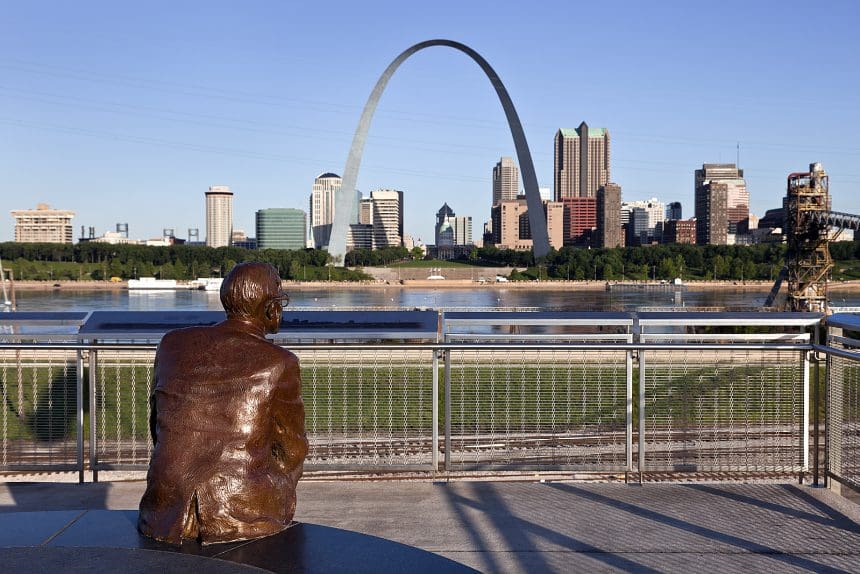
Boeing’s relocation of its defense headquarters to St. Louis is being viewed as a major economic win for the region.
The move also highlights renewed focus on public safety, infrastructure, and quality of life.
Local leaders face growing pressure to align crime reduction strategies with long-term economic development.
ST. LOUIS, MO (STL.News) Boeing – The decision by Boeing to designate St. Louis as the headquarters of its Defense, Space & Security division represents a powerful endorsement of the region’s aerospace capabilities. It reinforces Missouri’s status as a cornerstone of national defense manufacturing and places senior leadership at the center of critical military programs.
Yet alongside the economic optimism, the announcement has sparked a broader civic discussion: Is St. Louis positioned to meet the public safety expectations that accompany high-level corporate investment?
Major headquarters relocations do more than shift executive offices. They elevate a city’s national profile, increase workforce density in key corridors, and often intensify scrutiny of infrastructure, governance, and crime trends.

Boeing – Economic Momentum Meets Public Safety Reality
St. Louis has long been a defense manufacturing hub, but a headquarters designation raises visibility. Corporate leadership, visiting government officials, defense contractors, and international partners will increasingly engage with the region at executive levels.
In that context, public safety becomes not only a community issue but an economic variable.
Business recruitment experts frequently cite crime perception as a decisive factor in relocation and expansion decisions. While economic incentives and workforce quality matter, executive teams often evaluate broader quality-of-life indicators before committing to long-term growth.
For St. Louis, the Boeing defense headquarters move amplifies the urgency of aligning public safety strategy with economic development objectives.
Boeing – The Crime Conversation in Context
Crime in St. Louis has been a persistent topic in both local and national headlines. While trends fluctuate year to year, perceptions often shape investment decisions as much as statistical realities.
High-profile incidents, downtown safety concerns, and retail security challenges have contributed to ongoing debate about enforcement levels and governance structure.
At the same time, community leaders have emphasized recent progress in targeted enforcement efforts and coordination between city, county, and state agencies.
The headquarters move brings renewed attention to these discussions.
Boeing – Increasing Police Presence: One Piece of a Larger Strategy
Calls for increased police presence frequently follow major corporate announcements. The logic is straightforward: visible law enforcement can deter opportunistic crime and reassure businesses and residents.
However, public safety experts consistently note that long-term crime reduction depends on a multi-layered approach that extends beyond patrol volume.
Effective strategies often include:
- Data-driven deployment of officers in high-risk zones
- Collaboration between law enforcement and local businesses
- Environmental design improvements, such as lighting and surveillance
- Youth intervention and workforce development initiatives
- Mental health and social service coordination
- Rapid-response protocols for commercial districts
Simply adding officers without strategic targeting may have a limited impact. Sustainable reductions typically require both enforcement and prevention mechanisms working in tandem.
Boeing – Corporate Investment and Safety Expectations
Defense-related operations carry additional layers of security sensitivity. Facilities tied to national security programs require rigorous protocols, secure perimeters, and reliable emergency response capabilities.
Although Boeing’s primary defense production facilities in the St. Louis region already operate under strict security frameworks, broader community conditions still influence employee confidence and recruitment.
Executive relocations often bring senior staff and their families into the community. Housing decisions, school enrollment, and neighborhood selection all intersect with perceptions of safety.
For a region seeking to attract and retain high-level aerospace talent, maintaining visible progress on crime reduction can become a competitive advantage.
Boeing – Infrastructure and Urban Readiness
Public safety is closely linked to infrastructure. Well-lit commercial corridors, efficient transit systems, maintained roadways, and active business districts all contribute to safer environments.
The Boeing defense headquarters designation may accelerate conversations around:
- Downtown revitalization
- Business district security enhancements
- Improved emergency response times
- Coordinated regional policing efforts
- Public-private safety partnerships
Cities that successfully align corporate growth with infrastructure modernization often see compounding benefits in investment and population stability.
Boeing – Balancing Enforcement and Community Trust
Public safety policy is complex and politically sensitive. Increasing enforcement must be balanced with maintaining community trust and constitutional protections.
Effective crime-reduction strategies often combine visible policing with community engagement programs to address the root causes of criminal behavior.
Local leaders may now face pressure to articulate a clear safety roadmap that supports economic momentum while ensuring equitable and sustainable enforcement.
The Boeing defense headquarters move does not create crime challenges—but it heightens expectations that existing challenges be addressed decisively.
Boeing – A Strategic Opportunity
Rather than viewing the relocation as merely symbolic, civic leaders may see it as an inflection point.
Major corporate investments can serve as catalysts for broader reform. Increased attention from national media, federal partners, and defense stakeholders can amplify momentum for policy alignment.
If public safety improvements accompany economic expansion, St. Louis could position itself as both a manufacturing powerhouse and a model for urban stabilization.
Conversely, if safety concerns remain unaddressed, critics may argue that economic wins are undermined by governance gaps.
Looking Forward
The return of Boeing’s defense headquarters to St. Louis is unquestionably a positive development for the region’s aerospace industry and economic outlook. It reinforces decades of defense leadership and signals confidence in Missouri’s skilled workforce.
At the same time, the moment invites honest reflection about the relationship between economic growth and public safety.
Corporate investment thrives in environments characterized by stability, predictability, and effective governance. Crime reduction, infrastructure modernization, and coordinated regional leadership are not separate from economic strategy—they are central to it.
For St. Louis, this is more than a business story. It is an opportunity to align public safety policy with economic ambition.
As defense executives establish leadership operations in Missouri, the region has a chance to demonstrate that industrial strength and civic stability can move forward together.
If that alignment occurs, Boeing’s headquarters designation may be remembered not only as a defense milestone but as a turning point in strengthening both economic confidence and community security in St. Louis.
Other Business News published on STL.News:
- U.S. Dollar Index Slides as Global Markets Rebalance
- J. Russell McGranahan Named SEC General Counsel
- Supreme Court Tariff Ruling Sparks New Trade Showdown in Washington
- Initiative to Strengthen Cybersecurity – AI Risk Management
- US Court Orders DTE Energy to Pay 100 Million
© 2026 St. Louis Media, LLC d.b.a. STL.News. All rights reserved. No content may be copied, republished, distributed, or used in any form without prior written permission. Unauthorized use may result in legal action. Some content may be created with AI assistance and is reviewed by our editorial team. For official updates, visit STL.News.