



SANTA CLARA, CALIFORNIA — November 23, 2026 — STL.News — NVIDIA reinstates Jensen Huang as CEO following a unanimous board vote on Monday, ending a brief leadership transition at one of the world’s most influential semiconductor companies and triggering a dramatic recovery in technology stocks.
The decision comes amid continuing questions about corporate governance, American technology exports and the relationship between national security policy and the rapidly expanding artificial intelligence industry. Although investors welcomed the NVIDIA CEO’s return, the announcement does not bring the investigations surrounding the company to an end.
5 key facts about the NVIDIA CEO reinstatement
- The board unanimously approved Huang’s return.
- Colette Kress continues as chief financial officer.
- NVIDIA shares rallied following the announcement.
- National security and regulatory questions remain unresolved.
- AI infrastructure demand and corporate governance remain important to the company’s outlook.
NVIDIA reinstates Jensen Huang: the board decision
In its November 23 announcement, NVIDIA confirmed that Huang would resume his positions as president, CEO and director following a unanimous board vote. Chairman Harvey Jones will remain in his role, while interim chief executive Colette Kress will continue serving as chief financial officer.
The NVIDIA CEO had stepped down on November 12. His reinstatement just 11 days later represents an unusually rapid reversal for a corporation whose management decisions carry consequences far beyond its own shareholders.
The board cited its discussions with Huang and information received from senior American government officials in reaching its decision. Importantly, its stated confidence in the security implications of his return is a corporate assessment, not a final determination resolving every outstanding allegation or regulatory question.
President Trump’s involvement in Huang’s return
President Donald Trump supported bringing Huang back to the company. Reuters reported that Trump and Vice President JD Vance were involved in efforts to secure his return, with administration officials seeing Huang as an important advocate for American-developed open-weight AI models.
The decision to bring Huang back illustrates the increasingly close relationship between the technology industry and Washington. Advanced computing capacity has become relevant not only to commercial competition but also to defense, scientific research and economic policy.
Supporters of continuity at NVIDIA can argue that an experienced executive helps preserve America’s competitive position during an important technological transition. Critics, however, can reasonably ask whether political involvement makes it more difficult for directors to exercise independent judgment. Those competing considerations help explain why a decision welcomed by investors can simultaneously attract objections from lawmakers.
NVIDIA reinstates Jensen Huang as shares surge
According to Reuters’ closing market report, NVIDIA shares finished Monday up 31.5%. The Dow Jones Industrial Average advanced approximately 3%, the S&P 500 gained 4.7%, and the Nasdaq Composite climbed 6.5%.
These figures represent Monday’s trading session rather than an intraday estimate. The rally followed a difficult period for American equities and demonstrated the extent to which changes in confidence surrounding artificial intelligence can influence the broader stock market.
A stock price reflects expectations about future earnings, competitive advantages and risk. When investors perceive a reduction in uncertainty, they may be willing to pay more for those expected earnings even before a company reports any improvement in revenue. Conversely, unexpected leadership changes can sharply reduce the premium investors are prepared to pay.
Monday’s gains should therefore not be interpreted as evidence that every operational, regulatory or financial risk affecting NVIDIA has disappeared. A relief rally can coexist with considerable uncertainty over the longer-term outlook.
Why Jensen Huang matters to the AI industry
NVIDIA CEO Jensen Huang co-founded the company in 1993 and helped transform a business associated with computer graphics into a major supplier of accelerated computing infrastructure. The company’s evolution illustrates how a technology originally developed for one demanding workload can become useful in entirely different fields.
Graphics processors are particularly effective at performing many calculations in parallel. That characteristic makes them useful for tasks such as training neural networks, running AI applications and accelerating certain scientific simulations.
NVIDIA’s competitive position extends beyond individual processors. Software libraries, developer tools, networking products and integrated systems contribute to an ecosystem that helps customers deploy complex computing workloads. For customers, moving to another supplier may involve changes to software, engineering practices and infrastructure rather than simply replacing a component.
Leadership continuity matters in this environment because hardware roadmaps require long planning horizons. Customers commit significant resources to data centers, electricity supply and engineering teams before new computing systems are installed. Confidence in a supplier’s strategic direction can influence those commitments.
What the reinstatement means for data center investment
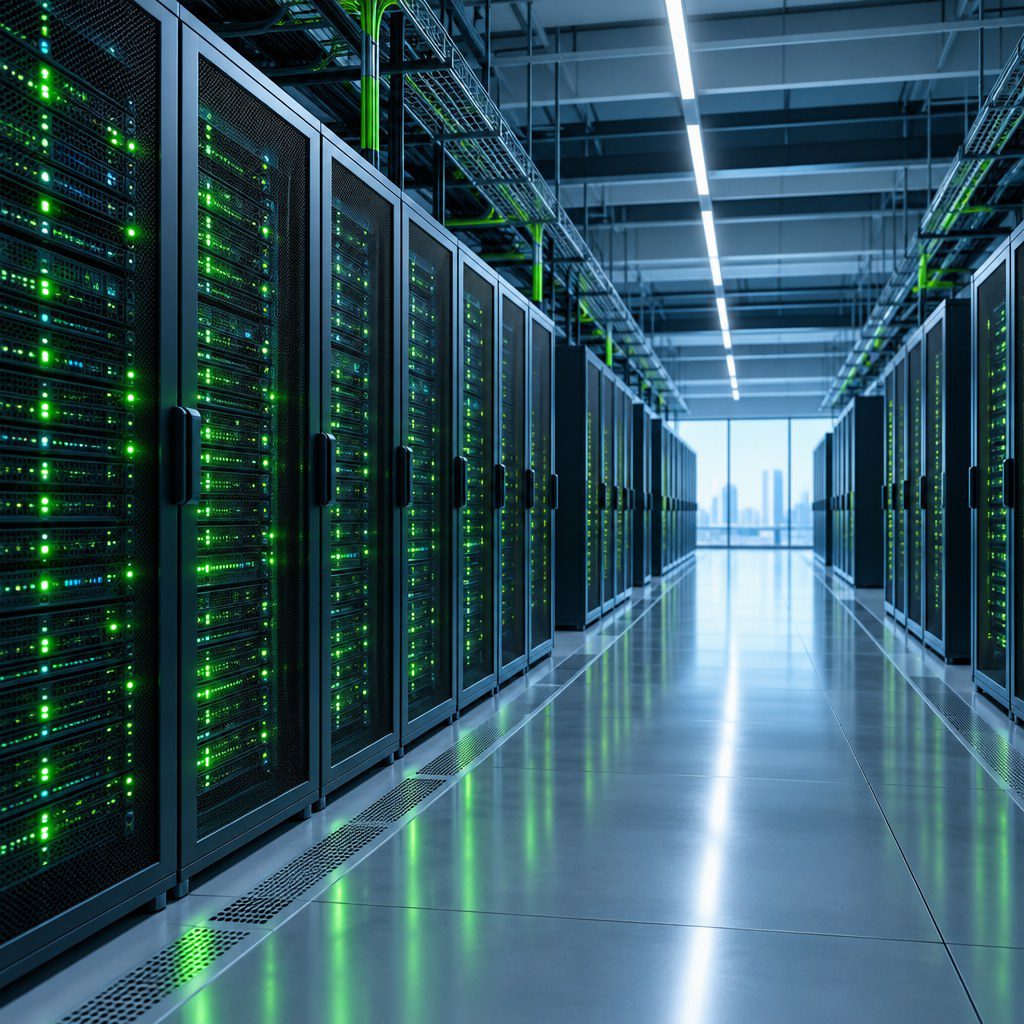
The artificial intelligence investment cycle involves numerous businesses beyond semiconductor designers. Cloud providers, equipment manufacturers, construction contractors, electrical utilities and cooling-system suppliers all participate in the development of computing infrastructure.
For these companies, demand depends on whether customers continue to fund new projects and whether those projects can produce commercially useful results. NVIDIA’s leadership announcement may influence sentiment about such spending, but it cannot independently guarantee that planned investments will generate sufficient returns.
Businesses purchasing AI infrastructure must evaluate operating expenses as well as acquisition costs. Electricity consumption, network capacity, maintenance and utilization rates can determine whether an expensive installation becomes a productive asset. A company’s ability to deliver new hardware is only one part of that calculation.
Consequently, a stronger semiconductor share price should not be confused with proof that every AI business model is profitable. The economic benefits of artificial intelligence will depend in part on how effectively organizations translate computing capacity into useful products and measurable productivity improvements.
National security and export controls remain important
Advanced semiconductors have become a subject of international policy because the same computing technology can support both civilian innovation and sensitive government applications. American export restrictions seek to manage access to strategically important technology while allowing domestic companies to participate in international markets.
That balance is difficult to achieve. Restrictive rules can reduce commercial opportunities for American suppliers and encourage foreign competitors to develop substitutes. Rules that are too permissive may undermine the security objectives they were designed to achieve.
For a multinational semiconductor business, compliance also requires attention to distribution partners, intended customers and applicable licensing conditions. The identity of an immediate buyer is not always sufficient to establish the eventual destination or use of a product. Effective oversight must extend beyond the initial sale.
NVIDIA’s return to familiar leadership does not remove these challenges. Investors should distinguish between the board’s decision about its CEO and the separate legal framework governing international trade.
Company investigations are not finished
NVIDIA said its independent directors would continue examining reports of possible foreign intelligence targeting of Huang, with assistance from outside counsel. The company also disclosed governance measures involving national security oversight and a search for a senior executive responsible for compliance.
Separately, Reuters reported that California Attorney General Rob Bonta’s office intends to continue its inquiry, including questions about disclosures to investors and potential transfers of technology or information.
An investigation is a process for establishing facts, not proof of misconduct. The existence of an inquiry does not establish that Huang or NVIDIA violated any law. Equally, a decision to reinstate the NVIDIA CEO does not resolve an independent regulator’s inquiry.
Congressional oversight and the next steps
The Associated Press reported that lawmakers from both major political parties objected to the board’s reversal and that a public Senate Banking Committee hearing involving Huang was scheduled for December 3.
Congressional oversight could clarify the government’s involvement, the information reviewed by decision-makers and the safeguards applicable to advanced semiconductor exports. Such proceedings may also identify areas where existing legislation or enforcement practices need reconsideration.
For shareholders, the most useful information will be specific findings and documented policy changes rather than political rhetoric alone. Public statements should be evaluated against official disclosures, regulatory decisions and the company’s subsequent financial reporting.
Corporate governance after a founder returns
Founder-led businesses can benefit from a long-term strategic vision and deep institutional knowledge. They can also develop significant dependence on a single individual. Both realities can exist at the same time.
A well-functioning board must establish credible succession plans and ensure that compliance standards apply consistently across management. It should also be able to challenge executive decisions when necessary, regardless of an individual’s commercial importance or popularity.
For NVIDIA, the coming months will provide an opportunity to demonstrate that leadership continuity and effective oversight are compatible. The independence of its investigative process, the authority of compliance personnel and the quality of shareholder disclosures will be relevant indicators.
What comes next for NVIDIA and Wall Street?
As NVIDIA reinstates Jensen Huang as CEO, immediate leadership uncertainty has diminished, but NVIDIA still faces competition, changing export rules, demanding product schedules and questions about the sustainability of AI infrastructure spending. These factors will influence its performance long after the initial market reaction has passed.
The NVIDIA CEO’s return is a significant development for American business because of the company’s role in global computing. The strongest test of the reinstatement will be whether NVIDIA maintains commercial execution while addressing outstanding governance and regulatory concerns transparently.
Monday’s market recovery represents a powerful expression of renewed confidence. It is not a substitute for the evidence that future financial reports and investigations may provide.
Sources: NVIDIA’s November 23 corporate announcement, Reuters market and regulatory reporting, and Associated Press congressional coverage. This article is for informational purposes and does not constitute investment advice. Allegations remain unproven unless established through appropriate legal proceedings. Any individual accused of a crime is presumed innocent unless proven guilty.