


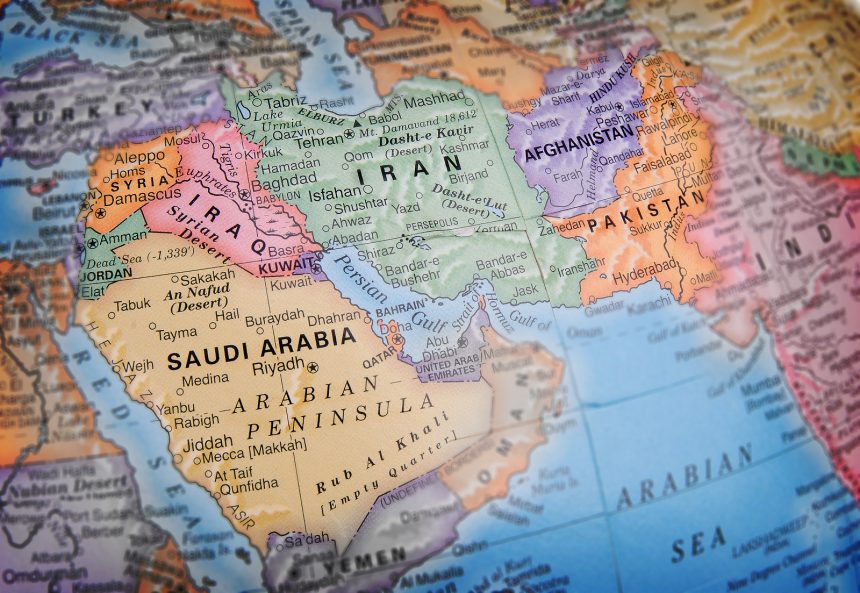
The conflict between the United States and Iran has intensified significantly after U.S. Central Command (CENTCOM) executed its ninth consecutive night of precision airstrikes inside Iran. Sparked by recent U.S. military fatalities from Iranian drone and ballistic missile fire in Jordan and Iraq, the widening warfare has shattered a brief June ceasefire. With the U.S. reimposing a strict naval blockade on Iranian ports, military operations are targeting defense networks, missile storage facilities, and transport infrastructure to break Tehran’s control over the critical Strait of Hormuz oil shipping lane.
MIDDLE EAST – July 19, 2026 (STL.News) The ongoing war between the United States and Iran entered an aggressive new phase as U.S. Central Command (CENTCOM) officially confirmed a ninth consecutive night of airstrikes targeting military assets across the Islamic Republic. The relentless air campaign, authorized at the direction of the Commander-in-Chief, marks a severe escalation in a conflict that began in late February and has increasingly threatened to engulf the broader Middle East in all-out war.
According to official Pentagon and CENTCOM statements, the primary objective of this coordinated offensive is to “swiftly punish” the Islamic Revolutionary Guard Corps (IRGC) and systematically degrade Iran’s ability to choke international commercial shipping lanes. The immediate focus remains heavily centered on the strategic Strait of Hormuz, a maritime chokepoint that accounted for roughly 20% of global oil supplies before hostilities disrupted international markets.
A Deadly Weekend Triggers Sweeping Retaliation
The latest expansion of the air campaign follows a highly volatile weekend that saw the first direct U.S. military troop fatalities from Iranian fire since the initial weeks of the war. On Friday, a sophisticated Iranian drone and ballistic missile attack struck a U.S. base in Jordan, killing two American service members, wounding four others, and initially leaving one missing. CENTCOM subsequently confirmed that military personnel recovered unidentified remains at the impact site in Jordan, which are being analyzed to confirm the identity of the missing personnel.
Adding to the heavy American toll, a separate U.S. service member was killed in action in northern Iraq during a controlled detonation intended to neutralize a downed Iranian drone. The recent deaths bring the total U.S. military fatalities to 17 service members, alongside more than 430 wounded, since the war officially commenced on February 28.
In response to the U.S. losses, President Donald Trump labeled the deaths “tragic” but affirmed that the military mission would continue aggressively. U.S. Energy Secretary Chris Wright echoed the sentiment, asserting that the administration would maintain current defensive and offensive operations “until the mission is done”—namely, ensuring the free transit of energy exports through the Gulf and permanently weakening Tehran’s localized military power projection.
Targets Shift to Infrastructure and Nuclear Sites
As the night-by-night bombing campaign moves forward, local reports inside Iran indicate that the geographical footprint of the strikes has expanded significantly. Explosions, active air defense sirens, and anti-aircraft artillery fires have been documented across numerous regions. Local Iranian media outlets reported U.S. strikes hitting northwestern Tabriz, southwestern port cities such as Bandar Mahshahr and Bandar Imam Khomeini, and southeastern coastal hubs like Konarak and Sirik.
CENTCOM officials stated that the waves of strike aircraft and Tomahawk cruise missiles successfully neutralized coastal surveillance platforms, early-warning air defense facilities, maritime attack assets, and hidden drone and missile storage bunkers.
However, the nature of the target list has shifted from purely tactical assets to dual-use infrastructure. Airstrikes over the past several days have damaged major civilian highway bridges, tunnels, and an electricity grid network, effectively severing primary land transportation arteries leading into Iran’s primary shipping hub at Bandar Abbas.
More provocatively, Iran’s atomic energy agency announced on state television that U.S. missiles had struck the construction site of the planned Darkhovin nuclear power plant located in southwestern Iran. The International Atomic Energy Agency (IAEA) quickly opened an investigation into the incident, noting that while the facility is in its earliest phase of earth clearing, it currently contains no active nuclear material.
The humanitarian toll within Iran continues to mount. Iranian health officials and the state-run Tasnim news agency indicated that at least 50 people have been killed and over 517 wounded over the past three weeks of intensified bombardment.
Regional Spillover and Diplomatic Collapse
The accelerating violence has completely shattered the fragile, temporary diplomatic ceasefire signed between the two nations in June. Iran’s Deputy Foreign Minister, Kazem Gharibabadi, publicly declared that Tehran has officially suspended all structural commitments to the interim agreement, accusing the United States of violating the terms via the reimposition of a total naval blockade on Iranian crude oil ports. Under the newly enforced naval blockade, U.S. Navy warships operating in the Persian Gulf have reportedly intercepted or redirected six commercial tankers and turned off an additional vessel suspected of attempting to transport illicit crude exports.
From a regional perspective, neighboring countries are rapidly becoming active theaters of conflict. In a direct retaliatory bid against Gulf allies hosting American personnel, the Iranian military launched a volley of counter-strikes targeting a U.S. military ammunition depot at the Al-Adiri camp and a Patriot missile defense radar array stationed at the Ali Al Salem airbase in Kuwait. The Kuwaiti Foreign Ministry vehemently condemned the attacks, labeling the bombardment of vital water desalination and civil utility facilities a “dangerous escalation” and a profound violation of international law.
Concurrently, Jordan’s air defense forces successfully intercepted three separate Iranian ballistic missiles transiting its sovereign airspace, prompting Amman to summon Iran’s charge d’affaires to protest the aggression formally. The missile activity near the Jordanian border also triggered widespread air raid warnings near Aqaba, causing neighboring Israeli officials to warn that the theater of war is drawing dangerously close to its borders.
With Iran’s Supreme Leader warning of “unforgettable lessons” if Western forces continue their aggressive postures, and U.S. lawmakers advocating for the destruction of IRGC launch assets, the prospects for a diplomatic exit ramp appear increasingly remote.



