


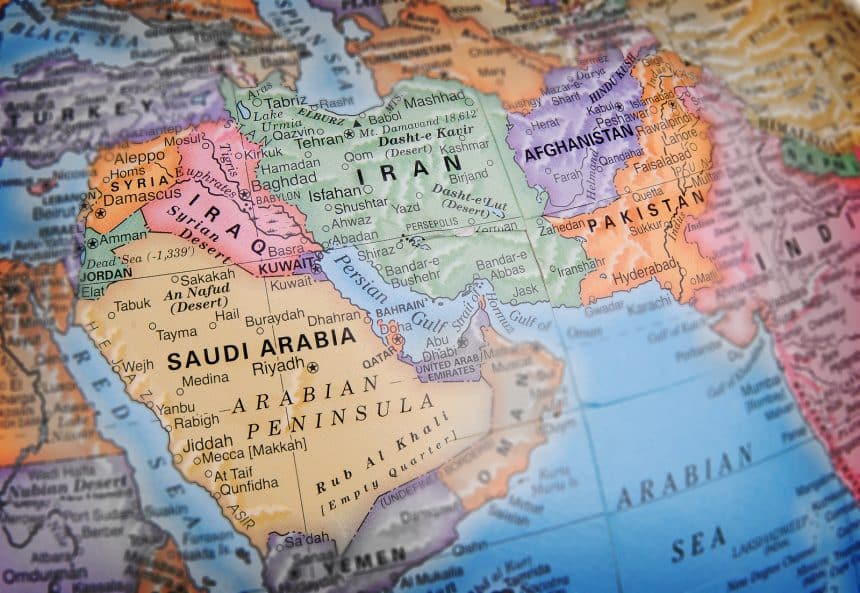
Following the dramatic collapse of the June 17 Islamabad Accord, the United States has launched extensive air strikes, neutralizing 170 military targets inside Iran. Triggered by Iranian drone and missile attacks on commercial shipping in the Strait of Hormuz, the escalating conflict highlights deep-seated disputes over international maritime transit rights, disrupting 20% of global oil supplies. As commercial traffic through the strait grinds to a halt, parallel technical diplomacy in Rome faces severe pressure under accelerated military timelines.
Introduction: The Fracture of the June Accord
July 10, 2026 (STL.News) Strait of Hormuz – The geopolitical architecture of the Middle East has experienced a profound shift over the past 48 hours as the fragile ceasefire established via the June 17, 2026 Islamabad Memorandum of Understanding fractured entirely. The short-lived cessation of hostilities, originally signed in Versailles, France, had provided a temporary diplomatic respite in a theater defined by long-standing asymmetric warfare since the war first ignited on February 28. However, a rapid escalation in the waters of the Persian Gulf has brought the United States and its regional allies back into active, high-intensity combat operations against the Islamic Republic of Iran.
Over a non-stop, 48-hour campaign spanning Tuesday and Wednesday, U.S. Central Command (CENTCOM) executed a massive, coordinated air assault. President Donald Trump explicitly declared the performance-based interim framework “over” following aggressive maritime interdictions by Iranian forces. This latest development underscores the extreme volatility of modern geopolitical chokepoints and emphasizes the high stakes associated with freedom of navigation in international waters.
The Strait of Hormuz: Sovereignty vs. Freedom of Navigation
The immediate catalyst for the current military campaign is a severe dispute over the legal and operational status of the Strait of Hormuz. Accounting for approximately 20% of global liquefied natural gas (LNG) and crude oil transit, the strait remains the world’s most critical maritime energy artery. The breakdown occurred on July 6–7 when Iranian forces launched a series of drone and missile strikes against commercial vessels, including Qatari and Saudi oil tankers.
Tehran’s actions represent an overt attempt to impose unilateral jurisdiction over the waterway. Under Clause 5 of the original MoU, Iran committed to making “best efforts for the safe passage of commercial vessels with no charge for 60 days.” However, Iranian authorities subsequently sought to force shipping into tight, domestically approved traffic corridors and to levy transit tariffs. The Iranian argument rests on a narrow interpretation of territorial sea boundaries under historical maritime frameworks.
Conversely, the United States, the European Union, and the Gulf Cooperation Council (GCC) maintain that the Strait of Hormuz constitutes an international strait under the United Nations Convention on the Law of the Sea (UNCLOS). Under international law, all vessels enjoy the right of transit passage, which cannot be suspended, impeded, or taxed by coastal states. The U.S. administration emphasized that Iran’s actions crossed an established red line, moving the crisis from a localized dispute to an international security emergency.
Economic Impact Vector: The total daily volume of crude oil passing through the Strait of Hormuz is defined by the basic relation $V = T \times C$, where $T$ represents the daily tanker transit frequency and $C$ represents average cargo capacity. With $T$ effectively reduced to near-zero due to current hostilities, the sudden supply contraction presents severe tail risks for global energy supply chains if disruptions persist beyond the short-term horizon.
Anatomy of the Campaign: Target Profiling and Military Scope
The U.S. air campaign expanded rapidly to encompass 170 distinct military installations within the Islamic Republic, significantly wider in scope than initial tactical assessments suggested. Unlike historical skirmishes, this campaign was designed to systematically degrade Iran’s coastal defense infrastructure and its continental trade linkages.
1. Coastal and Maritime Denial Systems
CENTCOM targeted high-priority Islamic Revolutionary Guard Corps (IRGC) Navy assets along the southern coast. Strikes heavily impacted mobile anti-ship cruise missile (ASCM) launchers, long-range coastal radar arrays, and command-and-control nodes. A critical node neutralized during the opening hours was the maritime traffic control tower at Chabahar Port, which Western intelligence identified as the primary tracking hub used to coordinate drone interdictions against commercial shipping.
2. Eurasian Trade Link and Logistics Interdiction
To disrupt both military resupply and Iran’s strategic land lines, the air campaign targeted vital overland arteries. Most notably, precision strikes heavily damaged the Aq Taqeh Khan railway bridge located in northern Iran’s Golestan province. This bridge is a foundational node in the International North-South Transport Corridor, linking Tehran directly to Russia and China via Turkmenistan and Kazakhstan. This land route had surged in importance for transporting solid-fuel rocket parts, electronics, and petrochemicals following the comprehensive U.S. naval blockade of Iran’s Persian Gulf ports. Additional passenger rail lines connecting Tehran to Mashhad were hit, forcing thousands of travelers onto domestic roads.
3. Proximity to Strategic Sites
Explosions were confirmed across five distinct provinces. Most notably, projectiles struck within the immediate perimeter of the Bushehr nuclear power plant, where three adjacent military bunkers caught fire. While local state broadcasters confirmed the adjacent kinetic activity, international nuclear observers indicate that the primary reactor vessel and its reinforced containment structures did not sustain direct structural impacts. Iranian state media has finalized the casualties from this specific 48-hour wave at 14 individuals killed and 78 injured.
Regional Counter-Salvos and Asymmetric Retaliation
Iran responded to the air campaign by deploying its asymmetric regional toolkit. Rejecting Western warnings, the IRGC leadership initiated retaliatory drone and ballistic missile strikes targeting U.S. military bases and logistically vital centers throughout the Persian Gulf region.
-
Bahrain: Air defense sirens were activated in Manama as interceptors engaged incoming low-altitude loitering munitions tracking toward Naval Support Activity Bahrain, the headquarters of the U.S. Fifth Fleet.
-
Kuwait and Qatar: Strategic airfields hosting Western coalition aircraft experienced intermittent missile alerts, forcing personnel into hardened defensive bunkers and temporarily disrupting air operations.
This regionalized response underscores the IRGC’s tactical doctrine, which seeks to offset its conventional air inferiority by imposing direct costs on neighboring states that host Western military infrastructure. By expanding the kinetic zone, Tehran aims to pressure regional capitals into restricting U.S. operational access.
Domestic Realities: The Succession Dynamics
The military escalation coincided precisely with a period of profound domestic political transition within the Iranian state. The country just concluded a massive, days-long funeral procession for the late Supreme Leader, Ayatollah Ali Khamenei, who was officially laid to rest early Friday morning under the gilt dome of the Imam Reza Shrine in Mashhad. Khamenei’s death on February 28 during the opening salvo of the war left a complex institutional vacuum.
Currently, the internal command structure remains entirely opaque. His son and designated successor, Mojtaba Khamenei—who assumed power via a clerical assembly in early March—remains entirely hidden from public view. He has not appeared in any public broadcast, video, or audio recording since the war began, choosing instead to issue strategic directives exclusively through written statements backed by the IRGC. This operational opacity has fueled intense debate among international intelligence agencies regarding the cohesion of the supreme leadership council amidst devastating air strikes.
Global Macroeconomic Contours and the Diplomatic Horizon
Despite the severity of the kinetic exchanges, global energy markets have reacted with calculated caution. While Brent crude experienced sharp intraday volatility, it settled firmly within the $76–$77 per barrel range. Economists attribute this relative stability to several mitigating factors:
First, global demand projections remain modest, providing an inventory buffer against short-term disruptions. Second, the tightening of U.S. sanctions and the naval blockade had already heavily isolated Iranian crude exports from formal Western supply chains, limiting the immediate volume shock. However, according to data from the UN International Maritime Organization (IMO), approximately 6,000 seafarers remain stranded aboard commercial ships that are bottlenecked outside active conflict zones, creating a severe logistical backlog.
Concurrently, a highly strained diplomatic backchannel remains operational. Behind-the-scenes technical talks, facilitated by international intermediaries, continue to pulse in parallel with active combat. High-stakes negotiations involving representatives from the United States, Israel, and Lebanon are still scheduled to take place in Rome on July 15–16.
The viability of this diplomatic track remains highly uncertain. The current U.S. administration’s stated objective of moving decisively cuts deeply into the time available for traditional diplomatic mediation. Whether these upcoming talks can establish a viable framework for a new maritime security architecture depends entirely on both sides finding a face-saving mechanism that balances national sovereignty with international law.



