


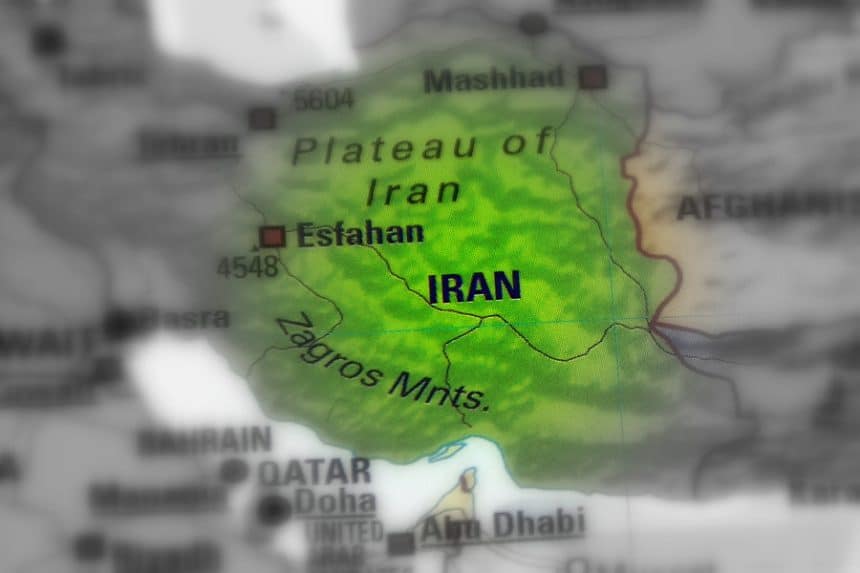
ST. LOUIS, MO – July 9, 2026 (STL.News) When assessing the volatile military friction between the United States and the Islamic Republic of Iran, standard analysis usually begins and ends with a spreadsheet. On paper, the matchup is entirely one-sided. The United States possesses unmatched technological superiority, a defense budget nearing a trillion dollars, overwhelming fifth-generation air power, and the world’s most formidable blue-water navy. By conventional metrics, any attempt by Tehran to stand toe-to-toe with Washington appears entirely irrational, even self-destructive. However, viewing the ongoing conflict through a conventional lens misses the entire architecture of Iranian military doctrine.
Iran is not planning to win a conventional war against the United States, nor do its commanders believe they can destroy the U.S. military in a head-on engagement. Instead, Tehran’s entire defense framework is built on a completely different premise: mosaic deterrence and asymmetric attrition. The core goal is not to defeat a superpower in battle, but to make the economic, political, and logistical costs of confrontation too high for Western political will to sustain over a prolonged period.
The Geography of Leverage: The Strait of Hormuz Chokepoint
Iran’s greatest strategic asset is not its hardware, but its geography. The nation sits directly along the Strait of Hormuz, a narrow, highly critical maritime chokepoint through which roughly 20% of the world’s petroleum and liquefied natural gas pass daily.
[Persian Gulf] ---> [Strait of Hormuz (Chokepoint)] ---> [Gulf of Oman / Indian Ocean]
                          ^
              [Iranian Coastal Cruise Missiles & Fast Attack Craft]
In any escalating conflict, Iran’s strategy relies heavily on its ability to choke this global artery. Rather than deploying large, vulnerable surface warships that U.S. carrier strike groups could easily destroy within hours, the Islamic Revolutionary Guard Corps Navy (IRGCN) utilizes a highly organized “swarming” doctrine. This involves three distinct layers of operational capabilities:
Fast-Attack Craft (FAC) and Ultra-Fast Boats
The IRGCN operates hundreds of small, heavily armed speedboats, often fitted with multi-barrel rocket launchers, short-range anti-ship missiles, or packed with explosives for remote detonation. These vessels are designed to overwhelm naval radar systems through sheer numbers, crowding commercial shipping lanes and creating a chaotic environment in which distinguishing civilian vessels from military threats becomes nearly impossible.
Smart Sea Mines
Civilian dhows and small vessels can rapidly deploy low-cost, bottom-dwelling, acoustic, and moored mines under the cover of darkness. The mere suspicion of a fresh minefield in the Strait of Hormuz is enough to instantly halt international commercial shipping insurance, effectively closing the strait without Iran having to fire a single shot.
Mobile Coastal Anti-Ship Cruise Missiles (ASCMs)
Utilizing truck-mounted missile launchers hidden along Iran’s rugged, mountainous coastline, units can fire sophisticated anti-ship weapons and immediately reposition into underground bunkers before U.S. reconnaissance drones can log their coordinates. These systems, such as the Ghadir and Abu Mahdi missiles, boast ranges that can cover the entire width of the Gulf of Oman.
By targeting commercial tankers or forcefully imposing Iranian-dictated traffic lanes, Tehran can instantly trigger global energy alerts, spike Brent crude futures, and destabilize international financial markets. The underlying logic is clear: use the stability of the global economy as a human shield against total conventional destruction.
The Math of Asymmetric Attrition: Weaponizing the Cost-Exchange Ratio
A core tenet of modern Iranian warfare is forcing a highly unfavorable cost-exchange ratio on the United States and its Western allies. Over the last two decades, facing crippling economic sanctions and an inability to procure modern Western parts, Iran chose not to waste capital trying to build advanced fifth-generation fighter jets or massive destroyers. Instead, it heavily invested in mass-producing low-cost loitering munitions (kamikaze drones) and short- to medium-range ballistic missiles.
This creates a severe mathematical imbalance for Western air defense networks, which are built around high-tier, expensive technology designed to counter peer threats such as Russia or China.
- The Drone Production Economics: A single Shahed-136 long-range attack drone costs between $20,000 and $35,000 to manufacture. They are built using commercial, off-the-shelf electronics, fiberglass bodies, and simple, noisy lawnmower-style MD-550 piston engines. They are slow and not stealthy, but they are cheap enough to deploy in the hundreds.
- The Interceptor Economics: To safely intercept that low-tech drone before it hits a high-value asset, such as an American Aegis destroyer, a commercial port, or an energy facility, Western forces must use advanced air-defense missiles. A single Patriot PAC-3 interceptor costs roughly $4 million. A Navy Standard Missile 6 (SM-6) costs over $4.3 million. Even smaller Rolling Airframe Missiles (RAM) cost hundreds of thousands of dollars per firing.
+------------------------------------------------------------+
|                COST-EXCHANGE RATIO IMBALANCE               |
+------------------------------------------------------------+
| Iran: Shahed-136 Drone        |  $25,000                   |
+-------------------------------+----------------------------+
| US: Patriot/SM-6 Interceptor  |  $4,000,000                |
+------------------------------------------------------------+
| Cost Multiplier Ratio         |  160x Advantage to Iran    |
+------------------------------------------------------------+
In a high-intensity, prolonged exchange featuring hundreds of incoming targets launched simultaneously, this dynamic creates a severe supply-chain bottleneck. Iran can manufacture and deploy thousands of cheap drones far faster than Western defense contractors can replenish highly complex, precision-guided missile stockpiles. For Iran, an offensive economic loss is actually a strategic victory if it depletes the superpower’s premium ammunition reserves, leaving forward naval groups vulnerable to secondary waves of heavier ballistic and cruise missiles.
Strategic Comparison: Conventional vs. Asymmetric Vectors
To understand how these two military machines interact, it is necessary to compare their operational frameworks across key strategic vectors rather than focusing solely on raw firepower. The conflict cannot be properly analyzed using traditional military balance-of-power metrics.
| Strategic Vector | United States Military Framework | Iranian Revolutionary Guard Corps (IRGC) |
| Primary Doctrine | Overwhelming conventional dominance, precision strikes, rapid global power projection, and air superiority. | Asymmetric attrition, mosaic defense, grey-zone escalation, and deniable proxy operations. |
| Core Operational Assets | Carrier Strike Groups, 5th-generation stealth aircraft (F-35), precision-guided munitions, and satellite surveillance. | Anti-ship cruise missiles, mass-produced loitering munitions, smart sea mines, and fast-attack craft. |
| Command Structure | Centralized, highly structured, tech-dependent network-centric warfare requiring high bandwidth. | Deeply decentralized, autonomous regional units and local commanders capable of operating independently. |
| Cost-Exchange Ratio | Highly unfavorable; forced to use multi-million dollar interceptors against low-cost, mass-produced threats. | Highly favorable; floods the theater with mass-produced, expendable technology to drain enemy reserves. |
| Primary Vulnerability | Long, complex supply lines; finite premium munitions; heavy sensitivity to domestic political shifts and casualties. | Lack of high-altitude air defense; vulnerable fixed infrastructure; severe economic isolation under sanctions. |
The Forward Defense Architecture: The Proxy Network
Iran’s military footprint extends far beyond its physical borders through an externalized strategy known as the “Axis of Resistance.” This decentralized network of regional state-aligned partners and non-state actors allows Tehran to project power across multiple fronts simultaneously without ever firing a missile from its own soil, providing diplomatic plausible deniability while maximizing operational reach.
                  ???? Hezbollah (Lebanon) ???> Israel/Levant Front
                  ?
[Tehran Command] ????? Iraqi & Syrian Paramilitaries ???> U.S. Forward Bases
                  ?
                  ???? Houthi Movement (Yemen) ???> Bab al-Mandeb / Red Sea
If a localized conflict escalates, the Iranian command structure ensures that the battlefield immediately expands into a multi-dimensional, regional war of attrition across three primary operational fronts:
1. The Levant Front via Hezbollah
Hezbollah in Lebanon acts as Iran’s primary conventional deterrent. The group possesses an estimated arsenal of over 150,000 rockets, heavy artillery shells, precision-guided ballistic missiles, and drones. In the event of a total war, this network is capable of overwhelming regional air defense shields, threatening major population centers and industrial hubs throughout the Levant, and locking down Western-aligned states in the area.
2. The Red Sea Interdiction via the Houthis
Operating out of Yemen, the Ansar Allah (Houthi) movement has demonstrated the ability to disrupt international trade through the Bab al-Mandeb Strait completely. By utilizing Iranian-supplied anti-ship ballistic missiles and sea-skimming drones, the Houthis have proven they can force global maritime shipping firms to bypass the Suez Canal entirely. This effectively allows Iran to threaten a second global maritime chokepoint thousands of miles away from its own borders, doubling the economic pressure on Western trade routes.
3. Iraqi and Syrian Paramilitary Groups
Dozens of highly trained, mobile rocket and drone units operate throughout Iraq and Syria under the umbrella of the Popular Mobilization Forces (PMF) and related factions. These groups are positioned within striking distance of U.S. forward operating bases and logistical staging hubs. They operate out of deeply embedded civilian infrastructure, turning localized American garrisons into immediate targets for low-cost harassing fire that drains local air defense interceptors.
Because these proxy forces operate under a highly decentralized command structure, degrading Iran’s central infrastructure in Tehran does not automatically stop the strikes across the region. Each node is engineered to keep fighting, select its own targets, and manage its own logistics even if the central hub in Iran is completely knocked offline by conventional airstrikes.
Macroeconomic Fallout: The Real Battlefield
For Iran, the ultimate target in a confrontation with the United States is not the American military, but global market stability. A full-scale kinetic conflict in the Persian Gulf would instantly ripple through international financial networks, triggering macroeconomic disruptions that directly affect Western domestic stability.
The Energy Price Shock
If the Strait of Hormuz is disrupted, energy analysts estimate that oil prices could instantly surge past $120 to $150 per barrel. This spike would immediately translate into higher global consumer fuel prices, driving up transportation costs for goods, worsening inflationary pressures, and complicating central bank policies worldwide.
Maritime Insurance and Supply Chain Contraction
As soon as kinetic actions begin in the Gulf, commercial maritime insurance syndicates (such as Lloyd’s of London) would dramatically raise war-risk premiums or revoke coverage entirely for vessels entering the region. Shipping companies would be forced to reroute vessels around the Cape of Good Hope in South Africa, adding weeks to transit times, tying up global shipping capacity, and creating widespread inventory shortages across retail and manufacturing sectors.
Capital Flight and Market Volatility
The uncertainty of a multi-front war involving key energy producers typically triggers immediate risk-off sentiment across global capital markets. Investors pull funds out of equities and emerging markets, seeking refuge in safe-haven assets like gold and U.S. Treasuries. The resulting volatility can stall economic growth, hit retirement portfolios, and dampen corporate capital expenditure plans far beyond the Middle East.
The Long Game: Outlasting the Political Clock
Ultimately, the Iranian regime operates on a fundamentally different timeline and risk threshold than Western democratic leadership. Iranian defense planners operate on the strategic assumption that American political appetite for a trillion-dollar, multi-front conflict in the Middle East is fundamentally finite, constrained by upcoming election cycles, domestic economic concerns, fiscal deficits, and public war fatigue.
Tehran’s leadership does not look at success through the lens of destroying enemy units or capturing territory. They measure success by their ability to survive the storm. By designing a military apparatus explicitly engineered to absorb heavy conventional punishment while continually disrupting global shipping, global supply chains, and international capital flows, Iran’s objective is to outlast the initial shock of Western intervention.
They do not expect to force a U.S. surrender. They expect to drag out the conflict until the compounding macroeconomic fallout forces Washington to conclude that a total war is not worth the systemic economic price, ultimately driving the superpower back to the negotiating table on terms Tehran can leverage for long-term regional recognition.



