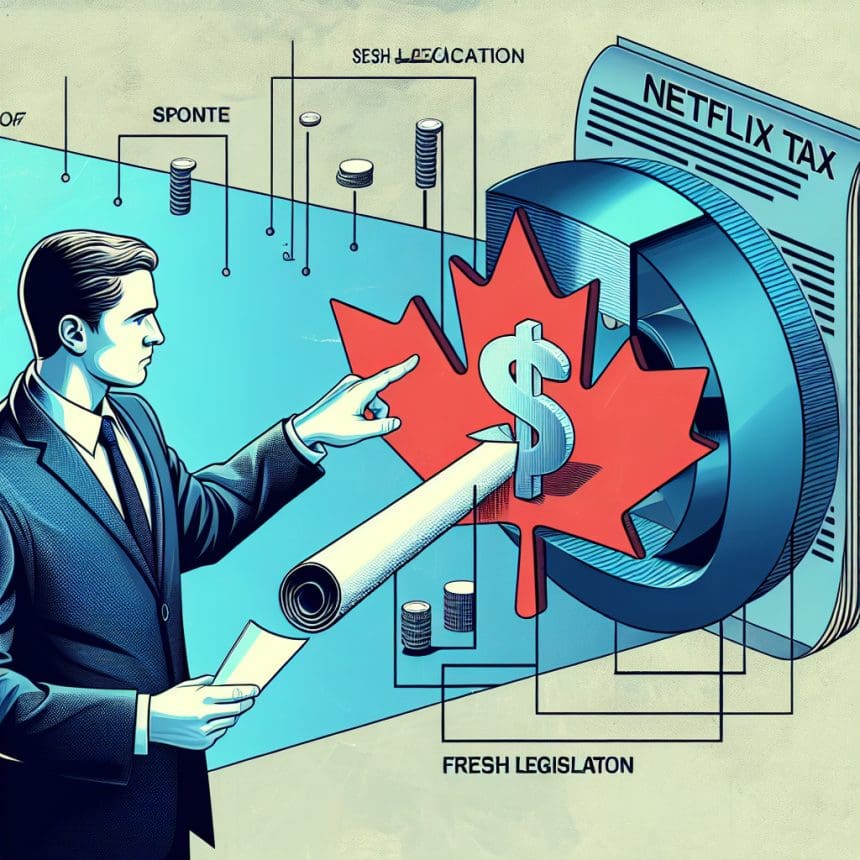
Headline: U.S. Congressman Challenges Canada’s ‘Netflix Tax’ with New Bill
In a bold move that could reshape digital media trading, U.S. Congressman Mike Rogers announced on Tuesday, October 3, 2023, plans to introduce legislation targeting Canada’s controversial ‘Netflix tax.’ This proposed bill, set to be debated in the House of Representatives next month, aims to address concerns over fairness in international trade and the potential implications of Canada’s taxation on American streaming services. The move comes amidst escalating tensions between the two neighboring countries regarding digital economy taxes and their impact on consumers and companies alike.
The Context Behind the ‘Netflix Tax’
Canada’s ‘Netflix tax’ was introduced in 2021 as a means of generating revenue from large multinational streaming companies. The tax requires these companies to pay a percentage of their revenues to fund Canadian content production, ostensibly to support local filmmakers and promote indigenous storytelling. However, critics argue that this tax creates an uneven playing field that disproportionately affects American companies like Netflix, Disney+, and Amazon Prime Video.
The Canadian Radio-television and Telecommunications Commission (CRTC) oversees the implementation of this tax, which has raised concerns in the U.S. about international trade fairness. Congressman Rogers believes that the tax could lead to retaliatory measures and complicate trade relations between the U.S. and Canada.

Key Provisions of the Proposed Bill
Rogers’s bill aims to prohibit U.S. trade agreements with nations that impose taxes on American digital services, thereby pushing back against what he describes as "discriminatory practices." The legislation is part of a broader initiative to safeguard American businesses in an increasingly global digital marketplace.
Key features of the bill include:
-
Ban on Trade Agreements: The bill will make it illegal for the U.S. to enter into trade agreements with countries that require taxes on digital services provided by American companies.
-
Multinational Cooperation: It encourages increased cooperation among U.S. and Canadian lawmakers to ensure a level playing field for all digital service providers.
-
Consumer Protection: Rogers argues that such taxes ultimately harm consumers, leading to higher subscription costs for streaming services.
- Impact Assessment: The bill mandates the Treasury Department to assess the impacts of international taxes on American businesses regularly, ensuring that U.S. companies do not bear the burden of discriminatory practices.
Reactions from Stakeholders
The announcement has ignited mixed reactions among stakeholders in both the U.S. and Canada. Proponents of the bill argue that it is a necessary step to protect American jobs and maintain competitive pricing in the streaming market. They express concern about the long-term implications of Canada’s tax on U.S. companies and the potential for similar measures being introduced in other nations.
“Taxing companies that are already struggling under the weight of the global pandemic is not the answer,” said Sarah Johnson, a member of the American Streaming Alliance. “We need to foster an environment of collaboration, not conflict.”
On the other hand, Canadian officials have defended the ‘Netflix tax,’ asserting that it is essential for the promotion and preservation of local content. They argue that the tax levels the playing field and supports national interests in a market dominated by foreign companies.
“We believe that supporting Canadian creators is vital to our identity and culture,” remarked Amy Zhang, a spokesperson for the Canadian Media Producers Association. “This tax enables us to ensure that Canadian stories continue to resonate both domestically and internationally.”
Broader Implications of Digital Taxation
Rogers’s bill is not an isolated effort. It ties into a larger global conversation about digital taxation and the role governments play in regulating multinational corporations. Countries like France, Spain, and the United Kingdom have introduced similar taxes, targeting tech giants to ensure that they contribute to the economies they profit from.
This issue is particularly relevant as the digital economy continues to expand rapidly. With more people relying on online streaming, governments face increasing pressure to impose regulations and taxes on foreign companies.
Experts suggest that the outcome of Rogers’s bill could set a precedent for how bilateral digital trade agreements are structured in the future. If successful, it could create a ripple effect, prompting other nations to reconsider their digital tax policies.
Moving Forward: What Comes Next?
As the bill heads to Congress, Rogers is expected to rally support from both sides of the aisle. The debate will likely raise broader questions about globalization, market fairness, and the responsibilities of multinational companies.
The potential for retaliation from Canada could also loom large as discussions progress. If Canada views the bill as a direct threat, it may lead to increased tensions, complicating an already nuanced relationship.
In the coming weeks, Rogers plans to hold hearings to gather input from various stakeholders, including tech companies, consumer advocates, and cultural organizations. This dialogue will be essential to address the complexities of digital taxation in a way that respects both national interests and international trade agreements.
Conclusion
Congressman Mike Rogers’s challenge to Canada’s ‘Netflix tax’ highlights a critical juncture in international trade policy concerning the digital economy. As negotiations unfold, the outcome will likely shape the relationship between the two countries, update existing trade policies, and influence how digital services are taxed globally. Stakeholders await the upcoming discussions with keen interest, mindful of the significant repercussions for consumers and businesses alike.
With the digital era still in its infancy, establishing equitable tax frameworks that balance local interests with international trade principles will remain a focal point of legislative efforts for years to come.