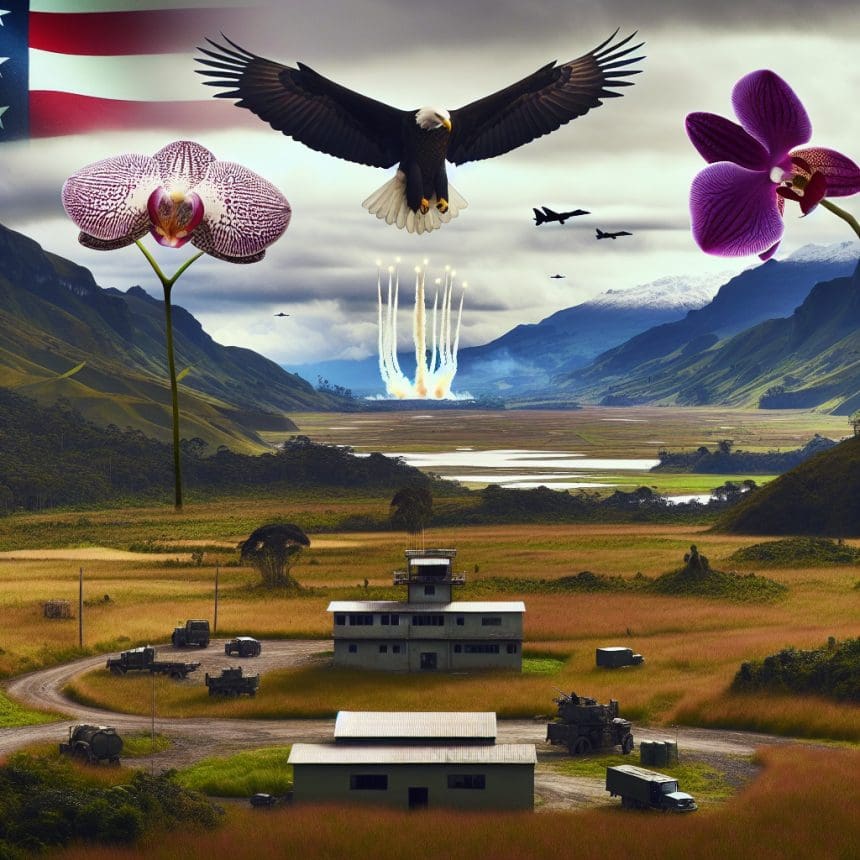
U.S. Partners with Ecuador on Targeted Drug Trafficking Strike
In a significant collaborative effort, the United States and Ecuador launched a targeted airstrike against a site believed to be linked to drug-trafficking operations in the coastal province of Esmeraldas. This strategic operation, conducted on Tuesday, marks a notable escalation in counter-narcotics efforts amid growing concerns over the influence of organized crime in the region. The operation aims to dismantle trafficking networks that have increasingly impacted both nations, highlighting the urgency of international cooperation in combating the drug trade.
The coordinated attack, which involved U.S. military resources and intelligence, comes in response to intensifying reports of drug-related violence and corruption in Ecuador. The country has witnessed a sharp rise in drug trafficking, as powerful cartels exploit its geographical position, serving as a major transit route for cocaine destined for North America and Europe. Authorities assert that dismantling these operations is vital for restoring security and stability in Ecuador and reducing drug-related crimes affecting communities on both sides.
Ecuador has become a key battleground in the fight against narcotics, and the U.S. has sought to assist its Latin American allies in developing more robust counter-drug strategies. U.S. officials have emphasized that supporting partner nations in targeting drug-trafficking operations is essential in curbing the transnational drug trade that poses a threat to U.S. interests and the safety of citizens.

The operation was characterized not only by its tactical precision but also by friendly relations between the two governments. Ecuador’s heightened willingness to work alongside the U.S. military reflects a broader acknowledgment of the challenges that drug trafficking presents. In a statement, Ecuador’s Ministry of Defense lauded the partnership, asserting that combating drug trafficking is a shared responsibility that requires collaborative approaches.
Analysts underscore the importance of this military cooperation, noting that improved intelligence and resource sharing can significantly enhance the effectiveness of operations against sophisticated criminal networks. This specific strike is part of a wider strategy aimed at weakening powerful drug cartels and their ability to operate freely throughout the region. Observers highlight that direct engagement by the U.S. military, while rare, is sometimes necessary to achieve decisive results against such entrenched criminal enterprises.
Despite the successful strike, concerns linger over the potential fallout. Critics argue that escalated military action could further destabilize Ecuador, which has faced political turbulence and public discontent related to crime and violence. The government, however, maintains that decisive action is necessary to deter narcotics-related crime and safeguard citizens.
The U.S.-Ecuador operation follows a series of anti-drug efforts across the region. The Biden administration has made it clear that combating drug trafficking is a priority, supporting various initiatives aimed at addressing root causes such as poverty and lack of economic opportunities in addition to direct military actions. The recent airstrike aligns with broader regional efforts including various collaboration agreements with other Latin American countries.
International response to the U.S.-Ecuador operation has been mixed. Allies have expressed support, recognizing the urgency of combating the drug trade, while some diplomatic voices have cautioned against heavy-handed military interventions, advocating instead for a focus on developmental aid and peacebuilding strategies. As such, striking a balance between military action and humanitarian assistance will be crucial in ensuring long-term success in the region.
In Ecuador, public sentiment is divided. Some citizens welcomed the airstrike as a necessary step to restore order and reduce violence, while others voiced concerns about the implications of foreign military involvement in national sovereignty. This event has reignited discussions about the balance between security needs and human rights in combating organized crime.
As the U.S. and Ecuador continue to navigate the complexities of drug trafficking and its far-reaching consequences, both countries are at a pivotal moment that could define their strategies moving forward. The collaboration reflects a deeper understanding of the intricacies of the drug trade, which can only be dismantled through sustained joint effort, addressing both symptoms and causes.
Looking ahead, officials from both nations indicated that this operation would not be the end of their collaborative efforts. Ecuador’s government confirmed plans to enhance its anti-narcotics capabilities further and maintain close ties with U.S. military and intelligence resources. Meanwhile, the U.S. has committed to providing ongoing support, recognizing that without a multifaceted approach to eradicating drug trafficking operations, the challenges faced will persist.
Ultimately, the airstrike in Esmeraldas stands as a testament to the effectiveness of international partnerships in overcoming mutual challenges. Experts argue that while military interventions can provide immediate gains against drug trafficking, a comprehensive approach focusing on economic development, education, and social services will be vital for achieving lasting peace and security in Ecuador and the larger region.
In conclusion, as the U.S. and Ecuador forge ahead in their fight against drug trafficking, the future will depend on their ability to balance military action with sustainable solutions that address the underlying issues contributing to the drug trade. As they work together to establish a safer environment for their citizens, the world will be watching closely, aware that the implications of their efforts will resonate far beyond their borders.