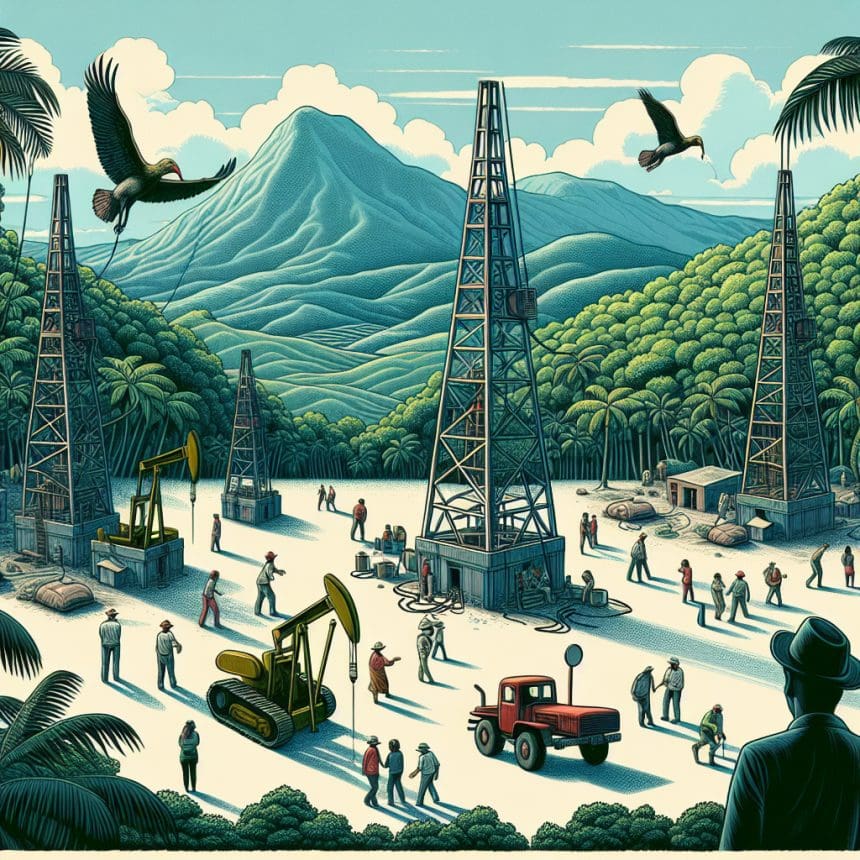
Headline: Trump Eyes U.S. Oil Firms for Venezuela’s Energy Sector
The Trump administration has initiated a renewed effort to engage American oil companies in Venezuela’s struggling energy sector, unveiling a series of incentives aimed at revitalizing the South American nation’s oil production. This campaign, marked by discussions and negotiations held this past week in Washington, D.C., underscores the administration’s commitment to enhancing energy independence while fostering economic growth in Venezuela, which has been crippled by years of mismanagement and sanctions.
A Shifting Landscape for Oil Investments
Venezuela, once the crown jewel of OPEC with the world’s largest proven oil reserves, has seen its production capabilities plummet due to a mix of political turmoil, economic sanctions, and decaying infrastructure. The U.S. State Department’s recent efforts aim to entice major American oil firms back into the Venezuelan market, despite the challenges presented by ongoing sanctions and human rights concerns.
The proposal, which reportedly includes tax breaks, streamlined licensing processes, and assurances of property rights, aims to make it easier for U.S. companies to tap into Venezuela’s oil reserves. “We want to ensure that American energy companies can access these resources while also supporting the people of Venezuela,” a U.S. official commented during the announcement.

Challenges Ahead
Despite the administration’s enthusiastic pitch, industry experts and business leaders express skepticism about the viability of this initiative. Many factors discourage U.S. oil companies from engaging with Venezuela, including the country’s unstable political environment, persistent corruption, and the risk of international backlash. Additionally, companies are wary of the potential reputational damage associated with operating in a country facing heavy scrutiny for human rights violations.
Several major oil companies, including ExxonMobil and Chevron, have previously reduced their involvement in Venezuela due to operational challenges and sanctions. "There’s a long history of risk in doing business in Venezuela, and many companies are cautious about returning until there’s a clear path toward stability," noted Brent Vickers, an energy analyst at the Center for Strategic Energy Solutions.
Competing Interests in the Region
The U.S. administration’s push comes at a time when global energy dynamics are increasingly complex. With countries like Russia and China showing interest in Venezuelan energy assets, American companies may find themselves at a competitive disadvantage. Russian state-owned oil company Rosneft has continued to engage with Venezuela, while China has long been a significant investor in its oil industry. Any U.S. attempt to re-enter the market may be met with resistance from these established players.
Furthermore, the recent uptick in global oil prices has reignited interest in exploration and production elsewhere, drawing attention away from Venezuela. Companies may prioritize operations in more stable regions where returns are more predictable.
The Geopolitical Context
From a geopolitical standpoint, the Trump administration’s efforts also coincide with a broader strategy to curb the influence of adversaries in Latin America. Officials argue that reinvigorating Venezuela’s oil production could stabilize the region and reduce the strategic foothold of countries like Russia and Iran. However, critics question the morality of engaging with a regime accused of human rights abuses.
“Any attempts to engage with the Maduro regime must be carefully weighed against the implications for human rights and democracy in Venezuela,” cautioned Maria Lopez, a Latin America policy expert. “The administration needs to ensure that its actions do not indirectly legitimize a government that has shown little regard for its citizens.”
Industry Responses and Future Prospects
As the Trump administration continues to navigate these complicated waters, responses from the oil industry remain mixed. Some companies indicate they would be willing to explore possibilities, albeit with caution. Others are outright hesitant, citing potential legal and ethical dilemmas related to entering Venezuela’s highly contentious political climate.
"The administration’s incentives may create a sense of opportunity, but it’s not enough to outweigh the inherent risks involved," said Mike Johnson, CEO of a mid-sized oil exploration company. "We need clear assurances of stability before we consider making any significant investments."
In light of these complexities, the future of U.S. oil companies in Venezuela remains uncertain. While the Trump administration’s initiative aims to reinvigorate interest in the country’s oil industry, the response from energy giants suggests a steep uphill battle ahead. Any significant movement would require more than just incentives; it would depend on achieving broader reforms and addressing the ongoing humanitarian crisis in the country.
Concluding Thoughts
As the Trump administration attempts to pitch Venezuela’s energy potential to American oil firms, the challenges loom large. With geopolitical factors at play and a history of turmoil in Venezuela’s oil sector, the U.S. effort to foster a revival may see limited success unless accompanied by substantial changes in the country’s political landscape. For now, it seems that the allure of Venezuela’s oil is overshadowed by a multitude of risks, leaving U.S. companies cautious and observers wondering about the next steps in this increasingly intricate saga.
As the global energy market continues to evolve, only time will tell whether the Trump administration’s outreach strategy will yield the desired results or remain a bold but ultimately unfulfilled ambition.