Headline: Officer Fitzsimmons Trial Opens with Unchambered Round Evidence
Article:
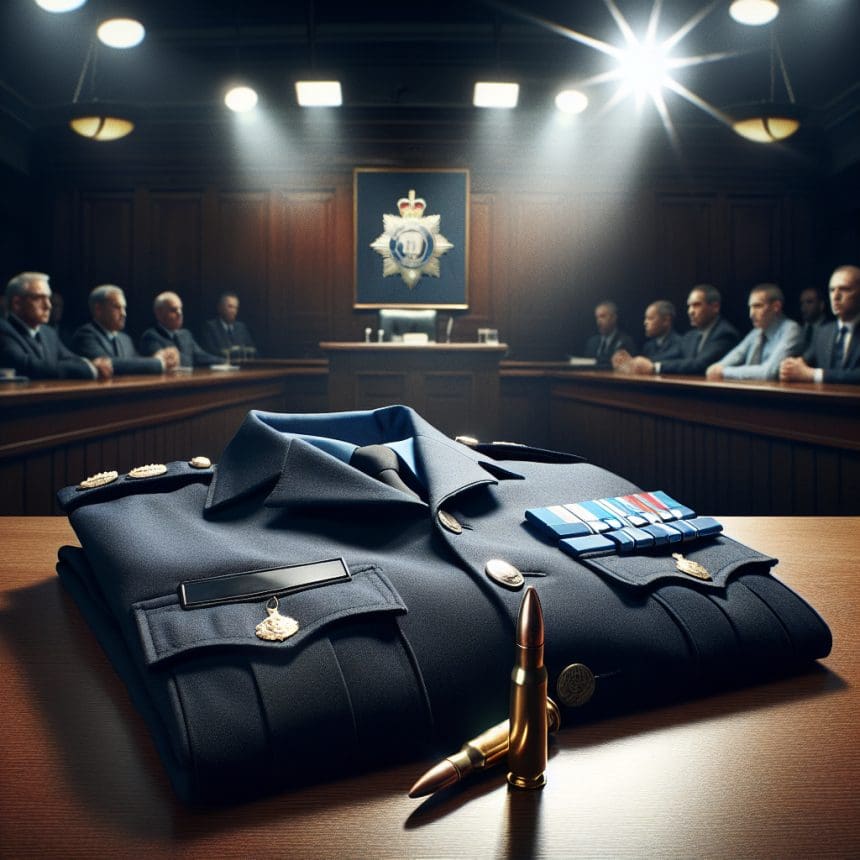
The trial of Officer Michael Fitzsimmons commenced this week in downtown Springfield, drawing significant media attention as prosecutors presented critical evidence involving an unchambered round found at the scene. Fitzsimmons faces charges related to a controversial shooting incident that occurred last March, which has sparked widespread debates about police use of force in the community. As jury selection began on Monday, the courtroom atmosphere was charged with tension as both sides prepared to present their cases.
In his opening statement, lead prosecutor Tom Reynolds emphasized the importance of the unchambered round, arguing that it serves as a pivotal piece of evidence in establishing the circumstances surrounding the shooting. Prosecutors allege that Fitzsimmons acted recklessly and without proper justification when he fired his weapon during an altercation with an unarmed suspect. "The evidence will show that Officer Fitzsimmons had alternatives available to him at the time," Reynolds stated, urging jurors to consider the ramifications of the officer’s actions on civil rights within the community.

Defense attorney Susan Clarke countered that her client had acted in self-defense. She pointed out that Fitzsimmons was faced with a rapidly evolving situation that left him feeling threatened. "This was a split-second decision in a tense environment," Clarke asserted, insisting that the officer’s response was appropriate under those circumstances. The defense plans to call several witnesses who were present during the altercation to support their version of events.
As the trial unfolded, courtroom observers noted that both the prosecution and defense must navigate the complicated landscape of public perception regarding law enforcement and use of deadly force. The Fitzsimmons case has ignited heated discussions not just in Springfield but across the nation about police accountability and community trust.
In the aftermath of the shooting, an investigation was launched, revealing the presence of the unchambered round, which has raised questions about whether Fitzsimmons followed standard protocols. According to sources familiar with the ongoing case, the round was found nearby, leading investigators to question if the officer had his weapon drawn inappropriately. This evidence could prove crucial in determining whether Fitzsimmons behaved within the guidelines set forth for law enforcement officers.
The trial is expected to last several weeks, with a diverse jury selected to ensure a fair evaluation of the evidence presented. Opening arguments are scheduled to extend into various facets of the case, including expert testimonies examining police training and the high-stress scenarios officers face daily. The outcome may have lasting implications for both law enforcement and community relations in Springfield and beyond.
Despite the high-profile nature of the case, legal experts believe the jury will focus on the specific details surrounding the shooting incident, rather than broader societal issues. “The unchambered round could be pivotal if the jury finds that Fitzsimmons had a clear alternative to using his firearm,” said legal analyst James Tully. The convergence of evidence could present challenges for both the prosecution and defense as they aim to construct compelling narratives that resonate within the jury’s deliberations.
Public sentiment regarding police officers is increasingly complex, particularly in the wake of several highly-publicized cases of police violence in recent years. Activist groups have organized demonstrations outside the courthouse, advocating for accountability and transparency in law enforcement. They argue that the Fitzsimmons trial is emblematic of a larger need for reform within police departments.
As the trial progresses, jurors will hear from experts in law enforcement procedures who will provide insights into the training officers receive concerning the use of firearms. The prosecution plans to introduce expert testimony on the concept of reasonable force, challenging whether Fitzsimmons’ actions can be deemed reasonable under the unique circumstances he faced. Conversely, the defense is prepared to present its own expert witnesses who will argue that officers must often make quick decisions without the luxury of hindsight.
The trial has drawn heightened interest not just locally but nationally, with various news outlets monitoring developments closely. Social media platforms are abuzz with discussions on the implications of the trial, reflecting a society grappling with the relationships between law enforcement, community standards, and individual rights. Observers note that the Fitzsimmons case could influence similar cases across the country, especially in communities that have experienced tension between residents and police.
In conclusion, the opening of Officer Fitzsimmons’ trial marks a significant moment for the Springfield community as it navigates the complexities of law enforcement accountability. The prosecution’s focus on the unchambered round illustrates the weight of evidence that will play a crucial role in determining Fitzsimmons’ fate. As the trial unfolds, all eyes will be on the jury’s decision, which could have a ripple effect on conversations about policing practices and community trust for years to come.
With both prosecution and defense gearing up for what is expected to be a rigorous trial, legal experts and the public alike await the outcome, hoping for a resolution that can bring clarity and perhaps even healing to a community in need. The Fitzsimmons case serves as a reminder that while law enforcement plays a critical role in maintaining public safety, the accountability of those who serve is equally vital to ensuring justice and community trust.