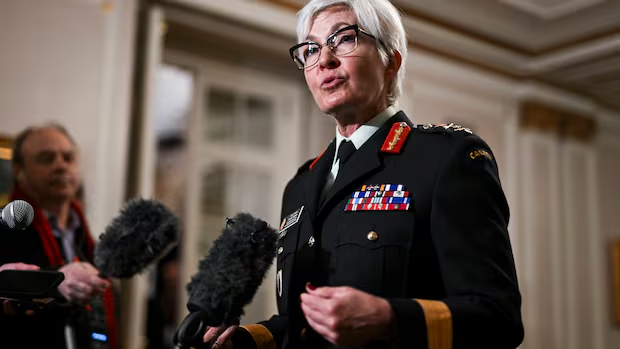
Headline: Canada May Assist in Gulf Defense, Military Leader Says
In a pivotal statement this week, Canada’s top military commander revealed that the nation could be called upon to provide support in defense of Gulf states against emerging security threats. General Wayne Eyre, Chief of the Defence Staff, made these comments during a conference in Ottawa, emphasizing the need for collective security partnerships amidst rising geopolitical tensions in the region. This development highlights Canada’s commitment to international security and its strategic role in global defense networks.
As tensions escalate in the Middle East, the question of Canada’s involvement in the defense of Gulf nations is increasingly relevant. General Eyre’s remarks signal a potential shift in Canada’s foreign policy towards a more engaged military posture, particularly in light of recent threats from non-state actors and geopolitical rivalries, particularly those involving Iran.
Currently, the Gulf states face mounting security challenges. The Iranian military and proxy groups, such as Hezbollah, have been escalating their activities, posing risks to national and regional security. General Eyre underscored that Gulf countries are seeking partnerships for stability and deterrence against these threats, and Canada’s military capabilities are well-suited to meet such needs.

The discussion around Canada’s potential involvement stems from its long-standing relationships with Gulf Cooperation Council (GCC) nations, including Saudi Arabia, the United Arab Emirates, and Kuwait. Historically, Canada has maintained military training and support roles in the region, contributing to stability and peacekeeping efforts. General Eyre mentioned that while Canada is not currently in conflict in the Gulf, the changing dynamics could necessitate a more proactive role.
Furthermore, Eyre pointed to Canada’s participation in international coalitions and its initiation of Operation Impact, which focuses on training and assisting local forces in their fight against ISIS. He noted that lessons from these operations could be applicable in the Gulf scenario, should Canada be called into action. The commander highlighted the importance of adaptability, suggesting that Canada’s military must prepare for various scenarios, including direct assistance to allied nations.
The implications of Canada’s potential involvement in Gulf state defense extend beyond mere military engagement. Such a commitment could foster stronger diplomatic relationships and trade ties with allied nations, positioning Canada as a key player in Middle Eastern affairs. Furthermore, this could enhance Canada’s image as an active participant in global peacekeeping missions.
Historically, Canada’s military engagements have been met with mixed reactions at home. The nation has grappled with public sentiment regarding military action abroad, especially following the protracted missions in Afghanistan and Iraq. However, recent polling indicates that a majority of Canadians support contributing to global security efforts in a measured approach, particularly when it comes to addressing terrorism and regional instability.
The dilemma of military involvement raises questions about Canada’s defense readiness and procurement strategies. As General Eyre called for an assessment of military resources, Canadian defense analysts have noted that ensuring readiness involves modernizing equipment and enhancing capabilities. The military has faced challenges regarding aging infrastructure and airlift capacities, which could impact Canada’s ability to support Gulf nations effectively.
Moreover, any engagement in the Gulf may involve navigating complex diplomatic landscapes. Canada would need to reconcile its foreign policy principles—such as human rights advocacy—with the realities of working alongside nations whose record may be at odds with these values. This balancing act will be critical as Canada seeks to maintain its integrity while ensuring regional security.
As preparations continue, the discussion will likely intensify across various sectors, including military, governmental, and civil society. Policymakers must weigh the legal, ethical, and strategic implications of expanding Canada’s military footprint in the Gulf region.
In conclusion, General Eyre’s warning about potential Gulf state defense involvement is a significant development in Canada’s military strategy. With rising threats in the region and a global political landscape that demands collective security, Canada’s readiness to assist its allies may soon be put to the test. As the nation evaluates its roles in a shifting landscape, the balance between military readiness, diplomatic integrity, and public sentiment will be essential in guiding its defense strategy—shaping not only Canada’s role on the world stage but also the future of international peace and stability in the Gulf region.