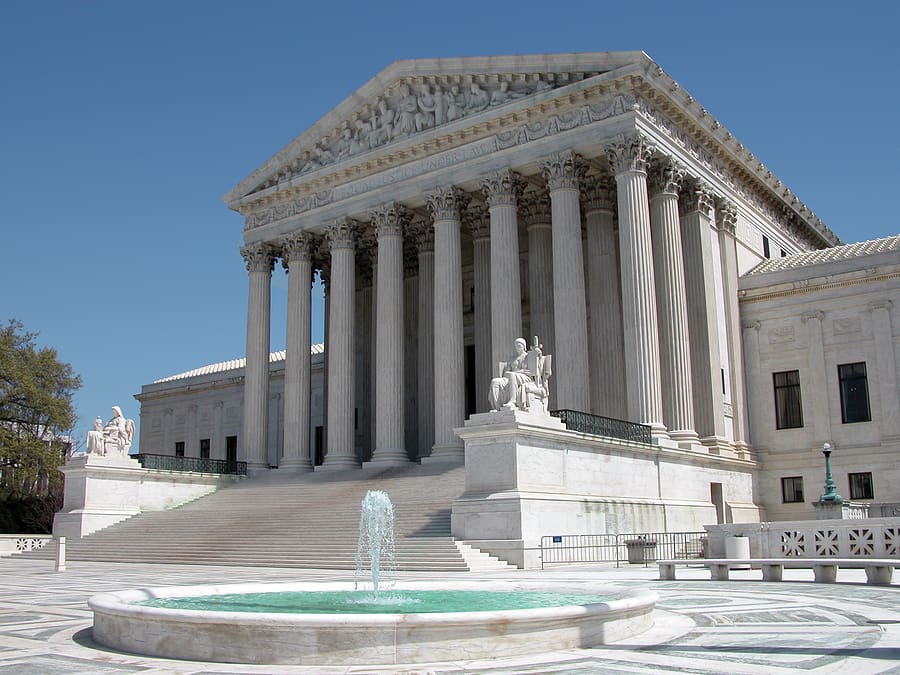
The Supreme Court’s decision limiting executive tariff authority triggered immediate political and economic reaction in Washington.
President Donald Trump responded with a temporary 10% global tariff under a separate trade statute.
Markets, lawmakers, and global partners are now watching closely as legal and political tensions rise.
Washington, D.C. (STL.News) A major Supreme Court decision restricting the use of emergency powers to impose sweeping tariffs has ignited a fast-moving political and economic response across the nation’s capital. Within hours of the ruling, President Donald Trump announced a new temporary 10% global tariff under a different legal authority, intensifying debate over who ultimately controls U.S. trade policy.
The rapid shift has created significant turbulence in Washington, financial markets, and international trade circles, raising fresh questions about executive authority, congressional responsibility, and the future direction of American trade strategy.
Supreme Court Limits Emergency Tariff Authority
The Supreme Court’s ruling centered on whether the president could use the International Emergency Economic Powers Act (IEEPA) to justify broad global tariffs. In its decision, the Court concluded that the statute did not provide sufficiently clear authority for sweeping, economy-wide tariffs.

At its core, the ruling reinforced a constitutional principle: Congress holds primary authority over taxation and trade under Article I of the Constitution. While Congress may delegate certain powers to the executive branch, such delegation must be clearly expressed when major economic consequences are involved.
The Court did not rule that tariffs are illegal. Instead, it determined that the specific emergency statute used did not authorize such expansive economic measures.
President Announces New 10% Temporary Tariff
Following the ruling, President Trump pivoted quickly. The White House announced a temporary 10% tariff on global imports, citing Section 122 of the Trade Act of 1974 — a separate law that allows limited tariff action in response to balance-of-payments concerns.
Section 122 permits temporary import surcharges for up to 150 days without additional congressional approval. The administration framed the move as necessary to address trade imbalances and protect domestic economic stability.
By shifting its legal footing, the administration signaled its intent to continue pursuing an aggressive trade policy while navigating the constitutional boundaries set by the Court.
Legal Experts Expect New Challenges
Trade law specialists anticipate fresh legal challenges. The central question is whether current economic conditions qualify as a “balance-of-payments” concern under the 1974 statute.
Courts reviewing the new tariff could examine:
- Whether the administration’s justification aligns with the statute’s original intent
- Whether the action qualifies as a “major question” requiring clearer congressional authorization
- Whether the 150-day limit is strictly followed
Because Section 122 has rarely been used in modern trade disputes, judicial precedent is limited. That legal uncertainty contributes to market volatility and political debate.
Markets React to Uncertainty
Financial markets responded cautiously to the rapid developments. Investors are weighing whether the new tariff will remain temporary, be struck down by courts, or escalate into broader trade tensions.
Markets historically react more strongly to uncertainty than to policy itself. The speed of events — from Supreme Court ruling to immediate tariff replacement — has prompted concerns about potential retaliation from trading partners and the risk of extended legal battles.
Retailers, manufacturers, and import-heavy industries are also assessing how a 10% surcharge could affect supply chains and pricing decisions.
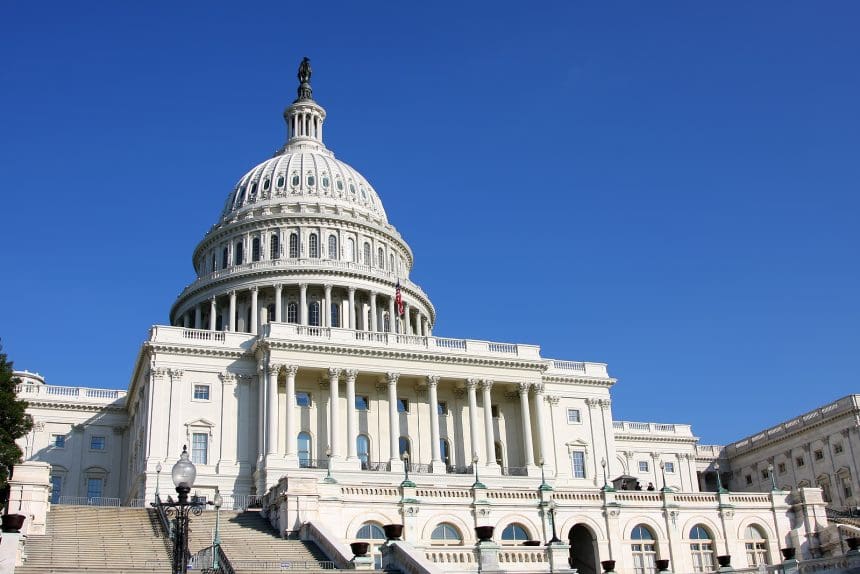
Congress Faces Renewed Pressure
The Supreme Court decision effectively pushes Congress back into the center of the trade policy debate. Lawmakers now face several options:
- Explicitly expand presidential tariff authority
- Reassert congressional control over trade policy
- Allow courts to continue defining the boundaries
The decision underscores a broader constitutional tension between executive flexibility and legislative oversight in an era of rapid global economic shifts.
For members of Congress, the issue carries both economic and political weight, particularly as voters remain sensitive to inflation and cost-of-living pressures.
Global Implications
International trading partners are closely monitoring developments. Some may adopt a wait-and-see approach, anticipating further court rulings. Others could prepare retaliatory measures if the tariff appears likely to remain in place beyond the temporary window.
Trade negotiations, diplomatic channels, and global supply chains could all experience secondary effects depending on how long the tariff remains in place.
A Broader Constitutional Moment
Beyond immediate economic implications, the episode reflects a deeper institutional recalibration.
Recent Supreme Court decisions have increasingly emphasized limits on executive authority in major economic or regulatory actions. The tariff case appears to fit within that broader judicial pattern.
By insisting that Congress must clearly authorize sweeping economic policies, the Court may be signaling a shift toward stricter statutory interpretation across multiple areas of governance.
What Happens Next?
In the short term, the temporary 10% tariff is expected to take effect while legal and political battles unfold. Court challenges could emerge quickly. Congressional debate may intensify. Markets will continue adjusting to headlines and policy shifts.
Longer term, the dispute may reshape how future presidents approach trade tools, emergency powers, and congressional cooperation.
For businesses and consumers, the key questions remain practical:
- Will prices rise?
- Will the tariff last beyond 150 days?
- Will Congress step in to clarify authority?
As Washington navigates this high-stakes policy moment, the coming weeks may determine whether this episode becomes a short-term political clash or a lasting constitutional turning point in U.S. trade governance.
Other Business News stories published on STL.News:
- Initiative to Strengthen Cybersecurity – AI Risk Management
- US Court Orders DTE Energy to Pay 100 Million
- Ten-Day Notice Rule Update from Washington, DC
- History of Jefferson City, Missouri
- Good Morning St. Louisans – St. Louis, MO – Feb.16, 2026
© 2026 St. Louis Media, LLC d.b.a. STL.News. All rights reserved. No content may be copied, republished, distributed, or used in any form without prior written permission. Unauthorized use may result in legal action. Some content may be created with AI assistance and is reviewed by our editorial team. For official updates, visit STL.News.