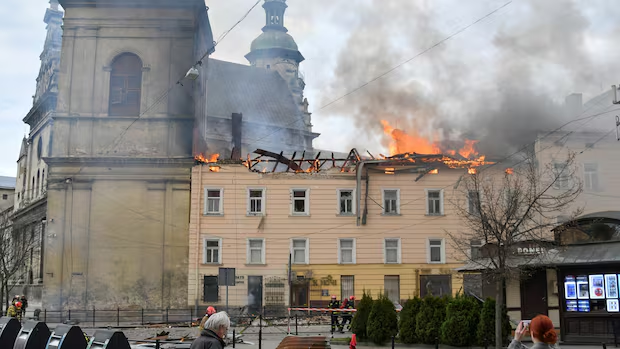
Headline: Russia Launches Daytime Drone Attack on Ukrainian City
In a rare daytime offensive, Russian forces unleashed a barrage of drone strikes on a western Ukrainian city on Tuesday, marking a significant escalation in the ongoing conflict. The targeted city, which had largely managed to avoid the extensive destruction seen in other war-torn regions of Ukraine, was caught off-guard by the sudden assault. This attack comes on the heels of increased tensions in the region and further complicates the complex dynamics of the war.
Authorities in Ukraine confirmed that the drone blitz occurred in the early afternoon, shocking residents who have primarily known their city as a safe haven in this prolonged conflict. The drone strikes, which targeted civilian areas, have reignited concerns about the potential for broader devastation in regions previously considered safe.
Local officials reported multiple explosions and thick plumes of smoke rising from several sites, as emergency services rushed to manage the aftermath of the strikes. Early reports indicated significant damage to infrastructure, as well as potential casualties, though details were still emerging as of press time.

The city, known for its historic landmarks and vibrant community, had remained relatively insulated from the widespread chaos affecting much of eastern and southern Ukraine. Local residents had begun to engage in recovery efforts and community rebuilding, attracted by the relative peace. However, this sudden attack serves as a grim reminder that the war’s impacts reach far beyond the immediate front lines.
International observers noted that such a brazen daytime attack underscores a shift in Russia’s military strategy, signaling a more aggressive approach in regions previously untouched by direct hostilities. Analysts believe that this could reflect Moscow’s growing desperation as it struggles to achieve its objectives in Ukraine.
Ukrainian President Volodymyr Zelensky condemned the drone strikes, labeling them as an act of aggression against civilians and a blatant violation of international law. He called upon allies for increased military support, emphasizing the urgency of fortifying air defense capabilities to protect Ukraine’s cities from future assaults. "Our cities are to be protected, and these cowardly attacks will not go unanswered," he remarked in a follow-up address.
NATO officials and member states swiftly reacted, reiterating their commitment to supporting Ukraine amid escalating tensions. They emphasize that attacks on civilian areas constitute a grave breach of international norms, calling for a united response. The alliance’s Secretary-General highlighted the necessity of reinforcing air defense systems not only for Ukraine but also for the security of neighboring NATO states.
As investigations into the drone strikes continue, intelligence analysts are working to identify the type of drones used and the potential for further attacks. Eyewitness accounts described the drones as small but numerous, suggesting a calculated effort to overwhelm local defenses. This aligns with reports of Russia ramping up its use of drone technology in recent weeks, adapting its strategies to evade Ukrainian air defenses.
The aftermath of the drone blitz has left many residents shaken, with some expressing disbelief that their city could be targeted after remaining relatively peaceful since the onset of the war. "I never thought I would see such horror here. We thought we were safe," said one local shopkeeper, tears streaming down her face as she assessed the damage to her business.
In the days following the attack, local officials are prioritizing crisis management and assessment of damages. Shelters are being established for those who have been displaced, and community efforts are underway to provide support for those affected. Despite the looming uncertainty, many residents are determined to rally together and rebuild their lives.
Geopolitical analysts point out that Russia’s choice to strike a city spared from previous assault may serve multiple purposes: to instill fear, to gauge Ukraine’s defenses in different contexts, and to signal a more extensive operational reach. This strategy poses questions about the long-term capabilities of the Ukrainian military and the resilience of its civilian population.
Furthermore, these events prompt a renewed discussion about the overall situation in Ukraine and the international community’s response. Calls for increased military aid, particularly in air defense systems, grow louder among both officials and the civilian population. A timely and coordinated response from NATO and its partners could be crucial in safeguarding not only Ukraine but also maintaining stability across the whole region.
As the dust settles on this unprecedented attack, the resilience of the affected community is already coming into focus. Many are advocating for international solidarity and support, emphasizing that the world must not turn a blind eye to acts of aggression that threaten civilians. The hope is that this moment of vulnerability might galvanize broader support for Ukraine’s defense efforts.
In summary, the rare daytime drone attack on this largely spared western Ukrainian city marks a pivotal moment in the ongoing war. As residents begin to grapple with the devastation, questions loom over Russia’s evolving military strategy and the resolute commitment of international allies to uphold Ukrainian sovereignty.