Headline: Republican Lawmaker Calls for Accountability in Fatal Airstrike
In a recent statement, a prominent Republican lawmaker urged U.S. officials to acknowledge responsibility for a tragic airstrike that struck an Iranian school, resulting in numerous casualties. The incident, which occurred in early October in northern Iran, has sparked outrage and calls for a thorough investigation into U.S. military actions in the region. The lawmaker argues that accountability is crucial to uphold U.S. values and maintain diplomatic relations.
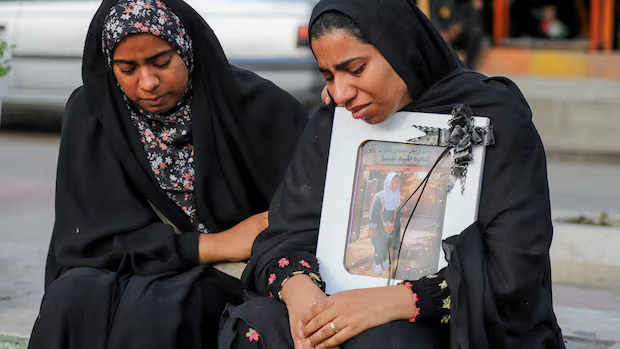
The airstrike reportedly hit a school during a period of heightened tensions between the U.S. and Iran, further complicating the already fraught geopolitical landscape. Eyewitness reports indicate that the strike occurred during school hours, resulting in substantial civilian casualties, including students and teachers. The GOP representative emphasized that if the U.S. military is found to be at fault, it is imperative to take responsibility to foster trust and transparency.
In the wake of this incident, there is an increasing demand from both domestic and international communities for the U.S. to clarify its role. Civilian casualties in military operations raise ethical concerns and complicate narratives regarding national security and foreign policy. The Republican lawmaker’s call for accountability could shape ongoing discussions in Congress about U.S. military involvement in the Middle East.

The airstrike has prompted a series of reactions from various stakeholders. Human rights organizations condemned the attack, urging the U.S. government to conduct a comprehensive investigation. They argue that adherence to international law and protection of civilians must be paramount, especially regarding educational institutions. Critics contend that any failure to acknowledge responsibility can damage America’s credibility on the global stage, particularly in light of existing criticism over its military strategies.
Accusations of negligence have emerged as questions arise about the intelligence used to justify the airstrike. Analysts note that the presence of civilians in a known school location should have prompted greater caution. The Republican lawmaker pointed out that mistakes happen in conflict zones, but it is crucial to learn from these missteps. “If we are responsible for the loss of innocent lives, we need to own up to it,” he stated. The GOP official’s position reflects a growing sentiment among some members of Congress advocating for greater debate over U.S. military engagement abroad.
U.S. Secretary of Defense has stated that an internal review is underway, aimed at assessing the intelligence and decision-making processes that led to the strike. The investigation will include a thorough examination of operational protocols to prevent similar incidents in the future. These measures are critical for maintaining operational integrity and ensuring adherence to established rules of engagement, particularly concerning civilian safety.
The repercussions of this airstrike extend beyond politics. It has reignited discussions about U.S.-Iran relations, which have been strained for decades. As diplomatic dialogues resume, acknowledging past mistakes could pave the way for more constructive conversations, both in the region and internationally. The Republican lawmaker believes that transparency and accountability can play a pivotal role in rebuilding trust and potentially allowing for peaceful negotiations between the two nations.
Public opinion remains sharply divided regarding U.S. military interventions. Many Americans are concerned about the impact of such actions on national security, while others argue that accountability for civilian casualties must take precedence. The Republican lawmaker’s remarks echo sentiments of constituents who demand greater oversight of military operations, urging Congress to reconsider strategies that risk civilian lives.
As the story develops, it is clear that this tragic incident will lead to broader discussions about U.S. military policies and ethical warfare. The Republican lawmaker’s insistence on accountability aligns with increased pressures on policymakers to ensure that actions taken overseas reflect both American values and strategic interests.
In light of the international scrutiny, the White House is under pressure to address these concerns proactively. While the administration has emphasized the importance of national security, it must balance that with the necessity of protecting human rights and maintaining international law. The fate of future military actions may depend on how effectively the government assesses and reacts to this situation.
As investigations continue, human rights advocates are calling for the U.S. to engage in reparative measures for the victims and families affected by the airstrike. They argue that acknowledging accountability is not only a moral obligation but an essential step toward healing and reconciliation. The lawmaker’s statements reflect a growing recognition that for the U.S. to maintain its standing as a champion of democracy and human rights, it must be willing to confront uncomfortable truths.
In summary, the Republican’s call for accountability regarding the deadly airstrike underscores significant moral and ethical dilemmas facing U.S. military operations abroad. As investigations unfold, it will be vital for U.S. leaders to navigate these turbulent waters with transparency and integrity. Ultimately, how the U.S. responds to this incident could reshape both domestic opinions and international relations in the coming months.
The conversation surrounding military accountability is increasingly resonating within the U.S., capturing the attention of lawmakers and citizens alike. Many view this as an opportunity for meaningful reform in oversight of military operations, pushing for more stringent guidelines that prioritize civilian safety while addressing national security concerns. How this event unfolds will be pivotal, prompting essential discussions about the U.S. military’s role in conflict zones and the importance of respecting human rights amidst military engagements.