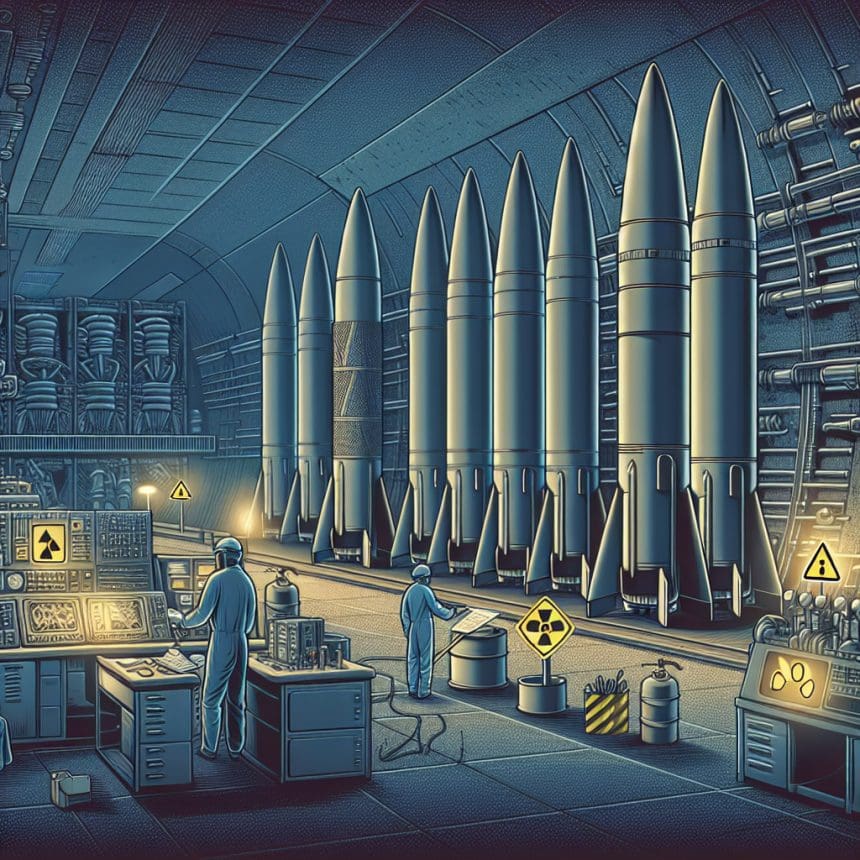
Headline: North Korea Boosts Nuclear Stockpile Amid Iran’s Instability
In a significant development in global security dynamics, North Korea has begun expanding its nuclear arsenal, drawing inspiration from Iran’s recent geopolitical vulnerabilities. This expansion, announced by North Korean state media on October 15, 2023, comes in response to perceived weaknesses in Iran’s capabilities following recent Western sanctions and diplomatic setbacks. This strategic military move is seen as a direct challenge to regional stability in East Asia and raises concerns among international observers regarding the potential for an arms race in the region.
North Korea’s Strategic Calculations
The motivation behind North Korea’s decision to bolster its nuclear capabilities appears rooted in its ongoing pursuit of security and deterrence. Analyzing Iran’s situation, Pyongyang’s leadership has evidently concluded that projecting strength through an enhanced nuclear stockpile may deter external threats more effectively. The recent events concerning Iran, particularly its struggle to maintain its nuclear ambitions amid increased sanctions and a lack of international support, seem to have convinced North Korean leaders that relying solely on traditional military power is insufficient for safeguarding their regime.
According to North Korean sources, the nation’s Supreme Leader Kim Jong-un has ordered the accelerated production of nuclear warheads, with a focus not just on quantity but also on technological advancement. The announcement included details on new delivery systems intended to enhance the country’s strike capabilities. Analysts predict that these developments will focus primarily on improving the range and precision of their missiles, expanding the reach of their nuclear deterrent capabilities.

Regional Reactions
The responses from neighboring countries have been swift and severe. South Korea and Japan, both of whom are within North Korea’s missile range, have expressed grave concerns over this escalation. South Korean President Yoon Suk-yeol criticized North Korea’s moves as a "provocation that undermines peace" in the region. He emphasized the need for united defense strategies among allies to counteract North Korea’s growing nuclear ambitions, echoing sentiments that may lead to enhanced military cooperation among the U.S., South Korea, and Japan.
In response, Japan’s Prime Minister Fumio Kishida underscored the importance of strengthening defense partnerships. He hinted at the potential for a more proactive posture for Japan’s Self-Defense Forces in light of the escalating threat from North Korea. This scenario not only raises tensions on the Korean Peninsula but also leads to similar defensive buildups in neighboring countries, potentially accelerating an arms race in East Asia.
The Impact on International Relations
North Korea’s nuclear weapons expansion could undermine the delicate balance of power in Asia-Pacific. With the U.S. reaffirming its commitment to the defense of its allies, the situation presents a complex challenge for international diplomacy. The Biden administration, facing a multifaceted array of geopolitical issues—from tensions with China to the fallout from the Ukraine conflict—may find it increasingly difficult to apply effective pressure on North Korea.
Industry experts caution that this scenario could lead to a dual scenario: a heightened arms race in which multiple nations develop and expand their nuclear capabilities, as well as a re-evaluation of diplomatic avenues to resolve longstanding conflicts. Nonproliferation advocates are particularly concerned that North Korea’s actions will embolden other nations with nuclear ambitions, potentially destabilizing future agreements aimed at global nuclear disarmament.
Lessons from Iran
The parallel drawn with Iran’s vulnerability paints a sobering picture of how geopolitical shifts can directly influence nuclear strategy. Iran’s fight to maintain its nuclear program against international sanctions and regional isolation demonstrates a pattern that could be a template for other nations facing similar conditions. North Korea appears to be keenly aware that robust nuclear capabilities provide both leverage and a deterrent against foreign aggression, a lesson learned from Iran’s struggles in obtaining and maintaining the necessary support for its nuclear ambitions.
This turn of events emphasizes the need for renewed dialogue and effective diplomatic strategies that engage not just nuclear nations, but also those at risk of nuclear proliferation. Experts argue that pressing commitments to denuclearization must adapt to the shifting realities of power and influence in the region.
Looking Ahead
As North Korea moves forward with its nuclear expansion, the implications for regional security and global stability cannot be understated. Policymakers are urged to examine the pathways to preventing further escalation, fostering confidence-building measures to reduce the nuclear threat on the Korean Peninsula. Collaborative efforts that involve major stakeholders, including China, Russia, and the United States, may be crucial in de-escalating tensions and exploring diplomatic resolutions.
The situation demands vigilance and collaboration, particularly from those countries that uphold nonproliferation agreements. As North Korea continues to pursue its nuclear ambitions, the international community must respond not just with rhetoric, but with strategic actions that prioritize global security and diplomatic engagement over military confrontation.
Conclusion
As the geopolitical landscape evolves, the confrontation between North Korea’s nuclear ambitions and the vulnerabilities of countries like Iran represents a critical juncture in international relations. The implications of North Korea’s actions reach far beyond its borders, affecting regional stability and prompting renewed discussions on defense and diplomacy. With challengers on the global stage multiplying, the need for effective, cooperative solutions has never been more pressing.
In sum, while North Korea’s reported nuclear expansion may initially seem a localized issue, its ramifications extend toward the heart of global security policies, potentially reshaping international relations in the decades to come.