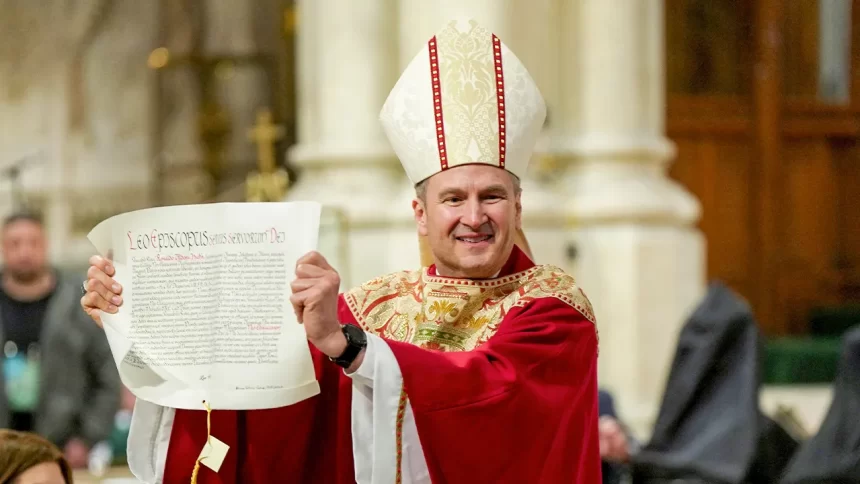
Archbishop Ronald Hicks Installed as New York’s Archbishop
(STL.News) [https://www.stl.news/] In a momentous ceremony held in New York City, Archbishop Ronald Hicks was officially installed as the new Archbishop of New York, taking up the mantle in one of the most prestigious positions within the Catholic Church in the United States. This event marks a significant transition for the archdiocese and its thousands of parishioners.
Background on Archbishop Ronald Hicks
Archbishop Ronald Hicks, who previously served as the auxiliary bishop for the Archdiocese of Chicago, brings a wealth of experience and leadership to his new role. Born and raised in the Catholic faith, Hicks has dedicated his life to serving the church and its community. Before his appointment, he was known for his pastoral work and commitment to youth and education, drawing on a diverse background that includes a focus on social justice and community outreach.
The Installation Ceremony
The installation took place at St. Patrick’s Cathedral, a historic site known for its stunning architecture and significant role in New York’s Catholic tradition. The ceremony was attended by numerous dignitaries, clergy, and faithful from across the archdiocese. The archbishop’s installation was marked by prayers, hymns, and blessings that echoed throughout the cathedral, symbolizing the community’s support for their new leader.
Archbishop Hicks emphasized in his inaugural address the importance of compassion, inclusion, and outreach, framing his new role within the broader mission of the Church to serve all people. He acknowledged the unique challenges faced by the archdiocese, including issues of social justice, poverty, and community division, and pledged to work collaboratively with various groups to address these concerns.

The Importance of the Archdiocese of New York
The Archdiocese of New York is one of the largest and most influential dioceses in the United States, encompassing a vibrant mix of communities across Manhattan, the Bronx, Staten Island, and parts of Westchester and Rockland counties. Home to millions of Catholics, the Archdiocese plays a pivotal role in the spiritual and social fabric of New York City.
With a rich history dating back to the early days of Catholicism in America, the archdiocese has faced numerous challenges, from immigration and urbanization to modern societal shifts. It continues to be a beacon of hope and support to many in the community, offering a wide range of services, including education, healthcare, and social services.
Priorities for the New Archbishop
In his first statements as archbishop, Hicks outlined several priorities he intends to focus on during his tenure. One major area of interest is the integration of youth in the Church, recognizing the importance of fostering a new generation of engaged and informed Catholics. This commitment involves not only enhancing religious education but also finding innovative ways to make the Church’s message relevant to contemporary society.
Another focal point for Archbishop Hicks is social justice. He articulated a strong desire to address issues such as poverty, homelessness, and systemic inequality. By leveraging the Church’s existing resources and partnerships, Hick aims to create meaningful change for those in need within the archdiocese.
Community Response to the Appointment
Reactions to Archbishop Hicks’ appointment have largely been positive. Many parishioners and community leaders expressed optimism about his leadership style and vision. The diverse communities within the archdiocese appreciate his focus on inclusivity and compassion, which resonates deeply with their own values and experiences.
Additionally, key figures within the Church have voiced their support. Bishops from neighboring dioceses and leaders of various Catholic organizations have noted the importance of having a leader who understands the nuances of urban ministry and the challenges faced by a diverse population.
Looking Towards the Future
As Archbishop Ronald Hicks embarks on this new chapter in his ecclesiastical life, his vision for the Archdiocese of New York seems to be centered around bridging gaps and fostering unity. His commitment to strengthening the bonds within the community is a clear indication of his desire to see the Church actively involved in meaningful dialogue and outreach.
With a blend of traditional values and an innovative approach to ministry, Archbishop Hicks stands at the forefront of a transformative period for the archdiocese. His leadership could shape the future trajectory of Catholic life in New York, inspiring a renewed sense of purpose and engagement among the faithful.
Conclusion
Archbishop Ronald Hicks’ installation marks not just a significant personal milestone but an important moment for the Archdiocese of New York. As he steps into his new role, the community looks forward to a period of renewal, revitalization, and spiritual growth. His commitment to inclusivity, social justice, and youth engagement heralds a hopeful future for Catholics across New York City.
In these challenging times, it is essential for church leaders to engage meaningfully with their communities. Archbishop Hicks appears ready to meet that challenge head-on, ensuring that the Archdiocese of New York remains a vibrant and welcoming place for all.