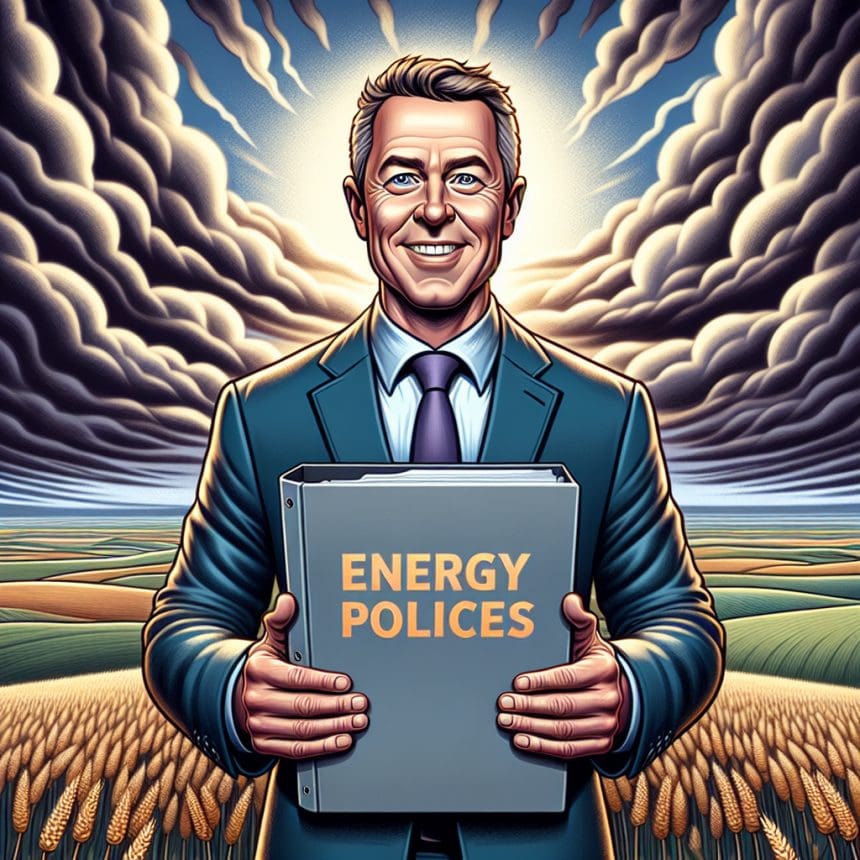
Headline: NDP’s Avi Lewis Extends Invitation to Prairie Leaders
In a significant development for Canadian politics, New Democratic Party (NDP) Leader Avi Lewis announced on Monday that he is willing to engage in dialogue with Prairie leaders who oppose his energy policies. During a press conference in Regina, Saskatchewan, Lewis emphasized his commitment to finding common ground and fostering cooperation amid escalating tensions over energy management and climate initiatives. This move comes as provincial leaders express concerns about the social and economic implications of transitioning to renewable energy sources.
The NDP, a party historically rooted in labor concerns and social justice, faces mounting criticism from leaders in Alberta and Saskatchewan regarding its approach to energy policy. The party’s ambition to cut greenhouse gas emissions sharply sparks apprehension about job losses in traditionally oil-dependent regions. Recognizing the need for a unified approach to the climate crisis, Lewis’s overture is aimed at bridging divides within the party’s national framework and regional interests.
During the press conference, held at the Saskatchewan Legislature, Lewis stated, “The door is open.” He reiterated his belief that meaningful dialogue could lead to viable solutions that benefit both the economy and the environment. “We need to listen and understand the unique challenges faced by our Prairie provinces while moving towards a sustainable future,” he said.

This initiative is part of a broader strategy for the NDP as it gears up for the next federal election, anticipated in 2025. The party aims to resonate with both urban and rural constituents, understanding that navigating the complex landscape of energy policy remains crucial to their electoral success. Lewis acknowledged that the energy transition poses daunting challenges but emphasized that conscientious engagement with critics was crucial in formulating effective policies.
Opponents of the NDP’s energy policies have expressed their intent to defend the interests of their constituents vigorously. Jason Kenney, former Premier of Alberta, has been particularly vocal, asserting that the NDP’s plans could jeopardize thousands of jobs and undermine the province’s economic stability. In response to Lewis’s comments, he stated, “While dialogue is welcome, we cannot sacrifice our livelihoods at the altar of ambition. Alberta demands policies that respect our resources and our workers.”
Conversely, environmental advocates argue that failing to make substantial changes to energy policies could lead to severe consequences for the planet. Organizations like Greenpeace Canada have applauded Lewis’s willingness to collaborate with skeptics. “This is a pivotal moment,” stated a representative. “Dialogue is the first step towards creating a sustainable future. We hope Prairie leaders will engage thoughtfully.”
The NDP leader’s initiative is not without challenges. The political landscape is fraught with divisions over climate action, particularly as economic recovery from the pandemic remains a priority for many. Striking a balance between robust climate action and economic stability will be a delicate task for Lewis, who is determined to promote a vision of prosperity that encompasses diverse viewpoints.
In his pursuit of consensus, Lewis outlines a framework for discussions that would focus on three essential areas: job transition, sustainable development, and provincial autonomy in resource management. He argues that empowering Prairie leaders to express their concerns within a structured dialogue can aid the NDP in crafting comprehensive policy frameworks that respect both economic and environmental needs.
Experts suggest that Lewis’s strategy could disrupt conventional political narratives that often create barriers between urban and rural voters. By showcasing a willingness to engage with those who hold differing views, Lewis positions the NDP as a party that values collaboration over confrontation. This approach may not only help in quelling dissent but also bolster the NDP’s image as a viable option for middle-ground voters.
Political analysts have begun to speculate on the potential ramifications of this approach, noting that the effectiveness of Lewis’s overture will depend largely on the responses from Prairie leaders. Many are skeptical but acknowledge the necessity of dialogue, particularly in light of climate commitments made by the federal government.
With looming deadlines for climate action and international agreements on emissions, Lewis has emphasized the urgency of this conversation. “We cannot afford to delay,” he said. “Our response should be inclusive, made stronger through consultation. It’s time to bring everyone to the table.”
While the initial reactions from Prairie leaders vary, the opportunity for discussion creates a semblance of hope for mutual understanding. As tensions continue to simmer over energy policies and their impacts, Lewis’s invitation may serve as a critical step towards not only redefining the narrative around the NDP but also towards achieving substantive, actionable policy changes.
In the background, the clock ticks down to the next federal election, and all eyes will be on Lewis’s ability to build bridges—or if the party risks alienating certain constituencies altogether. As the NDP drafts its platform, the implications of these discussions will likely play a central role in shaping not only the party’s future but also the wider political landscape of Canada as it navigates the pressing issue of climate change amid competing economic interests.
As dialogue continues, stakeholders from various sectors remain cautiously optimistic. Industry leaders hope that the NDP under Avi Lewis will adopt policies that support both economic growth and environmental sustainability. The coming weeks will be crucial for assessing how these discussions evolve, as Lewis aims to demonstrate that the NDP is more than just a party of opposition—it seeks to be a party of solutions that accommodates the vast spectrum of Canadian interests.