Headline:
Iranian Women’s Soccer Team Returns Amid Asylum Controversy
In a highly publicized return, members of the Iranian women’s national soccer team landed in Tehran on Tuesday after a tumultuous stay abroad that included several players withdrawing their asylum claims. The team had traveled to Spain for the International Women’s Soccer Tournament, and amidst discussions of political asylum, some athletes opted to return home. The decision has sparked conversations about athlete rights and support systems within Iran, highlighting the ongoing struggles faced by women’s sports in the country.
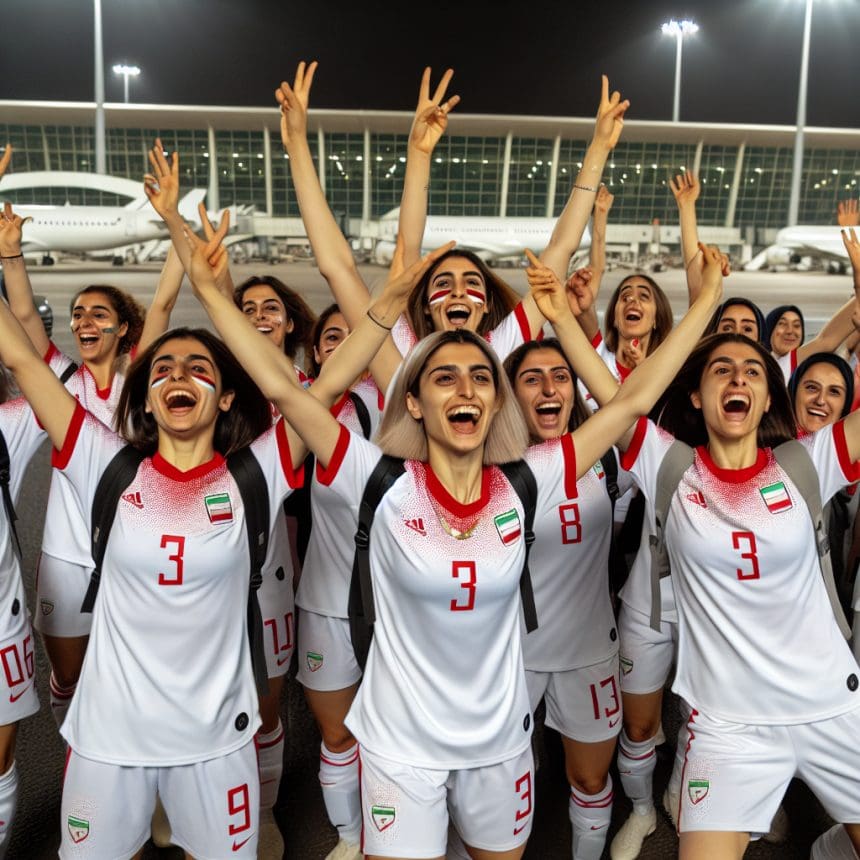
Upon their arrival at Tehran’s Imam Khomeini International Airport, the players were met with a mix of relief and apprehension. The decision to withdraw asylum applications came after a period of intense scrutiny and emotional turmoil, with members of the team considering the implications of their choices on their families and futures. While some players chose to remain in Spain and seek asylum, others felt a strong pull to return home, demonstrating the complexities involved in such life-altering decisions.
The backdrop to this situation is a difficult one for Iranian women athletes. In a country where female participation in sports has often faced barriers, the women’s national soccer team has become a symbol of resilience and determination. However, recent years have seen increased oppression, leading many athletes to evaluate their options amid a rapidly changing political landscape.

The Context of Asylum Applications
The decision to seek asylum stems from a variety of factors, including recent crackdowns on civil liberties in Iran and the consequent fears for personal safety. Amid ongoing protests in the country, many athletes have vocalized concerns about the treatment of women and alarming political conditions. The players faced immense pressure from both governmental authorities and societal expectations, which contributed to the complexity of their situation in Spain.
Reports suggest that prior to their departure, the athletes consulted with coaches and sports officials, who encouraged them to prioritize their safety and wellbeing. It is noteworthy that some players initially planned to seek asylum to escape potential repercussions for their participation in the tournament, a stage that notably emphasizes women’s empowerment in global sports.
A Divide Within the Team
As discussions unfolded, a rift formed within the team regarding the next steps. Some players felt an undeniable affinity for their homeland and believed that returning was the most prudent decision. Others argued that staying in Spain could open new opportunities not only for themselves but for other Iranian women athletes who might follow in their footsteps.
Sources close to the team highlighted the emotional toll this decision has taken on the players as they weighed their aspirations against the realities of life back in Iran. The players have become poignant symbols of the struggle for rights within a patriarchal system, making the messages from both the supporters of the team and government authorities particularly salient.
Reactions and Implications
The return of the team has ignited a fierce debate among supporters, social activists, and government officials. Critics argue that the Iranian government has not provided adequate support for female athletes, a situation that pressures players into difficult decisions. On the other hand, officials presented the players’ return as an extraction of national pride, emphasizing their commitment to their homeland despite emerging challenges.
Reactions on social media have ranged from supportive to critical, reflecting a society that is grappling with its identity in the wake of stark political changes. Well-known athletes, activists, and even sports commentators have taken to platforms to express solidarity with the players, encouraging a conversation on women’s rights and the vital need for greater support within Iran’s sports sector.
The Future of Women’s Sports in Iran
Despite the current challenges, the women’s national soccer team continues to be a beacon of hope for aspiring female athletes in Iran. Events like the International Women’s Soccer Tournament allow female players to showcase their talents and connect with the international community. Moreover, these platforms are essential for raising awareness about the challenges women face in sports, particularly within conservative societies.
Looking forward, the team’s experience in Spain could inform broader discussions concerning women’s rights and the support structures available for female athletes. Efforts are underway to advocate for greater investment in women’s sports, safety, and legal protections for athletes considering their future in Iran or abroad.
Conclusion
The Iranian women’s soccer team’s uncertain return heralds both personal and cultural implications within the realm of sports. While some chose to withdraw their asylum claims, the varied motivations behind these decisions underscore the complexities surrounding women’s rights in Iran. This episode serves as a reminder of the ongoing struggles faced by women athletes, who remain at the intersection of politics, culture, and sport.
The situation is far from a definitive conclusion, rather a pivotal moment in a broader narrative that reflects the evolving landscape of women’s sports in Iran. With continued advocacy, support, and visibility, there lies hope for change—both on the field and off—as the dialogue around women’s rights in sport persists on a global scale.