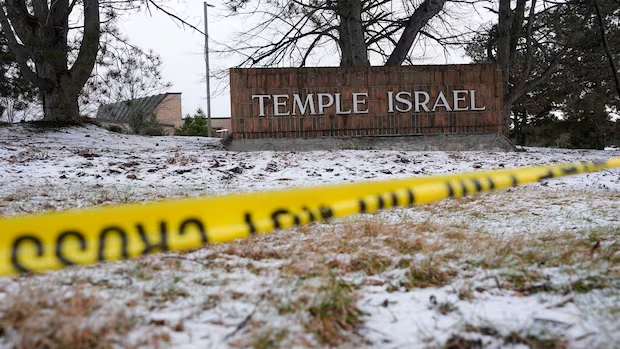
Headline: Michigan Synagogue Attacker Linked to Hezbollah Commander’s Kin
In a shocking revelation, Israeli authorities have identified the assailant who attacked a synagogue in Michigan as the brother of a prominent Hezbollah commander killed in combat. The incident occurred on Friday night, escalating tensions amid ongoing concerns over terrorism linked to the Lebanese militant group. Israeli intelligence officials disclosed the connection, suggesting the attack may have been motivated by the slain commander’s legacy and the broader geopolitical conflict involving Hezbollah and Israel.
Details Surrounding the Attack
The incident took place during a prayer service at the synagogue, where approximately 100 congregants were in attendance. Eyewitness accounts described a tense scene as the attacker, armed with a firearm, opened fire. Fortunately, none of the congregants sustained life-threatening injuries, thanks to the swift response from law enforcement. Officers arrived minutes after the attack commenced, apprehending the suspect and preventing further harm.
Israeli officials have stated that the perpetrator, identified as Mohammad Jibril, had been radicalized in the wake of his brother’s death, which occurred during an Israeli military operation last month. The deceased, commander Waleed Jibril, was known for orchestrating attacks against Israeli forces and was linked to multiple acts of terrorism targeting Israeli citizens.

Historical Context: Hezbollah’s Influence
Hezbollah, an Iranian-backed militant group based in Lebanon, has long been involved in regional conflicts, often clashing with Israel. The organization has a significant presence in southern Lebanon and is notorious for its aggressive tactics aimed at undermining Israeli security.
The attack in Michigan bears the hallmarks of Hezbollah’s outreach and influence, even extending to the U.S. This incident raises concerns about potential sleeper cells operating within the U.S. During the investigation, officials found Jibril had connections with other Hezbollah sympathizers residing in Michigan, a state with a sizeable Muslim community.
Broader Implications
The implications of this attack extend beyond the immediate horrors experienced at the synagogue. It highlights the intricate web of international terrorism and local extremism, showcasing how global conflicts can reverberate within American communities. Experts warn that radicalization can occur among individuals with familial connections to overseas conflict zones, leading to domestic terrorism.
Security analysts stress the need for heightened vigilance in communities with significant populations sympathetic to Hezbollah or similar groups. Law enforcement agencies are under increased pressure to monitor hate speech, recruitment efforts, and fundraising activities that may fund terror cells.
Community Reaction and Support
In the aftermath of the attack, local and national Jewish organizations have expressed solidarity and support for the congregation affected. Several interfaith leaders have come forward, emphasizing unity against extremism and hate. Rabbi Miriam Cohen, of the synagogue where the attack occurred, stated, "We must come together as one community to combat hatred and fear. This horrifying act will not deter us from our faith or our mission of peace."
Local authorities have vowed to enhance security measures around places of worship and community centers, aiming to reassure congregants and safeguard them from further threats. Governor Gretchen Whitmer issued a statement condemning the attack and promising resources for community support. "Acts of violence against any group will not be tolerated in our state. We stand firm in our belief that diversity strengthens us," she said.
The Role of Counterterrorism Efforts
Washington has also taken notice of the incident, with both Congress and the Department of Homeland Security discussing the potential implications for national security. A bipartisan commitment to thwarting domestic terrorism is currently in motion, with legislators proposing increased funding for intelligence-sharing programs that aim to dismantle threats from radicalized individuals influenced by foreign conflicts.
Security experts are now urging a comprehensive approach, combining local law enforcement strategies and federal intelligence operations. This unified effort is crucial to assess and neutralize threats stemming from individuals who may be influenced by foreign organizations like Hezbollah.
Conclusion: A Call for Vigilance
As details continue to unfold, the incident serves as a reminder of the interconnectedness of global political dynamics and their potential impact on local communities. The need for awareness and preparedness in the face of evolving threats has never been more urgent.
Synagogue leadership, community organizations, and law enforcement must work collaboratively to foster resilience against hatred, while also remaining vigilant to any signs of radicalization. As discussions around national security evolve, it is crucial for communities to remain united in their stand against all forms of violence and extremism.
This unsettling event in Michigan is just one of many instances demonstrating how geopolitical tensions can find their way into everyday life, underscoring the importance of vigilance, dialogue, and solidarity among diverse communities. The road ahead must focus on healing and rebuilding trust while being proactive in preventing future incidents. Through collaborative efforts, there remains hope for overcoming fear and division, paving the way for a more peaceful coexistence.