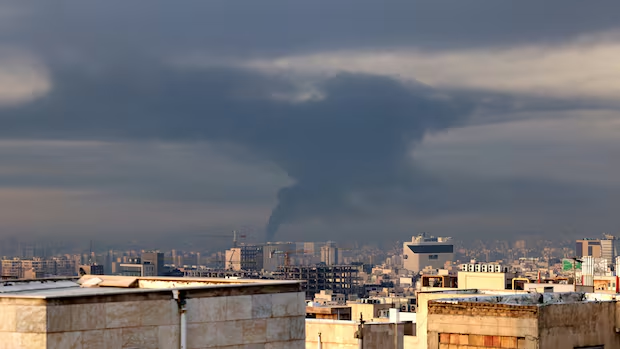
Headline: Iran’s Pezeshkian Extends Apology to Gulf States Amid Escalating Conflict
In a surprising move that underscores the escalating tensions in the region, Iranian President Masoud Pezeshkian publicly apologized to Gulf states this week as the ongoing conflict enters its second week. The apology, delivered during a televised address in Tehran on Monday, comes in the wake of rising hostilities between Iran and neighboring nations, particularly concerning maritime security and territorial disputes in the Strait of Hormuz. Pezeshkian emphasized the necessity for dialogue and cooperation, urging Gulf countries to engage in peace talks to avoid further bloodshed and regional instability.
Iran’s decision to reach out to Gulf states follows an alarming increase in military activity and hostile exchanges in the region. The conflict initially sparked when Iran accused several Gulf nations of undermining its sovereignty, leading to a series of confrontations at sea. Reports indicate that military vessels have been deployed by both sides, heightening fears of a broader conflict that could disrupt vital shipping routes and energy supplies, crucial for global markets.
In his address, Pezeshkian articulated his concerns regarding the ramifications of continued tensions, stating, "We must not let our differences escalate into war. Dialogue is essential for the stability and prosperity of the entire region." His call for peace represents a significant shift in Iran’s stance, especially as previous interactions have often been marked by hostility and suspicion. The Iranian government hopes that this conciliatory gesture may pave the way for diplomatic outreach and contribute to de-escalating the ongoing crisis.

The situation in the Gulf has been precarious since the beginning of the conflict, with multiple skirmishes reported in strategic waters. Analysts suggest that Pezeshkian’s apology may also be an attempt to rally domestic support as the Iranian public grows increasingly wary of the implications of prolonged military engagements. The economic repercussions of the unrest have already begun to affect the Iranian populace, intensifying calls for government accountability and a more prudent foreign policy.
Observers note that Pezeshkian’s overture could resonate favorably with Gulf leaders who have historically viewed Iran’s actions with skepticism. The apology is likely to be scrutinized by various factions within Iran, especially hardliners who have previously championed a more aggressive approach to foreign relations. For Gulf states, this moment could present both a challenge and an opportunity to redefine their diplomatic strategies with Iran.
Regional experts emphasize that the success of Pezeshkian’s outreach will depend significantly on the responses from the Gulf states. Some leaders may be inclined to take a conciliatory approach, hoping to prevent further destabilization in the oil-rich region. Others, however, may remain wary, recalling previous instances where diplomatic overtures from Tehran were perceived as tactical maneuvers rather than genuine efforts at reconciliation.
The complex dynamics of regional politics are further complicated by the involvement of international powers. The United States, which has historically supported Gulf states in their stands against Iran, has been monitoring the situation closely. American officials have recently reiterated their commitment to protecting allies in the region, which may influence how both Iran and Gulf states respond to the ongoing conflict.
Pezeshkian’s statement also included an appeal for unification among Muslim countries, emphasizing that internal divisions only serve external interests that thrive on discord. This rhetoric aligns with a broader Iranian narrative seeking to position itself as a regional leader in Islamic solidarity. However, the efficacy of this approach in convincing wary neighbors remains to be seen.
Furthermore, the economic implications of the conflict cannot be understated. The Strait of Hormuz is a critical artery for global oil transport, with a considerable percentage of the world’s oil passing through its waters. Any prolonged conflict could lead to significant spikes in oil prices, impacting economies far beyond the region. Experts warn that both Iranian and Gulf economies could face dire consequences if tensions do not ease and may incentivize both parties to reconsider their approaches to diplomacy.
As the conflict continues, the stranglehold of uncertainty looms over economic forecasts in the region. Predictions regarding oil prices and security conditions hang in the balance while Gulf states weigh their options for engaging or isolating Iran. In the backdrop of broader geopolitical maneuvers, the stakes have never been higher.
In light of these developments, Iranian officials have indicated that they are ready for a series of high-level discussions with Gulf counterparts aimed at addressing shared security concerns and fostering mutual economic interests. This open-door policy might provide a much-needed avenue for dialogue, although the response from Gulf leaders remains closely guarded.
As the second week of conflict unfolds, both Iran and the Gulf states face a pivotal moment that may define their future relationship. How leaders choose to interpret Pezeshkian’s apology—and whether they respond in kind—could shape the trajectory of peace and stability in a region fraught with tension.
With the international community holding its breath, all eyes will be on Tehran and its neighboring states to see if diplomacy can triumph over animosity in one of the world’s most volatile regions. The unfolding outcomes could serve as a harbinger for potential shifts in Middle Eastern geopolitics, one that may resonate well beyond the shores of the Gulf.