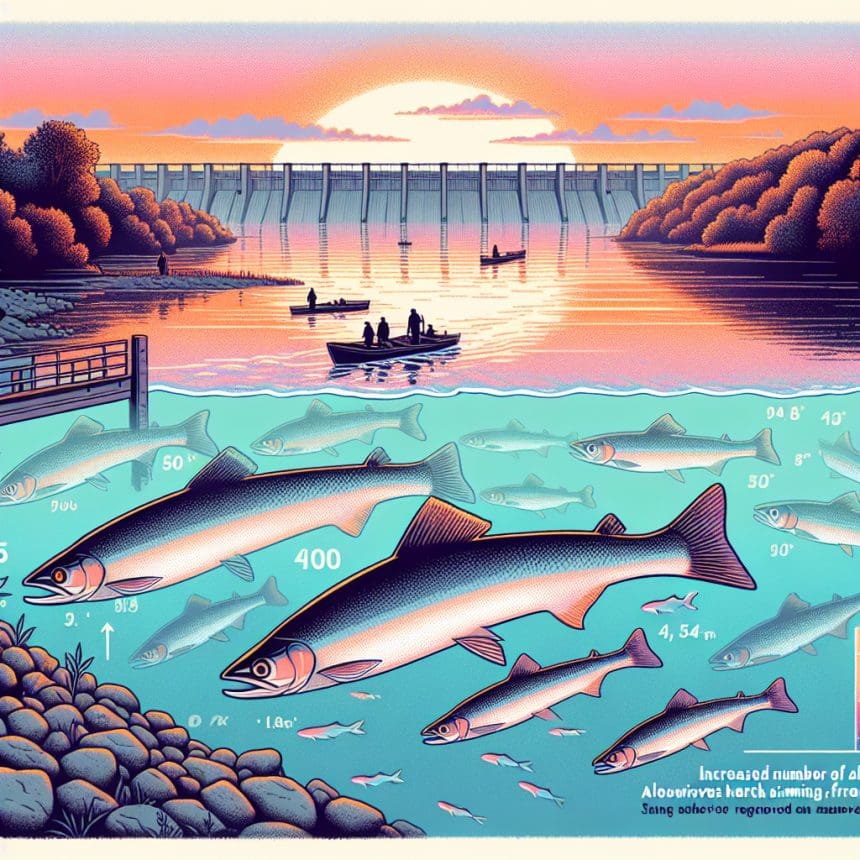
Headline: Alewife and Blueback Herring Thrive Post-Dam Removal
In a significant environmental milestone, wildlife advocacy groups report an increasing population of alewife and blueback herring in the St. Croix River following the removal of a landmark dam. This positive shift in fish populations has been observed during the summer months of 2023 when monitoring efforts were intensified, highlighting the benefits of ecological restoration initiatives in the region. The restoration project, which aimed to enhance fish passage and promote biodiversity, has demonstrated promising results at multiple benchmarks along the river.
The removal of the dam, completed in 2021, was part of a concerted effort to revive the aquatic ecosystem along the St. Croix River. This historic waterway, straddling the Minnesota and Wisconsin border, has long been affected by habitat fragmentation due to manmade barriers. The dam previously obstructed migratory routes for various fish species, particularly the alewife and blueback herring, which are vital for maintaining ecological balance in the river ecosystem.
In recent years, alewife and blueback herring populations had sharply declined, raising alarms among conservationists worried about the health of riverine ecosystems. The restoration project, led by a coalition of local wildlife organizations and supported by state and federal funding, has focused on re-establishing these populations. "The return of alewife and blueback herring signifies a major step towards restoring biodiversity in the St. Croix River," said Emily Jacobs, a biologist with the local conservation group.

Monitoring has shown a steady increase in both species since the dam removal. Studies conducted throughout the summer indicated a marked uptick in alewife numbers, with estimates revealing a threefold increase compared to pre-restoration data. Blueback herring have also made a noticeable comeback, particularly in the river’s upper stretches, where previously obstructed habitat is now accessible.
These fish are crucial for the ecological framework of the St. Croix River. Alewife and blueback herring serve as a food source for larger fish species, birds, and mammals, thus integrating into a broader food web vital for maintaining ecosystem stability. Their return is a boon not only for the species themselves but also for the health of identified predator populations in the river.
Local businesses and communities are also excited about the changes in the river’s ecology. The resurgence of these fish species is expected to boost recreational fishing and ecotourism in the area, which has been stunted by previous environmental degradation. "The increased fish population will undoubtedly have a positive impact on our local economy," said Tom Richards, owner of a nearby tackle shop. "More anglers mean more business, and that’s great for our community."
In supporting the project, stakeholders emphasized the need for long-term monitoring and proactive management to ensure these gains are sustained. Regular assessments will help gauge the success of the repopulation efforts and guide necessary interventions. The project team has also been working closely with local universities and research institutions to analyze the ecological advancements taking shape.
Expert opinions underscore the value of such ecological restoration projects, particularly as challenges related to climate change and urbanization continue to threaten local ecosystems. "Removing barriers allows for natural fish migration, fostering healthier aquatic ecosystems," said Dr. Lisa Torres, an ecologist specializing in riverine habitats. "What we’re seeing in the St. Croix is a powerful example of how restoration can positively affect both the environment and local communities."
The combined efforts in conservation and public awareness are also pivotal. Educational programs and community engagement initiatives produced by local organizations aim to foster stewardship and understanding of the St. Croix River’s ecological importance. These programs have garnered support from residents, schools, and environmental groups, helping to build a community invested in protecting the river and its inhabitants.
As fish populations continue to recover, the future of the St. Croix River looks promising. The ongoing success of the alewife and blueback herring populations serves as a vessel of hope for further ecological restoration initiatives elsewhere. Not only does this success illustrate the value of removing barriers to wildlife migration, but it also provides a model for similar efforts in rivers affected by dams and human infrastructure across the nation.
The implications of the dam removal extend beyond just the biological realm. It highlights the intricate connections between local ecosystems and community well-being. Activists and researchers alike stress that sustainable management practices, future restoration projects, and ongoing monitoring will play critical roles in ensuring the health of the St. Croix River for generations to come.
Moving forward, conservation groups plan to increase their research efforts to better understand the dynamics of not only alewife and blueback herring but other aquatic species that inhabit the St. Croix River. They aim to seize the momentum from this project to advocate for further restorations across the region. The overall sentiment from environmental advocates is one of cautious optimism; the success of the river’s restoration project is a demonstration that strategic environmental action can yield positive, enduring results.
As the summer of 2023 progresses, excitement is palpable in the communities alongside the St. Croix River. Many are hopeful that continued collaborative efforts between governmental agencies, non-profits, and local residents will bring even greater ecological advancements to the river’s diverse ecosystems. The increasing presence of alewife and blueback herring not only marks a triumph in restoration efforts but also reinforces the collective responsibility to nurture and protect natural waterways for future generations.