Headline: Houthis Launch Missile Attack on Israel: A New Escalation
In a significant escalation of regional tensions, Yemen’s Houthi movement has claimed responsibility for a missile attack on Israel. The incident occurred on Tuesday morning, with reports indicating that multiple missiles were fired from Houthi-controlled territory in Yemen. This attack marks a notable shift in the Houthis’ military strategy and represents an alarming development in the already volatile Middle Eastern landscape.
Background on the Houthis
The Houthi movement, also known as Ansar Allah, is a Yemeni rebel group that has been entrenched in a civil war against the internationally recognized government of Yemen since 2014. Backed by Iran, the Houthis have extended their military operations beyond Yemen’s borders, previously targeting Saudi Arabia and other regional adversaries. Their claims of responsibility for an attack on Israel align with the group’s broader objective of opposing perceived Western and Israeli influence in the region.
Details of the Attack
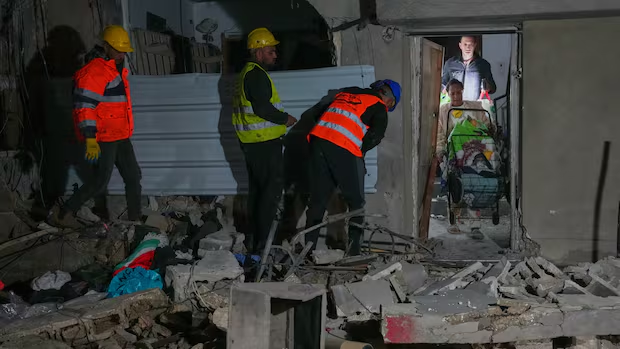
According to reports, the missile strike was launched around 10 AM local time and targeted military installations in northern Israel. While the extent of damage and any casualties remains unclear, Israeli military sources confirmed that the missiles had been intercepted by the Iron Dome defense system. This incident has escalated fears of a wider conflict involving multiple regional actors, amid already high tensions following the ongoing Israel-Palestine conflict.

Global Reactions
The international community has reacted swiftly to the attack, with calls for restraint from various quarters. The United States condemned the missile strikes, stating that such actions only serve to escalate the conflict and undermine efforts to achieve peace in the region. Meanwhile, Israeli Prime Minister Benjamin Netanyahu labeled the attack as an act of aggression that cannot be tolerated. "We will respond decisively to any threats to our nation," he asserted in a public statement.
The concerns are not limited to the immediate geopolitical ramifications; experts warn that this development could trigger increased military operations in the region. The U.S. has previously backed Israel with military aid and advanced weaponry, and further support may be warranted in response to the growing threat from the Houthis.
Implications for Regional Security
The missile attack highlights a worrying trend of increasing hostility among various factions in the Middle East. Experts note that if the Houthis continue to target Israel, it could draw in other regional players, including Iran and Saudi Arabia, escalating the existing conflicts and complicating any potential diplomatic efforts.
Dr. Amina Khalil, a Middle East analyst, remarked, “This is a pivotal moment. The Houthis have shown their willingness to extend their reach, and if this becomes a sustained campaign against Israel, we might see a cascade of retaliatory actions that could destabilize the entire region.”
In light of these developments, the possibility of a broader military confrontation in the Middle East appears to be on the rise. Analysts have suggested that Houthi attacks, if sustained, may invite retaliatory campaigns not only from Israel but also from other regional powers, thus igniting new flashpoints of violence.
The Role of Iran
Iran’s role in supporting the Houthis cannot be understated. The Islamic Republic has provided military and logistical support to the Houthis since the onset of the Yemen conflict. Following the missile launch, Iranian officials commended the Houthis for their actions, positioning their support as a response to perceived aggressions by Israel and its allies.
This relationship complicates the conflict further, as Tehran may now see an opportunity to leverage its influence through the Houthis to create a multi-front scenario against Israel. The potential for Iranian-Houthi collaboration emphasizes the necessity for heightened vigilance among Israeli and U.S. military officials.
Prospects for Peace
Amid these troubling developments, questions linger about the future of peace in the region. The recent attacks further diminish prospects for any meaningful dialogue between Israel and its neighbors. Observers note that any chance for diplomacy hinges on a commitment to ceasefire agreements and a reduction in aggressive military actions.
Organizations focused on peacebuilding in the region have begun to voice their concerns, seeking to create channels for dialogue. Originally aimed at fostering understanding between differing factions, these initiatives might now have to contend with increasingly aggressive military postures.
Conclusion
The Houthi missile attack on Israel marks a significant and troubling escalation in regional conflicts, raising the stakes for all parties involved. As the situation develops, the international community faces the urgent task of mediating tensions to prevent a broader conflict. The dynamics in the Middle East continue to evolve rapidly, and the global response will play a crucial role in shaping the future security landscape.
As analysts closely monitor the situation, the coming days will likely bring further developments, both on the ground and in diplomatic corridors around the world. The potential for escalation remains high, prompting urgent calls for dialogue and restraint from multiple stakeholders. Only time will tell how this latest incident will shape the course of an already complicated regional paradigm.