Former Circus Official, George S. Pace, Pleads Guilty to Embezzling More Than $123,000 from St. Louis Nonprofit
A former board president of a St. Louis nonprofit circus, George S. Pace, 63, has pleaded guilty to wire fraud after admitting he stole more than $123,000 in donor and organizational funds.
Federal prosecutors say the scheme involved unauthorized credit cards, diverted checks, and forged financial records.
Sentencing is scheduled for May 2026 in federal court.
ST. LOUIS, MO (STL.News) A former senior official of a St. Louis nonprofit circus has admitted in federal court that he embezzled more than $123,000 from the organization, using his position of trust to divert donor funds, rack up unauthorized personal expenses, and conceal his actions through deception and forged financial records.
According to federal court filings, George S. Pace, 63, of Ladue, pleaded guilty to four counts of wire fraud, acknowledging that he abused his authority while serving on the nonprofit’s board and later as its president. The case highlights the vulnerabilities nonprofit organizations face when internal financial controls break down—particularly when oversight is concentrated in a single individual.
Abuse of Authority Inside a Trusted Organization
Pace joined the circus’s board in 2020 and eventually rose to the role of board president. Prosecutors say that between December 2022 and at least September 2023, he systematically misused the organization’s funds for personal gain, while representing himself as a steward of its mission and donor trust.
Federal investigators allege Pace obtained and used at least one credit card without authorization, charging personal expenses unrelated to the nonprofit’s operations. Those expenses included dining, personal care services, and other lifestyle costs that provided no benefit to the organization.

In a separate instance, Pace used an additional credit card for further unauthorized spending. When questioned by another board member about suspicious charges, he claimed the card had been stolen — a claim prosecutors say was false.
Forged Records and Financial Deception
Rather than coming clean, Pace allegedly attempted to cover his tracks. Court records indicate he provided forged account statements to other officials to make it appear the issue had been resolved. This deception allowed the scheme to continue while delaying detection.
Beyond credit card misuse, Pace admitted to diverting checks that were intended to pay down the circus’s line of credit. As a result, the organization incurred additional interest expenses, further compounding its financial burden.
He also acknowledged depositing donor checks payable to the nonprofit into his personal bank account, a move prosecutors say constituted theft of charitable contributions.
Disaster Loan Applications Add to the Case
The guilty plea also references Pace’s admission that he fraudulently applied for two Small Business Administration disaster assistance loans totaling $29,400. Although those loan applications were ultimately denied, prosecutors cited them as further evidence of intent and financial misconduct.
Although no funds were disbursed from the loan applications, the attempt itself contributed to the broader pattern of deception detailed in the case.
Federal Investigation and Penalties Ahead
The investigation was led by the Federal Bureau of Investigation, and the prosecution was handled by the U.S. Attorney’s Office for the Eastern District of Missouri.
Each wire fraud count carries a maximum sentence of 20 years in federal prison, with a potential fine of up to $250,000 per count. Restitution is also expected to be addressed at sentencing.
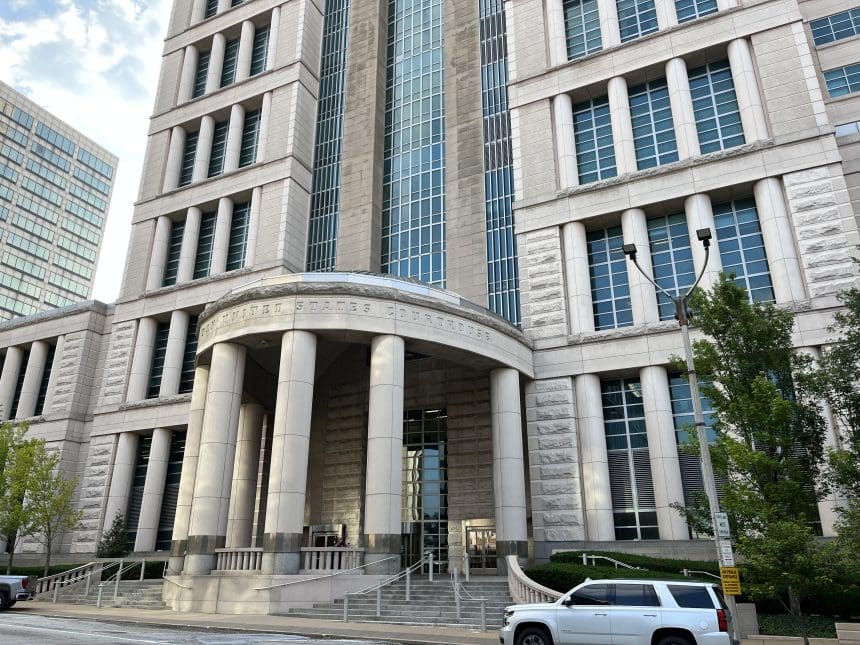
Pace is scheduled to be sentenced on May 4, 2026, in the U.S. District Court.
A Broader Warning for Nonprofits
The case underscores the importance of internal financial oversight, segregation of duties, and regular audits—particularly in nonprofit organizations that rely heavily on volunteer leadership and donor trust.
For donors, board members, and nonprofit leaders alike, the situation serves as a cautionary example of how quickly financial misconduct can escalate when accountability mechanisms fail.
As the sentencing phase approaches, the case remains a stark reminder that charitable organizations are not immune to financial crime — and that federal authorities are increasingly scrutinizing fraud involving nonprofit entities and donor funds.
© 2026 – St. Louis Media, LLC d.b.a. STL.News. All Rights Reserved. Content may not be republished or redistributed without express written approval. Portions or all of our content may have been created with the assistance of AI tools, such as Gemini or ChatGPT, and are reviewed by our human editorial team. For the latest news, head to STL.News.