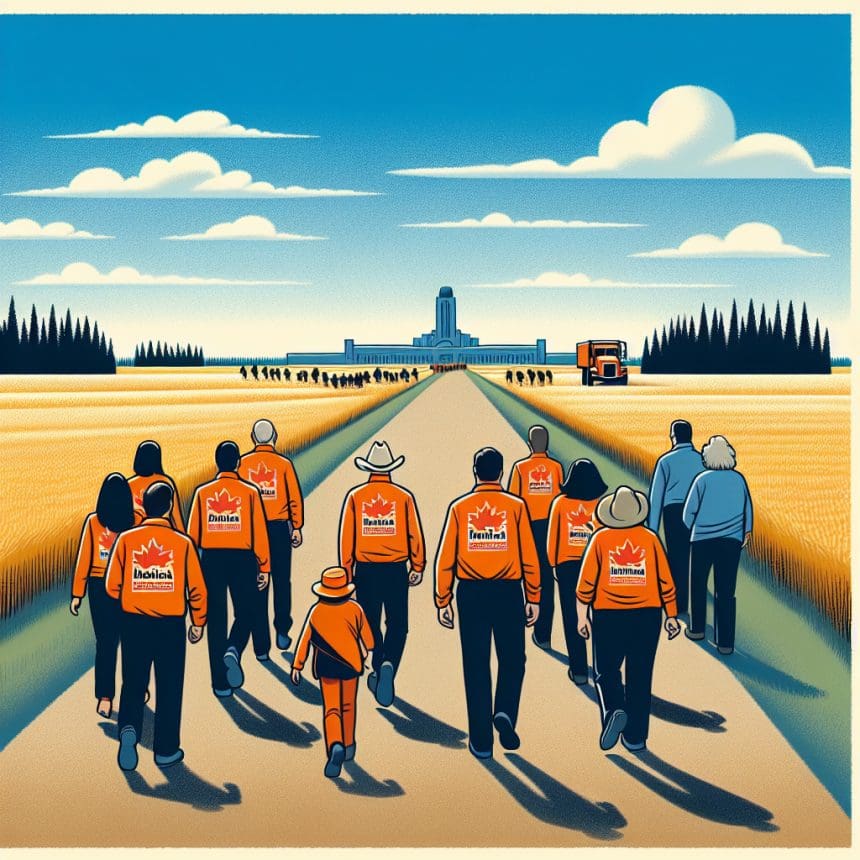
Headline: Tensions Rise in Manitoba as Federal NDP Visits Sparks Debate
In a recent move that has drawn significant attention, leaders of the Federal New Democratic Party (NDP) visited Manitoba this week, igniting discussions around the role and presence of federal representatives in provincial affairs. The visit, which was marked by public rallies and discussions, raises questions about how Prairie NDP leaders perceive this engagement and whether it aligns with their local strategies and priorities.
Background on Federal and Provincial Dynamics
The New Democratic Party has a storied history in Canada, particularly in Manitoba, where it has historically enjoyed substantial support. However, the dynamics between federal and provincial leadership have often been complex. The Prairie provinces, including Manitoba, have unique challenges and perspectives that often differ from national narratives. As the Federal NDP seeks to strengthen its foothold, local leaders are weighing the benefits and potential drawbacks of increased federal involvement.
Local Leaders Voice Their Concerns
In light of the recent Federal NDP delegation, several local leaders expressed mixed feelings. While some welcomed the attention and resources the federal party could bring, others raised concerns about the autonomy of provincial NDP leadership. Several sources indicate that the provincial party wants to maintain a distinct identity that resonates with local constituents more than federal directives.

“Manitoba is unique, and our needs may not reflect the broader agenda of the federal party,” stated a prominent NDP MLA who requested to remain anonymous. “We appreciate support from our federal counterparts, but it’s critical they understand the local issues we face.”
The Importance of Local Context
Issues such as healthcare, education, and natural resource management are pivotal in the Prairie region but often require a localized approach. Leaders argue that federal initiatives should be tailored to address these distinct needs.
Diving into specifics, healthcare funding remains a pressing topic, especially in the wake of the COVID-19 pandemic. Provincial leaders are advocating for funding that recognizes the particular challenges Manitoba faces, ranging from rural healthcare access to long waiting times.
“We can’t afford a one-size-fits-all approach to healthcare,” remarked a local healthcare advocate. “The needs in Winnipeg are vastly different from those in rural communities. Any federal engagement must account for that.”
Federal NDP’s Message to Manitoba
Federal NDP Leader Jagmeet Singh, during the visit, emphasized the importance of unity and shared goals, stating, “We are here to support the work that local leaders are doing to ensure that all Manitobans have access to quality healthcare, education, and opportunities.”
Singh also pointed to the federal party’s commitment to Indigenous rights and climate action as key issues that resonate across provinces, including Manitoba. However, the sentiments expressed by local leaders indicate that while these causes are crucial, they may not fully align with the immediate priorities on the ground.
Collaboration or Confusion?
The potential for collaboration between federal and provincial NDP factions is evident, yet concerns regarding confusion in messaging and priorities linger. As elections approach, establishing a unified front could prove beneficial, but only if both levels of the party can successfully navigate their distinct narratives.
One influential Prairie NDP leader commented, “It’s crucial that we don’t appear to be just an extension of the federal party. We have our own vision, and it’s integral we communicate that effectively.”
Impact on Upcoming Elections
As Manitoba prepares for upcoming elections, the role of the Federal NDP could play a significant part in shaping the strategies of local leaders. With a growing emphasis on coalition-building, some local leaders have called for clearer communication from federal representatives regarding their intentions and support.
Political analysts suggest that the effectiveness of this visit, and the resulting dialogues, will reflect significantly in election outcomes. Both levels of NDP must be attuned to voter sentiments, which can be influenced by a perception of whether they are in sync.
Concluding Thoughts
Ultimately, the intersection of federal and provincial NDP interests poses both opportunities and challenges. While some local leaders are cautiously optimistic about the potential support from the Federal NDP, others are firm in their desire for autonomy and a clear focus on provincial issues.
As the conversation around federal involvement in provincial matters continues, the necessity for local representation and understanding of regional contexts remains paramount. The Federal NDP’s future interaction with its Prairie counterparts will likely determine the party’s electoral success in Manitoba and beyond. This nuanced relationship must evolve, rooted in respect for the local narratives that have shaped the province’s political landscape.
The visit has sharpened the focus on these dynamics, setting the stage for ongoing discussions and possibly redefining the alliance between federal and provincial NDP leaders. Whether they unify or diverge remains to be seen, but one thing is certain: the stakes in Manitoba could not be higher.