Headline: FBI: Michigan Truck Crash Linked to Hezbollah Inspiration
Article:
In a shocking development, federal authorities have revealed that a man who crashed his truck into a synagogue in Michigan was inspired by Hezbollah. The incident occurred on a Friday evening, with the intention to provoke chaos and fear within the local Jewish community. Following an exhaustive investigation, the FBI has labeled the act as a hate crime, alleging that the suspect’s motivations were heavily influenced by extremist ideologies.
Early last month, 29-year-old David Harris drove his pickup truck through the front gate of the Temple Beth-El congregation in Bloomfield Township, a suburb of Detroit. The crash resulted in significant property damage but fortunately did not cause any injuries. Witnesses reported seeing Harris shouting anti-Semitic slurs as he attempted to ram the vehicle into the building, setting the scene for a horrifying act of violence.

Investigators quickly identified Harris through surveillance footage and witness statements. The FBI led the inquiry, eventually uncovering a troubling discovery: Harris had shown a fascination with Hezbollah and other extremist groups, using online forums to share his thoughts and ideologies. The agency noted that this incident could be part of a larger concerning trend of domestic extremism inspired by foreign terrorist organizations.
“Inspiration can come from various sources, and sometimes it can be foreign extremist groups that influence individuals here at home,” said FBI Special Agent Lara Connors in a press briefing. “We are actively working to thwart the proliferation of such ideologies and the violence they can incite.”
The investigation revealed that Harris had been radicalized over several months. He reportedly frequented online platforms and chat rooms that promoted hate, where he echoed sentiments that mirrored those often articulated by Hezbollah spokespersons. This discovery has raised alarms among community leaders and law enforcement officials regarding the potential for similar incidents.
Local Jewish leaders expressed their outrage and concern over the attack, stating that it starkly reflects the rising tide of anti-Semitism in the United States. Rabbi David Miller of Temple Beth-El condemned the incident. “This act is not an isolated event; it represents a growing threat to our community. We must remain vigilant and united against hate in all its forms,” he stated.
Harris has been charged with multiple offenses, including attempted destruction of property and ethnic intimidation. Prosecutors are considering additional charges that could escalate the severity of the case, particularly due to the hate-driven nature of the attack. If convicted, Harris could face significant prison time.
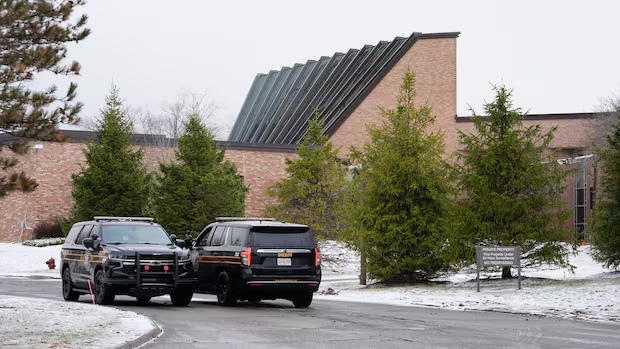
In response to the incident, local authorities are heightening security measures around not only the synagogue but also other places of worship within the community. The Bloomfield Township police department is collaborating with the FBI to ensure that there is a visible law enforcement presence during gatherings and events at various religious institutions in the area.
The incident sheds light on a broader issue: the rise of extremist ideologies within American borders. According to a report by the Anti-Defamation League (ADL), incidents of anti-Semitic attacks have surged by over 30% in the past year alone. This alarming statistic has reignited national conversations about hate crimes and the necessity for comprehensive hate crime legislation.
“Understanding the motivations behind acts of hate is crucial for preventing them,” said Sara Levy, a spokesperson for the ADL. “Law enforcement agencies, community organizations, and citizens must collaborate to create safe environments for everyone.”
Amidst these discussions, community leaders are also calling for educational initiatives aimed at dismantling stereotypes and fostering understanding among diverse populations. Rabbi Miller emphasized the importance of interfaith dialogue, stating, “Only through education and understanding can we truly combat hate and intolerance.”
While this incident has rattled the local community, many are choosing to respond with resilience. Residents have gathered for solidarity events, lighting candles and holding vigils to honor victims of hate. The outpouring of support from neighboring communities has showcased an unwavering stance against bigotry.
As the investigation unfolds, there are numerous questions left unanswered. What led Harris to such radical views? How can communities better protect themselves from similar threats in the future? Local leaders are advocating for ongoing dialogues and collaborative efforts to ensure safety while also promoting a culture of respect.
The FBI has confirmed that they will continue to monitor Harris’s activities and social media presence closely. Investigators are also looking into whether he had connections or communications with other individuals who might share similar extremist views. Heightened vigilance and community advocacy remain at the forefront of preventing such acts of violence in the future.
As this case unfolds, it serves as a stark reminder of the work that lies ahead in eradicating hate from society. The Michigan synagogue incident is not merely a local concern but a national one — a call to action for individuals and organizations alike to foster understanding, empathy, and ultimately, peace.
The community’s response may well determine how local residents emerge from this incident — with fear, or with a commitment to unity in the face of darkness. As discussions around hate-driven violence continue, the hope is that individuals will unite against hatred, showcasing resilience and empathy as they advocate for a safer future.