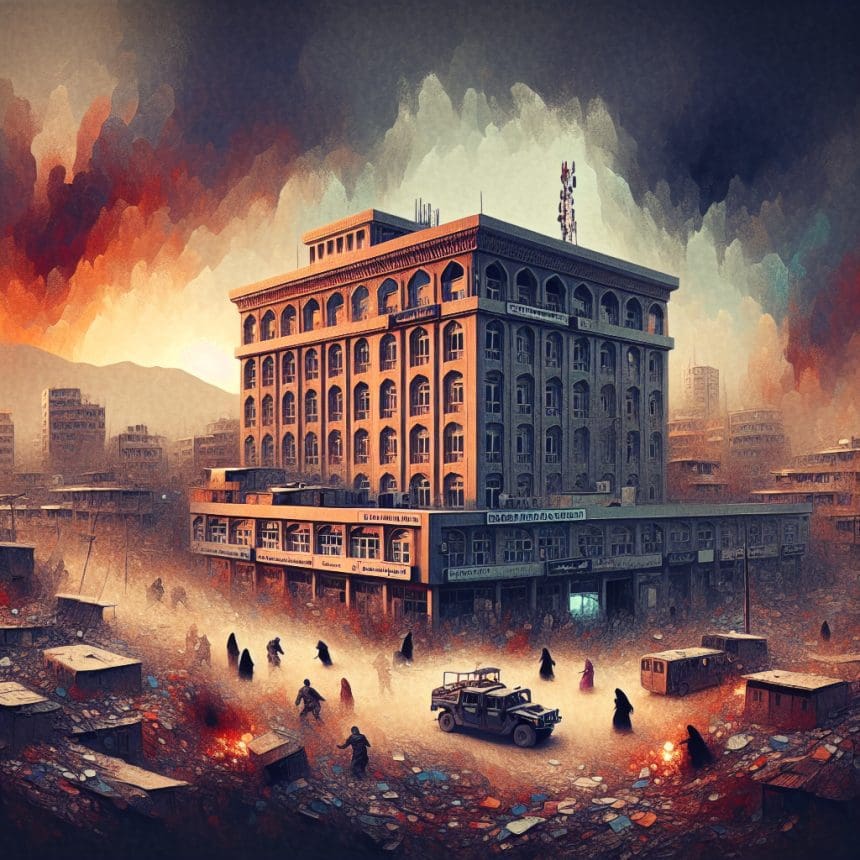
Headline: Afghanistan Alleges Pakistan Airstrike Killed Hundreds in Kabul
In a grave escalation of tensions between Afghanistan and Pakistan, the Afghan government has accused Pakistan of conducting a devastating airstrike on a Kabul hospital that allegedly killed hundreds of civilians on Tuesday. The airstrike, which marks one of the most severe incidents in Kabul since the Taliban’s return to power in August 2021, has drawn international condemnation and raised alarms about regional stability. Afghan officials claim that this deliberate attack targeted a facility that primarily served the vulnerable population, including mothers and children.
The incident occurred early in the morning, just as patients and health care workers began their daily routines at the hospital. Eyewitness accounts from survivors painted a harrowing picture of destruction and chaos as smoke billowed from the facility. Many were left trapped in the rubble, prompting emergency rescue operations that continued into the night. Afghan investigators assert that the strike was part of an ongoing military campaign by Pakistan to undermine Afghan sovereignty and intimidate the Taliban administration.
Pakistani officials have vehemently rejected the accusations, calling them “unfounded and irresponsible.” In a statement released shortly after the accusations, the Pakistani military emphasized their commitment to combat terrorism and maintain regional stability. They characterized the airstrike as a baseless allegation and suggested that the Afghan government was attempting to divert attention from its internal issues, including rampant insecurity and economic turmoil.

As the news of the airstrike spread, it ignited widespread outrage both within Afghanistan and across the international community. Social media platforms quickly erupted with calls for accountability and justice. Various human rights organizations have issued statements demanding a thorough investigation into the incident, stressing the need to protect civilians in conflict zones. The United Nations has called for an immediate ceasefire and urged both nations to engage in dialogue to de-escalate tensions.
The strike highlights the deteriorating situation in Afghanistan since the Taliban reclaimed control of the country. Public services, including healthcare, have dramatically declined, and with ongoing clashes between Taliban forces and various militant groups, the safety of civilians has become increasingly precarious. Experts believe that the ongoing violence has only exacerbated humanitarian crises faced by the Afghan population, many of whom are already suffering from food shortages and limited access to essential services.
In the wake of this tragedy, Afghan security officials have warned of potential ramifications, including retaliatory strikes. The Taliban, which has historically sought to establish a semblance of governance and stability in Afghanistan, now finds itself grappling not only with internal dissent but also external threats. Observers speculate that the resolution of these tensions could involve complex diplomatic negotiations, especially as global powers have vested interests in the region.
International relations analysts caution that this incident could lead to a more robust response from Kabul, potentially involving military action along the border with Pakistan. The increasing militarization of the area could create additional instability, further complicating efforts to reach a peaceful resolution. As both governments engage in a war of words, the humanitarian crisis continues to deepen, affecting thousands of innocent lives on both sides of the border.
Humanitarian organizations are mobilizing to provide assistance to those affected by the airstrike. Local NGOs and international bodies have pledged resources to support emergency medical treatment and aid for families who lost loved ones, but they face enormous challenges amidst an increasingly dangerous environment. Hospitals, already stretched thin from years of conflict, are now confronted with an influx of casualties, further crippling their abilities to serve the public.
As reports of the airstrike continue to emerge, the focus now shifts to how the international community will respond. Governments around the world have been urged to take a stand against such actions that endanger civilian lives. Many advocate for a united front to pressure Pakistan and Afghanistan to prioritize peace talks, emphasizing the dire need for a collaborative approach to tackle terrorism and protect civilians.
The situation remains fluid, with both the Taliban and Afghan civilians caught in the crossfire. The international community is watching closely, with potential implications for future aid and support dependent on how these nations address the escalating violence. An immediate resolution may seem distant, but many believe that a concerted diplomatic effort coupled with humanitarian assistance could pave the way for a more stable future.
As the story unfolds, deeper questions arise about accountability and the need for robust mechanisms to protect civilians in conflict zones. The airstrike on the Kabul hospital may serve as a wake-up call, urging nations to reassess their strategies regarding military engagement, humanitarian relief, and diplomacy in one of the world’s most challenging contexts.
The world will be watching closely as Afghanistan and Pakistan navigate this perilous moment. For the people affected by this tragic incident, urgent action is needed to ensure their safety and access to basic human rights, including healthcare and protection from violence.
The implications of the Kabul airstrike are not limited to Afghanistan and Pakistan alone; they resonate throughout the region and have the potential to affect global security dynamics. As concerns continue to grow, it remains crucial for the international community to engage with both countries to seek a peaceful resolution that prioritizes human rights and humanitarian concerns in a landscape marked by uncertainty and fear.