


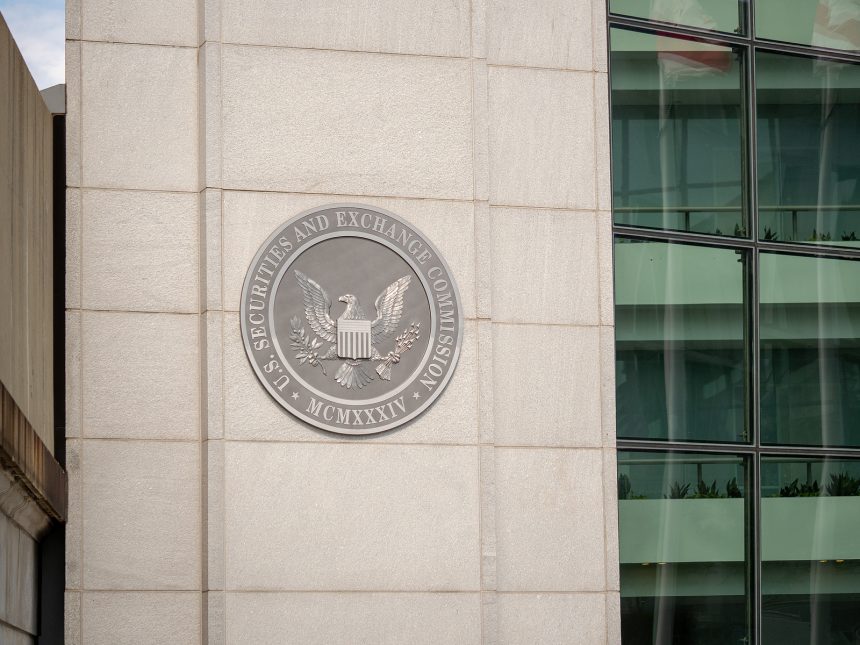
WASHINGTON, DC – October 9, 2026 (STL.News) The U.S. Securities and Exchange Commission (SEC) has proposed sweeping changes to investment fund trading regulations that could reduce transaction expenses for mutual funds and other registered investment companies while introducing new safeguards designed to protect investors from conflicts of interest.
Announced Friday, October 9, the proposal would amend Rule 17a-7 under the Investment Company Act of 1940, expanding the types of securities that registered funds can trade directly with certain affiliated funds and entities.
The proposed changes would restore cross-trading opportunities for most fixed-income securities, including many bonds, following restrictions that resulted from investment valuation regulations adopted in 2020.
The SEC also proposes updated pricing methods, mandatory compliance reviews, additional recordkeeping and expanded reporting requirements.
SEC Chairman Paul S. Atkins said the changes would modernize longstanding regulations and create opportunities for funds to avoid certain trading expenses, potentially passing those savings along to investors.
The proposal remains subject to public comment and has not been adopted as a final rule.
What Cross Trading Means for Investment Funds
Cross trading occurs when a registered investment company buys or sells securities directly with an eligible affiliated fund or entity rather than executing separate transactions through outside market intermediaries.
For example, an investment adviser might manage two mutual funds with different investment objectives. One fund needs to sell a corporate bond, while another wants to purchase the same security.
If regulatory conditions are satisfied, the funds could complete a direct transaction without using an outside securities dealer.
Such arrangements can reduce brokerage commissions, dealer spreads, and other transaction expenses.
However, cross trading also creates potential conflicts because the same investment adviser may influence decisions affecting both the buyer and seller.
Federal investment laws therefore impose restrictions designed to prevent investment advisers from favoring one fund’s shareholders over another’s.
Rule 17a-7 provides a conditional exemption permitting certain affiliated transactions when investor protections are satisfied.
Why the SEC Is Changing Rules Dating to 1966
The SEC originally adopted Rule 17a-7 in 1966, initially allowing certain cross trades involving exchange-traded securities.
The exemption was subsequently expanded, allowing registered funds to conduct qualifying transactions involving fixed-income investments.
However, the regulatory framework changed when the SEC adopted Rule 2a-5 in December 2020.
That regulation established updated standards for determining the fair value of investment fund holdings.
Its definition of readily available market quotations also affected which securities qualified for cross trading under Rule 17a-7.
According to the SEC, the interaction between the rules effectively excluded most fixed-income securities from the cross-trading exemption after the valuation rule’s compliance date.
The new proposal seeks to address that restriction while modernizing pricing and oversight requirements.
More Bonds Could Become Eligible for Cross Trading
A central provision would expand eligibility to securities valued using directly or indirectly observable market inputs.
The SEC says this approach is consistent with Level 2 inputs under the fair value hierarchy established by U.S. generally accepted accounting principles.
These inputs can include market information used to estimate securities values even when an identical security does not have a continuously available quoted price in an active market.
The change could make most fixed-income securities eligible for cross trading, provided the transactions satisfy the rule’s other conditions.
Bond markets differ from major stock exchanges because many securities trade through dealer networks rather than centralized exchanges.
Pricing can vary depending on interest rates, credit quality, liquidity, and investor demand.
The SEC believes improvements in electronic trading, market transparency, and independent pricing services support a more flexible regulatory approach.
However, the proposal would not authorize unrestricted cross trading of every security.
SEC Proposes Two Methods for Pricing Transactions
The proposed amendments would replace existing prescriptive pricing conditions with two permitted approaches.
Under the first method, a cross trade could be priced using the security’s value determined in the registered fund’s next calculation of net asset value on the transaction date.
Under the second method, an investment adviser could use a price reasonably representing the security’s current market value, based on unaffiliated pricing sources.
Advisers using the second method must periodically review whether those prices remain reasonable.
These provisions are intended to accommodate modern securities pricing practices while maintaining safeguards against unfair transactions.
Accurate pricing is particularly important when affiliated funds trade with one another because an inappropriate transaction price could benefit one fund at another’s expense.
Stronger Investor Protections and Compliance Oversight
The SEC’s proposal includes requirements designed to address conflicts of interest.
Before completing a cross trade, an investment adviser would be required to determine that the transaction is in the best interest of each participating registered fund.
The trade would also need to be consistent with the fund’s investment policies and strategies.
Additionally, the proposed amendments would assign specific oversight responsibilities to each registered fund’s chief compliance officer.
The officer would conduct quarterly reviews of cross-trading activity to determine compliance with regulatory requirements and report the findings to the fund’s board.
The SEC would also require annual back-testing reviews.
These reviews would examine transaction outcomes, including prices ultimately realized when securities acquired through cross trades are later sold, to identify patterns suggesting that affiliated transactions disadvantaged a fund.
The SEC also proposes maintaining records of cross trades, compliance reviews, and reports provided to fund boards.
These safeguards are intended to help ensure that lower transaction costs do not come at the expense of fair treatment for shareholders.
Could Mutual Fund and Retirement Investors Benefit?
The proposed changes could have indirect financial implications for Americans investing through mutual funds, individual retirement accounts, and workplace retirement plans.
Investment funds incur expenses when purchasing and selling securities, and those costs can affect shareholder returns.
By avoiding certain outside trading expenses, eligible cross trades could reduce portfolio management costs.
Over time, lower transaction expenses could benefit investors in affected funds.
However, the SEC has not guaranteed that the proposal would produce specific savings for individual investors.
Actual benefits would depend on trading activity, security prices, market conditions, and compliance costs.
The amendments would not directly change retirement contribution limits, tax treatment, withdrawal requirements or mutual fund management fees.
Investment advisers and retirement plans would also remain subject to other applicable legal obligations, including relevant provisions of the Employee Retirement Income Security Act.
New SEC Reporting Requirements
The proposal would expand regulatory reporting through Forms N-PORT and N-MFP.
Registered funds engaging in cross trading would report aggregated information, organized by asset class, concerning securities trading and cross-trading activity during the preceding month.
The requirements would give regulators additional information on the extent and composition of affiliated trading transactions.
The SEC also proposes allowing limited payments to unaffiliated service providers for necessary administrative services, including clearing, settlement, and custody.
Such payments would be subject to conditions, rather than serving as unrestricted transaction fees.
What Happens Next?
The SEC identified the proposal as Release No. IC-36358, File No. S7-2026-36.
The public comment period will remain open for 60 days after the proposed rule is published in the Federal Register.
Investment companies, financial advisers, investor advocates and other interested parties may submit comments addressing the proposal’s costs, benefits and investor protections.
The Commission will review public feedback before determining whether to adopt final amendments, revise the proposal or take no further action.
Until the Commission formally adopts any amendments and they become effective, existing cross-trading requirements remain in place.
The proposal represents a significant potential change in how registered investment funds manage securities transactions, particularly in fixed-income markets.
For investors, the central issue is whether expanded trading flexibility can deliver meaningful cost savings while preserving fair pricing, effective oversight, and protection against conflicts of interest.
Read Business News at STL.News




