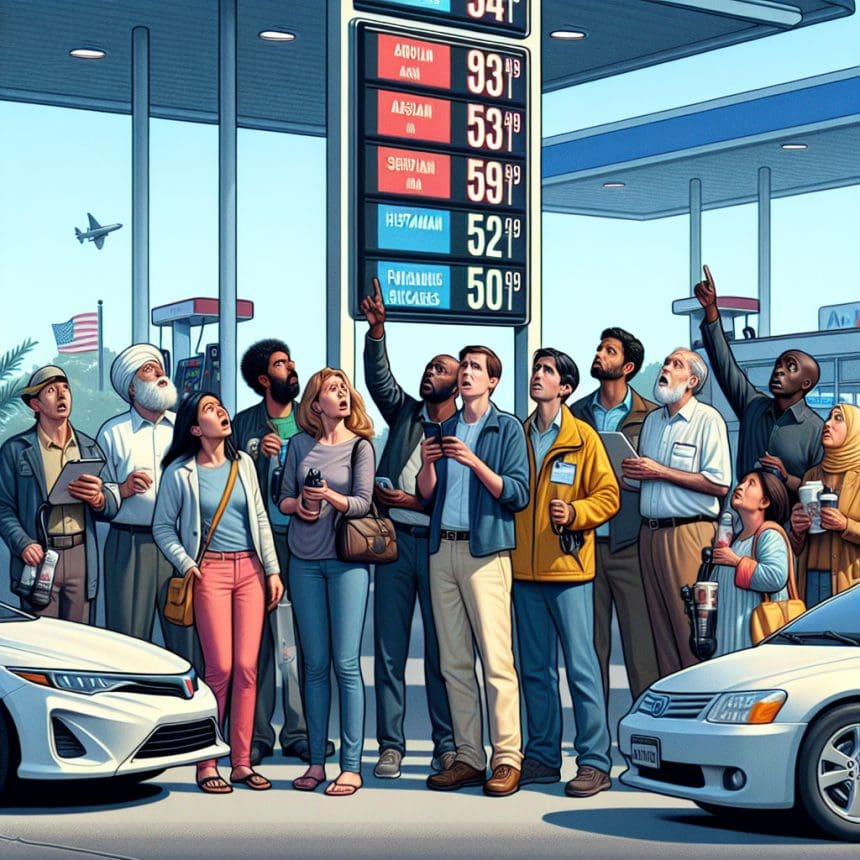
Headline: Rising Gas Prices Hit Ride-Hail Drivers Hard
As gas prices surge to record highs, ride-hail drivers across the country are feeling the financial strain more than ever. The significant increase in fuel costs has resulted in fewer profits for these essential gig workers, who have seen their operational expenses swell amid the ongoing economic pressures. This trend is particularly evident in urban areas, where drivers often depend on their vehicles for daily earnings. As prices at the pump soar, many ride-hail drivers are grappling with the reality of declining take-home pay, leaving them to question their continued viability in the industry.
According to the latest data from the American Automobile Association (AAA), the national average for regular gasoline reached a staggering $4.50 per gallon this month, a level not seen since the pandemic’s early days in 2020. This spike comes on the heels of rising crude oil prices, supply chain disruptions, and geopolitical tensions that continue to affect market stability. For ride-hail drivers, whose earnings often hinge on the volume of rides they can complete, these escalating gas prices directly impact their income.
The economic landscape for drivers has become increasingly challenging over the past few months. A driver in Los Angeles, who requested anonymity, expressed frustration with the squeeze at the pump. "Every time I fill up, I feel like I’m working harder for less," they said. "It makes it tough to justify spending hours on the road when the fuel costs cut so deeply into what I take home." For many drivers, the increased fuel expenses are not only affecting their daily earnings but also their overall job satisfaction.
Industry analysts warn that this trend may lead to a decline in the number of active ride-hail drivers. According to a report published by the Rideshare Drivers Alliance, nearly 30% of drivers have considered leaving the platform due to rising costs. This adjustment may result in longer wait times for passengers and higher fares, creating a feedback loop that could ultimately drive riders away from these services. The community of drivers, often working long hours for minimal wages, is now faced with a profound dilemma: bear the cost burden or seek alternative sources of income.

Uber and Lyft, two of the most prominent ride-hail platforms, have attempted to address the driver concerns by implementing temporary fuel surcharges. These surcharges are designed to offset fuel expenses, yet many drivers argue that they are insufficient to make a meaningful difference in their take-home pay. "The surcharge helps, but it doesn’t cover the skyrocketing prices we’re facing," said a Lyft driver in Chicago. "A few dollars here and there just doesn’t cut it when my gas tank is constantly on empty."
In response to growing unrest within the driver community, both companies have launched initiatives aimed at alleviating financial pressures. Uber recently announced a $200 million fund aimed at assisting drivers impacted by rising operating costs. However, skepticism abounds. Many drivers are unsure whether these initiatives will be effective or merely serve as a temporary band-aid on a larger, systemic issue.
Moreover, the difficulties facing ride-hail drivers have sparked conversations about better compensation models within the gig economy. Labor advocates are calling for fundamental changes to how ride-hail platforms operate, advocating for fairer wages and benefits. “Gig workers should be treated as essential workers who deserve a fair wage, especially when they’re spending more of their income on necessities like gas,” stated a representative from the National Employment Law Project.
As gas prices continue to fluctuate, some industry experts suggest that drivers may need to rethink their strategies. Carpooling and using electric or hybrid vehicles could be viable options for some drivers, albeit with their own set of challenges. In regions where traffic congestion is a perennial issue, drivers may find that optimizing their routes or seeking shared rides could provide a cushion against rising operational costs.
In the meantime, advocacy groups are urging local and state governments to step in. They propose measures that could provide relief to fuel-exposed gig workers, including fuel rebates or tax incentives for ride-hail drivers. “We must create a balanced platform where drivers feel secure in their livelihoods,” commented a spokesperson from the Gig Workers Collective.
Public sentiment has also shifted, with many consumers now more aware of the struggles faced by ride-hail drivers. Some riders have expressed a willingness to pay a bit more per ride if it translates into fair compensation for drivers. Platforms like Uber and Lyft have taken notice and may need to adjust their pricing structures to better reflect the needs of both drivers and consumers.
While the rising costs at the pump present immediate challenges, they may also pave the way for long-term changes within the ride-hail industry. If drivers are forced to seek alternatives, it could lead to an influx of demand for public transportation, cycling, or even traditional taxi services. The ride-hail model, often characterized by lower-than-average fare pricing, may soon encounter pressures that necessitate a reevaluation of operational frameworks.
As the pressure intensifies, ride-hail drivers are at a critical juncture. They must balance their need to earn a living with the harsh realities of rising gas prices that threaten to render their work financially unviable. The next few months will undoubtedly be pivotal, not just for drivers, but for the relationship between gig economy workers and the platforms they rely on for income. The future will likely hinge on how effectively these parties can navigate the growing challenges of fuel costs while still providing accessible transportation options for consumers.
In the face of rising gas prices, adaptability, resilience, and collective action may prove essential for ride-hail drivers as they seek to reclaim a piece of their diminishing earnings while ensuring that their role in the transportation ecosystem remains viable.