Headline: NYPD Officer’s Widow Shares Heartbreak as Trial Begins
In a somber courtroom in Manhattan on Monday, the widow of an NYPD officer broke down in tears as the trial of the man accused of killing her husband commenced. The proceedings began after several delays, igniting renewed public attention and emotional responses from the victims’ family, as they sought justice for the 35-year-old officer, whose life was tragically cut short during a routine patrol. Family members and supporters filled the seated gallery, bringing an atmosphere of palpable grief and tension to the trial.
The alleged perpetrator, 28-year-old Marcus Greene, faces charges that include first-degree murder and armed robbery. Prosecutors claim that Greene shot Officer Anthony Solis during a contentious encounter last summer while attempting to flee the scene of a reported crime. Greene was arrested shortly after the incident, leading to a series of legal delays that have kept Officer Solis’s family and the public waiting for closure.
During the opening statements of the trial, the lead prosecutor painted a harrowing picture of the events leading up to the shooting, portraying Officer Solis as a dedicated public servant who devoted his life to protecting the community. “He was doing what he loved, serving the people of New York City,” the prosecutor stated, reflecting the deep sense of loss felt by the family and the city.
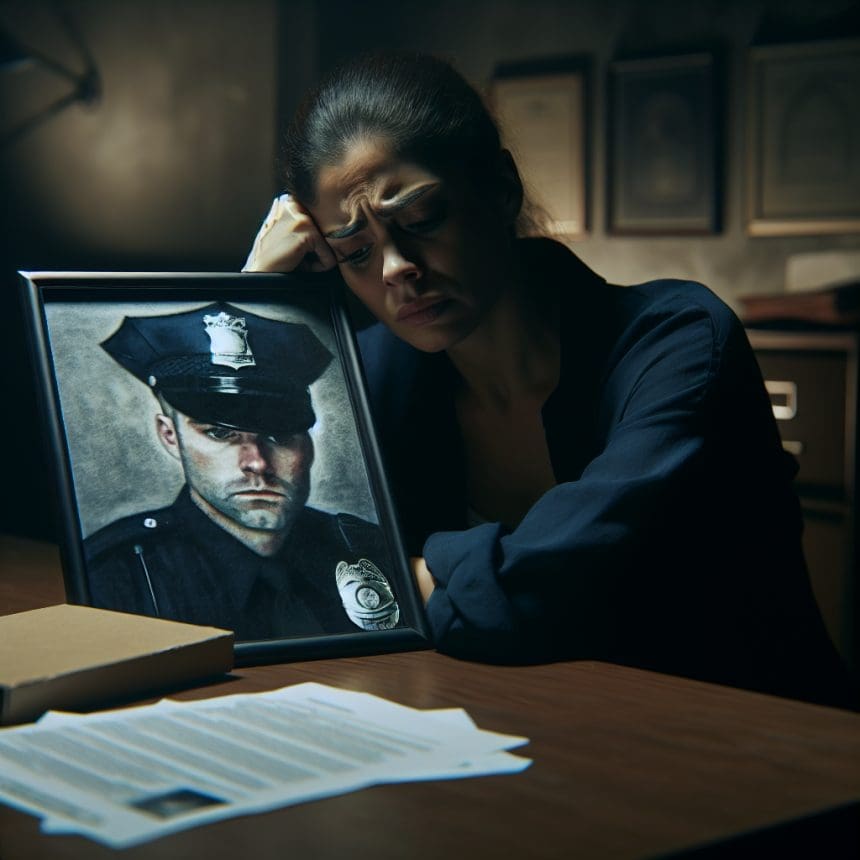
Solis’s widow, Maria, sat in the front row, visibly shaken as the details of the night her husband died were recounted. Eyewitnesses described the chaos and fear that engulfed the street as gunshots rang out. Friends and colleagues of Officer Solis have expressed their heartbreak and frustration at the loss of a man who had not only served his community but also embraced being a loving father and husband.

The emotional weight of the trial seems to weigh heavily on the proceedings, pushing jurors to grapple with the real-life implications of the charges against Greene. Legal experts have noted that the case may become as much about the emotional toll of police work, particularly in a city that has seen rising gun violence, as it is about the specifics of the crime itself.
In a sign of the societal tension surrounding police-community relations, defense attorneys plan to argue that Greene acted in self-defense during the incident, framing him as a man responding to fear for his own life. This narrative has sparked discussions among local advocacy groups that emphasize a need for reform in policing practices, reigniting citywide debates about violence against men of color, law enforcement ethics, and public safety.
Supporters of Officer Solis have rallied outside the courthouse, carrying banners and flowers, demonstrating solidarity with the grieving family. “Justice for Officer Solis” and “End Gun Violence Now” were among the slogans highlighted by those advocating for a speedy trial and severe consequences for the accused. The presence of these supporters serves as a testament to the broader implications of the case, influencing public sentiment and the jurors’ environment.
The NYPD has issued statements of support for Solis’s family, reiterating their commitment to ensuring that justice is served. “We stand with the family of Officer Solis and remember him not just as an officer, but as a father, husband, and friend,” said NYPD Commissioner Edward Cummings during a press conference last week. He emphasized the risks faced by officers on the job, especially in high-crime neighborhoods.
As the trial unfolds, some legal analysts suggest that the outcome may significantly impact ongoing conversations about police funding, law enforcement practices, and community relations in New York City. Many are closely monitoring the proceedings to glean insights into how jurors respond to the intense emotional narratives and legal arguments presented by both sides.
Throughout the courtroom, a sense of heavy anticipation looms. Family members gathered with solemn resolve as Maria Solis wiped away her tears – a heartbreaking reminder of the personal toll incurred in the wake of violence and loss in the community.
Undeniably, the trial of Marcus Greene will not only determine his fate but also reflect broader social dynamics at play in New York City. Police officers continue to face pressures from various corners, including concerns over their safety and public perception, while advocates push for systemic changes in how communities are policed.
As the first day came to a close, with witnesses set to take the stand on both sides, the community and the judicial system braced for a trial that promises to be both emotionally laden and fraught with tension. The coming weeks will reveal not just the details of one tragic event, but also the ways in which society grapples with the aftermath of crime, loss, and the quest for justice.
In parallel discussions, the trial has drawn attention from the media and advocacy groups who aim to shed light on the complexities surrounding violence and policing in urban environments. With public sentiment hanging on the outcome, the trial will likely serve as a flashpoint for larger issues affecting New Yorkers and law enforcement.
As the spotlight remains on the courtroom, the widow’s haunting cries echo not just for her husband, but for a city yearning for healing—an agonizing reminder that the process of seeking justice can often be as painful as the loss that prompted it. The case continues to develop as witnesses are expected to present harrowing accounts from that fateful night, keeping the spotlight on community safety, accountability, and the enduring legacy of Officer Anthony Solis.