(STL.News) When United States President Donald Trump publicly expressed interest in acquiring Greenland, the reaction ranged from confusion to ridicule. Many observers dismissed the idea as unrealistic or symbolic, but behind the headlines lies a serious strategic conversation about global power, security, and economic interests. While the concept of purchasing territory may seem outdated in modern geopolitics, Trump’s interest reflects broader shifts in global competition, particularly in the Arctic.
This article examines why Trump wants Greenland, the strategic logic behind the proposal, and how his past leadership style and business background inform the approach. The goal is not to promote or oppose the idea, but to explain it objectively and in context.
Greenland’s Strategic Importance
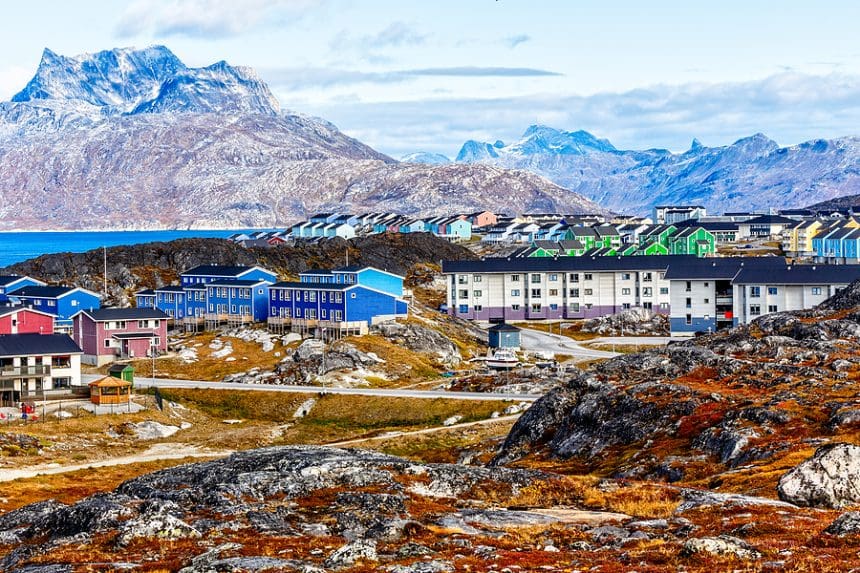
Greenland is the world’s largest island and sits between North America and Europe. Its geographic location places it at the crossroads of major global trade routes and military transit corridors. As climate change alters climate patterns, Arctic ice is receding, opening new shipping lanes that could dramatically reshape global commerce.
Control or influence over Greenland strengthens access to these emerging routes. For the United States, this means faster military mobility, shorter trade paths, and increased oversight of international shipping traffic.

Additionally, Greenland hosts a long-standing U.S. military presence. The Pituffik Space Base (formerly Thule Air Base) plays a critical role in missile detection, space surveillance, and national defense systems. This installation already makes Greenland strategically relevant to American security.
Trump’s interest builds on this existing footprint. From a national security perspective, expanding influence in Greenland aligns with maintaining dominance in Arctic defense infrastructure.
Competition with Russia and China
The Arctic has become a growing theater of competition between global powers. Russia has significantly expanded its military presence in the region, reopening Soviet-era bases and developing new ports and airfields. China, although not an Arctic nation, has declared itself a “near-Arctic state” and is investing heavily in infrastructure and research projects throughout the region.
Trump’s approach to foreign policy consistently emphasized countering Chinese and Russian influence. Whether through trade tariffs, diplomatic pressure, or military spending, his administration focused on preventing adversaries from gaining strategic advantages.
Greenland represents a crucial outpost in that contest. Gaining stronger U.S. control or influence there limits foreign expansion and reinforces NATO security interests. In this context, Trump’s interest aligns with a broader geopolitical strategy rather than a symbolic purchase.
Natural Resources and Economic Potential
Greenland holds significant untapped natural resources, including rare earth minerals, uranium, oil, and gas. Rare earth elements are particularly valuable for modern technology, defense systems, and renewable energy production.
China currently dominates the rare-earth supply chain, raising concerns about dependency and national security. Diversifying supply sources is a strategic priority for the United States and its allies.
Greenland’s mineral reserves represent an opportunity to reduce that dependency. From a business perspective, Trump often emphasizes control over supply chains and the development of domestic resources. His interest reflects a focus on securing critical materials needed for future industries.
Economic development in Greenland could also benefit its population through infrastructure investment, job creation, and trade partnerships. While any extraction would require environmental safeguards, the economic potential is undeniable.
Trump’s Business Mindset
Trump’s background as a real estate developer shapes how he views national assets. Throughout his career, he pursued undervalued properties, high-impact investments, and long-term growth opportunities. This perspective translates into how he approaches geopolitical strategy.
From his viewpoint, Greenland represents a long-term strategic asset with rising value. As global competition increases and Arctic routes expand, the island’s importance will likely grow. Securing influence now could be seen as a forward-looking investment rather than an impulsive idea.
During his presidency, Trump renegotiated major trade agreements, including the USMCA, replacing NAFTA. Supporters argue this demonstrated his willingness to challenge traditional frameworks in pursuit of better terms for the United States. Whether one agrees or not, it shows a pattern of unconventional negotiation tactics.
His approach to Greenland follows a similar pattern—questioning long-standing assumptions and introducing ideas others avoid discussing.
Historical Precedent
While purchasing territory may sound outdated, it is not unprecedented. The United States acquired Alaska from Russia in 1867, a deal that was initially criticized but later recognized as strategically brilliant. The Louisiana Purchase doubled the size of the nation and reshaped American history.
Trump has referenced these examples when discussing Greenland. Historically, strategic land acquisitions have played a major role in U.S. expansion and security.
Modern international law and diplomacy make such deals far more complex today, but the concept itself is not new. Trump’s interest fits within a historical pattern of American territorial strategy.
National Security Framing
Trump consistently framed major decisions through a national security lens. Whether it was border enforcement, defense spending, or trade policy, he emphasized protecting American interests.
Greenland fits within that framework. Expanding influence over a strategically located territory strengthens early warning systems, missile defense, and Arctic surveillance.
The U.S. military already relies on Greenland’s infrastructure. Formalizing or expanding that relationship could streamline operations and strengthen NATO coordination.
From a defense standpoint, Trump’s position reflects continuity rather than radical change.
The “Easy Way or Hard Way” Statement
Trump’s remark that he would get Greenland “the easy way or the hard way” sparked controversy. Many interpreted it as a threat, but it also reflects his negotiating style.
Throughout his business career, Trump often used aggressive language to gain leverage. Supporters see it as strategic positioning rather than literal intent. Critics view it as unnecessarily provocative.
The “easy way” likely refers to negotiation—economic partnerships, long-term leases, or expanded military agreements. The “hard way” could imply diplomatic pressure or strategic competition rather than military action.
There is no evidence that Trump intended to forcibly seize Greenland. Such a move would violate international law and undermine NATO alliances. More realistically, the statement aligns with his tendency to use blunt language to shift negotiating dynamics.
Greenland and Danish Sovereignty
Greenland is an autonomous territory within the Kingdom of Denmark. Both Danish and Greenlandic leaders have repeatedly stated that the island is not for sale.
Any major change in status would require approval from Greenland’s population. Trump’s proposal sparked renewed discussion inside Greenland about independence and economic development.
In this sense, his comments indirectly elevated Greenland’s global visibility and negotiating position.
While Denmark rejected the idea, the broader conversation highlighted Greenland’s importance on the world stage.
Past Presidential Successes
Supporters point to Trump’s track record of achieving outcomes many believed impossible:
- Renegotiating trade agreements
- Securing historic peace deals in the Middle East
- Pressuring NATO allies to increase defense spending
- Confronting China on trade imbalances
- Passing major tax reform legislation
These accomplishments shape how his supporters interpret the Greenland proposal. They argue that Trump often succeeds where others hesitate, using unconventional tactics to drive results.
Even critics acknowledge that his approach changed diplomatic norms and forced new conversations.
Domestic Political Context
Trump’s Greenland comments also reflect domestic political strategy. By introducing bold ideas, he dominates media coverage and reshapes public debate. This tactic keeps him at the center of the national conversation.
For his base, boldness signals strength and leadership. For opponents, it raises concerns about unpredictability.
Regardless of viewpoint, his statements consistently generate discussion about U.S. global strategy.
Economic Strategy and Infrastructure
Trump frequently emphasized infrastructure investment and domestic production. Greenland could serve as a platform for Arctic research, shipping hubs, and resource development.
As Arctic routes open, ports and logistics centers will become increasingly valuable. Investing early could secure long-term economic advantages.
From a strategic planning perspective, this aligns with Trump’s broader economic vision of positioning the U.S. for future growth.
Environmental Considerations
Any development in Greenland would raise environmental concerns. The Arctic ecosystem is fragile, and resource extraction must be carefully managed.
While Trump prioritized economic development, any serious proposal would require international environmental standards and oversight.
Balancing security, economic growth, and environmental protection remains a key challenge.
Public Perception vs Strategic Reality
Public reaction to the Greenland proposal often focused on tone rather than substance. Many dismissed it without examining the underlying strategic logic.
Yet defense analysts and geopolitical experts agree that Greenland’s importance is rising. Whether under Trump or future administrations, U.S. engagement in the Arctic is likely to increase.
Trump simply expressed it more bluntly than most politicians.
Long-Term Implications
Greenland will remain central to Arctic geopolitics for decades. Shipping routes, mineral resources, and military positioning ensure its relevance.
Trump’s interest may be seen in hindsight as an early signal of that shift.
Even if the proposal never advances, it forced policymakers and the public to acknowledge Greenland’s strategic value.
Conclusion
Trump’s interest in Greenland is rooted in national security, economic opportunity, and geopolitical competition. While his language sparked controversy, the strategic logic behind it is widely recognized.
His business mindset, past successes, and unconventional leadership style shape how he approaches global challenges. Supporters view the proposal as forward-thinking. Critics see it as unrealistic. But both sides acknowledge that Greenland matters.
In a rapidly changing world, strategic territories are gaining increasing importance. Whether through negotiation, partnership, or investment, U.S. involvement in Greenland is likely to expand—regardless of who occupies the White House.
Trump’s proposal may ultimately be remembered less for its feasibility and more for how it reframed the conversation about America’s role in the Arctic and the future of global power dynamics.
Copyright © 2026 – St. Louis Media, LLC d.b.a. STL.News. All rights reserved. This material may not be published, broadcast, or redistributed. It may have been written in part with either Gemini or ChatGPT AI programs. For the latest news, head to STL.News.