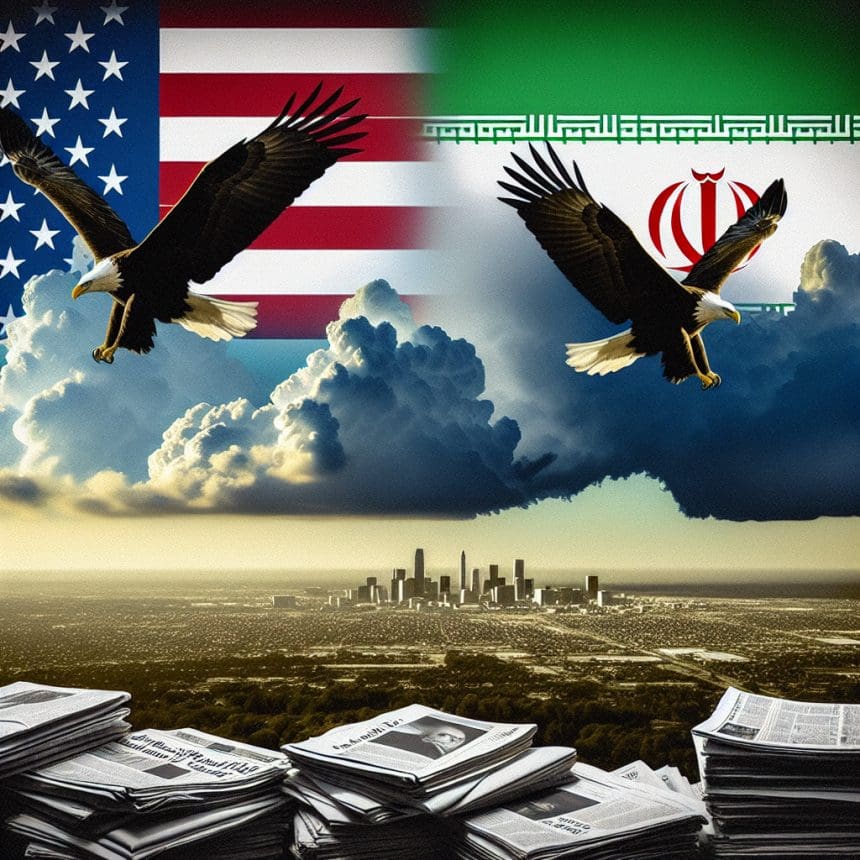
Headline: US-Israel Airstrike Strategy Weakens Iran’s Defense Capabilities
US-Israel Blitz Cripples Iran as Uncontested Airspace Nears
In a significant escalation in the Middle East, the United States and Israel have launched a coordinated series of airstrikes aimed at crippling Iran’s military capabilities. Taking place over the past week, these targeted operations have reportedly degraded key military installations across Iran, demonstrating a strategic shift that could lead to a new phase of aerial dominance in the region. Intelligence sources suggest that this rapid escalation reflects growing concerns over Iran’s nuclear ambitions and destabilizing activities in the Middle East.
Overview of Strategic Airstrikes
The airstrikes, primarily focused on Iran’s missile production facilities and drone depots, were coordinated by both US and Israeli military forces. This unprecedented collaboration showcases a unified approach to addressing mutual threats posed by Tehran’s military advancements. Analysts indicate that the air operations mark a pivotal moment in US-Israel relations, revitalizing a security alliance that has faced evolving challenges over recent years.
Tactical Objectives of the US-Israel Coalition
The mutual objectives of the US and Israel in this operation are clear: to dismantle Iran’s capability to project power in the region and to deter future nuclear developments. By targeting specific military assets, both countries aim to send a strong message that further aggression by Iran will not be tolerated.

Targeted Military Installations
Reports indicate that the airstrikes have successfully neutralized several significant locations associated with Iran’s ballistic missile program. By striking autonomy hubs responsible for the production of advanced munitions and drones, the US-Israel coalition seeks not only immediate tactical advantages but also long-term strategic gains.
Implications for Middle Eastern Geopolitics
The coordinated airstrikes have broader implications for the geopolitical landscape of the Middle East. With Iran’s military capabilities significantly hampered, regional dynamics are likely to shift. Countries such as Saudi Arabia, the United Arab Emirates, and Bahrain may find themselves reassessing their defense strategies in light of the newly contested airspace.
Initial Reactions from Iran
Iran has condemned the airstrikes, calling them acts of aggression. In a statement released by Iranian officials, they vowed retaliation and emphasized their commitment to defending their sovereignty. The Iranian leadership’s response emphasizes the importance of their military capabilities and highlights the significant tension that may follow.
US and Israeli Military Partnerships: An Evolving Landscape
The partnership between the US and Israel has evolved substantially over the last few years. Joint military exercises, intelligence sharing, and technological collaborations have strengthened their operational capabilities. This recent engagement marks a new chapter in that partnership, showcasing an increasingly aggressive stance against perceived threats.
Advanced Technology and Tactical Integration
Both nations rely on advanced technologies such as drone warfare and precision-guided munitions. The integration of these technologies in air operations not only enhances strike accuracy but also minimizes collateral damage, a critical consideration given the complex landscape of Iran’s urban areas.
Countermeasures and Future Strategies
As the US-Israel coalition gains momentum, Iran is rapidly developing countermeasures to mitigate the impact of these airstrikes. Both domestic politics and military strategy will shape Iran’s response in the coming weeks.
Strengthening Missile Defense Systems
Reports suggest that Iran is accelerating efforts to enhance its missile defense systems. These developments are critical as Iranian officials focus on ensuring that their military infrastructure is resilient against future strikes, indicating a possible arms race in both defense and offense capabilities.
International Reactions and Diplomatic Consequences
The international community has responded with a mix of concern and support. European powers, traditionally more cautious in their stance towards Iran, have called for restraint on all sides. However, some members of the Gulf Cooperation Council (GCC) expressed appreciation for the actions taken by the US and Israel, viewing them as a necessary step to ensure regional stability.
Potential Diplomatic Strains
The coordinated airstrikes could strain US relations with several key allies. Nations that maintain economic ties with Iran, such as China and Russia, may see this military action as an escalation of hostilities in an already turbulent region. Additionally, tensions may mount within the United Nations, as discussions surrounding nuclear non-proliferation become even more contentious.
The Path Forward: A New Era of Air Superiority?
As the dust settles from the recent aerial strikes, questions emerge about the future of military engagement in the Middle East. With airspace over Iran becoming increasingly contested, how the situation evolves will be closely watched by global leaders.
Potential Outcomes of Ongoing Operations
Should the current operations achieve their intended outcomes, the US-Israel coalition may find itself in a position of unprecedented air superiority in the region. This could reshape not only the strategic calculations of Iran but also influence the broader geopolitical environment of the Middle East.
Conclusion: The Stakes Remain High
The US-Israel blitz represents a transformative moment in Middle Eastern geopolitics and military strategy. As the coalition continues its operations against Iran, regional dynamics are likely to be reshaped, making the coming weeks crucial for diplomatic and military responses. Whether this enhanced military collaboration leads to long-term stability or further conflict remains to be seen. The eyes of the world remain fixed on the skies over Iran, as the tension between power and sovereignty continues to unfold.