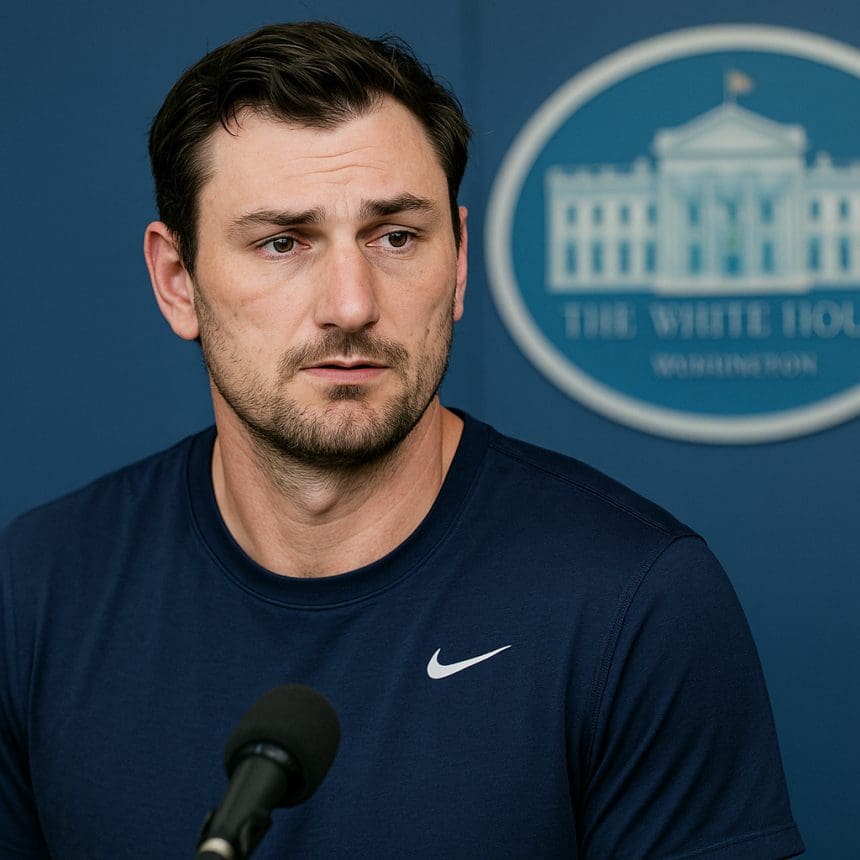
Headline: Connor Hellebuyck Defends Wife Amid Controversy Over White House Visit
In a recent statement, NHL goaltender Connor Hellebuyck voiced his concerns regarding the backlash faced by his wife after attending a White House celebration for the 2023 Stanley Cup Champions, the Vegas Golden Knights. The visit, which took place on October 9, 2023, has sparked debate, prompting Hellebuyck to highlight the inequity of the situation during a press conference in Winnipeg.
Hellebuyck’s remarks come in light of the mixed reactions the event has generated, particularly on social media. Many fans took to platforms like Twitter and Facebook to express their opinions about the White House visit, with some critics aiming their discontent at players and their families for participating in a politically charged environment. Hellebuyck emphasized that his wife, who accompanied him to the visit, should not be a target for the ire of fans and critics who hold divergent views on the political implications of such events.
“Just not fair,” Hellebuyck stated, referencing the undue pressures placed on families of athletes. “She shouldn’t have to face any negativity for my job or for attending a celebration. We’re here to celebrate my career, and that includes my family.” By defending his wife, he underscores the emotional strain on those connected to high-profile athletes, who often become collateral damage in larger societal discussions.

Hellebuyck’s comments resonate with many athletes who have also faced criticism for their public appearances, particularly when related to polarizing institutions like the White House. The intersection of sports and politics has become increasingly controversial, with athletes struggling to maintain their personal values while navigating the significant public scrutiny that comes with their professions.
The White House event to honor the Golden Knights was a traditional celebration for the championship team, yet it has attracted criticism from various factions. Some individuals argue that attending such forms of recognition promotes or aligns the players with specific political views and policies being advanced by the current administration. This sentiment has fueled the backlash directed not just at the players but also at their families, who are often unaware of the potential implications of such visits.
In his statement, Hellebuyck highlighted how athletes often find themselves at the intersection of sports and societal issues that go beyond the rink. He elaborated on the resilience athletes must embody, not only in their professional lives but also when dealing with scrutiny that can affect their family members.
“Whenever you achieve something, you just want to share that moment with your loved ones,” he said. “But it’s hard to celebrate freely when you know there might be consequences or backlash for something so innocent.”
Sports figures have increasingly become involved in conversations about social justice, equality, and the political landscape. Cases like Hellebuyck’s reflect the complications that arise when athletes step into the public sphere. Pressure doesn’t merely affect the players but extends to their families, who share in both the triumphs and tribulations of their loved ones’ careers.
Hellebuyck’s comments have sparked a wider conversation about athlete activism and the responsibilities that come with fame. Many athletes have utilized their platforms to shed light on pressing issues such as race relations, inequality, and mental health awareness. However, the criticism athletes face when they engage with political figures can become particularly contentious, often leading to unanticipated fallout that affects their family dynamics.
As discussions surrounding the boundaries of political involvement in sports continue, many in the sports community are questioning how best to balance their public personas with personal convictions. Hellebuyck’s remarks serve as a reminder that not only do players face intense scrutiny, but their families are often drawn into the fray, which can lead to significant emotional tolls.
Moreover, this controversy prompted a broader examination of the role that social media plays in shaping public opinion regarding athletes and their actions. With millions of voices online, the narrative surrounding any incident can quickly pivot, and negative sentiment can spread like wildfire. Hellebuyck’s expression of concern illustrates the emotional challenges faced not just by athletes but also by those who share their lives, as they navigate the complexity of public perception.
In closing, Connor Hellebuyck’s candid remarks about the undue criticism faced by his wife serve as a poignant reminder of the intersection between sports, politics, and personal lives. As the dialogue continues around the implications of such events, it becomes clear that the challenges athletes and their families face are far-reaching. The need for a more empathetic understanding of the personal dimensions of sports-related controversies is more important than ever.
As fans continue to engage in discussions about the intersection of sports and politics, there is a growing consensus around the idea that athletes should be allowed to celebrate their achievements without their loved ones facing unjust backlash. Connor Hellebuyck’s emphasis that “it’s just not fair” resonates strongly in the current climate, urging fans and critics alike to consider the broader implications of their comments on the families of professional athletes.