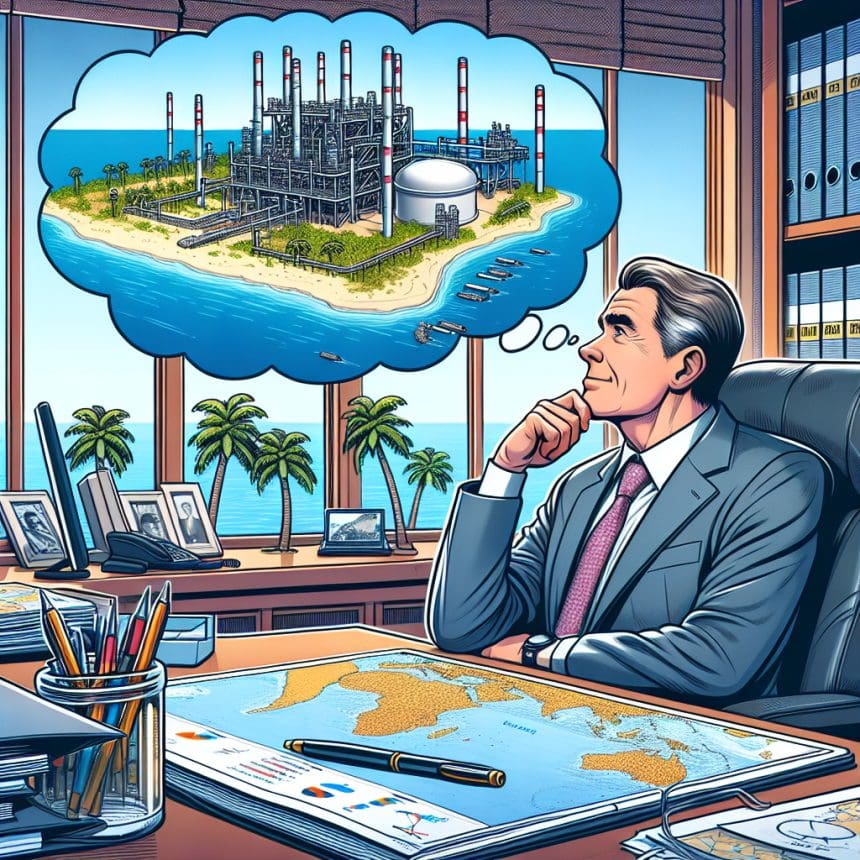
Headline: Trump Considers Kharg Island Oil Terminal Operation
Former President Donald Trump is reportedly weighing the option of seizing Iran’s Kharg Island oil terminal as tensions escalate over the nation’s nuclear ambitions. Sources close to Trump reveal discussions surrounding this contentious move, which could dramatically alter U.S.-Iran relations. This potential maneuver has arisen amid ongoing geopolitical strife, specifically in response to the stalled negotiations over Iran’s nuclear program.
The Kharg Island oil terminal, located in the Persian Gulf, is one of Iran’s most significant oil export hubs. It plays a crucial role in the nation’s economy, accounting for a substantial part of its oil exports. The discussions surrounding the terminal coincide with increasing fears in Washington that Iran is advancing its nuclear capabilities beyond what was agreed in the 2015 Joint Comprehensive Plan of Action (JCPOA).
Should Trump pursue this unprecedented strategy, it could spark international outrage and provoke considerable backlash from the Iranian government. U.S. officials have warned that such an action could lead to conflict in an already volatile region. Any operation against Kharg Island would require careful consideration of the broader consequences, including potential retaliatory actions from Iran and its allies in the region.

Current U.S. Secretary of State Antony Blinken has emphasized the need to find a diplomatic resolution to the Iranian nuclear issue, suggesting that military options should remain a last resort. Yet, Trump’s advisors argue that a show of force might be necessary to convey the seriousness of U.S. intentions and deter Iran’s aggressive actions.
In the Republican Party, opinions are sharply divided over Trump’s approach to Iran. While some members support a more aggressive stance, others caution that a military operation could create an escalation that may not be easily controllable. The differing views reflect broader concerns about U.S. involvement in the Middle East and the necessity of a cohesive strategy that prioritizes diplomatic engagement.
The notion of seizing Kharg Island has also raised eyebrows on Capitol Hill. Congressional leaders and foreign policy experts suggest that any unilateral military action could violate international law and complicate alliances with other nations. Washington’s partners in Europe, the Middle East, and beyond may not support such a dramatic shift in U.S. foreign policy, particularly without exhausting diplomatic avenues first.
Moreover, the economic implications of seizing such a significant oil terminal must also be taken into account. Iran could retaliate by disrupting oil supplies in the region, which would have ripple effects on global energy prices. The potential for increased oil prices could exacerbate existing economic challenges in the U.S. and elsewhere, further complicating Trump’s calculations.
In recent months, Iran has made headlines with its expanding nuclear program, enriching uranium to levels closer to weapons-grade material according to reports from the International Atomic Energy Agency (IAEA). In light of these developments, Trump’s focus on the Kharg Island terminal may signify a significant shift in U.S. strategy toward Iran, representing a stark departure from the more measured approaches taken during the Biden administration.
The timing of this revelation is also noteworthy, as it comes just weeks ahead of the upcoming midterm elections. Republican candidates in various states may benefit from a tough stance on foreign adversaries, and Trump may use this option as a rallying point for supporters, framing it as a necessary action to safeguard U.S. interests abroad.
Public sentiment on the issue of military action against Iran is mixed. Polls indicate that while a significant portion of the American public supports a firm stance against Iran’s nuclear development, few advocate for military intervention as a solution. As Trump considers this explosive option, he will have to navigate the delicate balance between projecting strength and maintaining public support.
As the Biden administration continues to grapple with the complexities of U.S.-Iran relations, this potential strategy of seizing Kharg Island will undoubtedly add further tension to an already fraught geopolitical landscape. Analysts believe that should Trump officially endorse the plan, it could lead to a dramatic reshaping of not just U.S.-Iran relations but also America’s role in Middle Eastern diplomacy going forward.
The Kharg Island oil terminal symbolizes much more than just an economic asset; it represents the larger struggle for power and influence in the region. Should this move gain traction, it will be imperative for Trump and his advisors to prepare for the swift consequences it may invoke, both domestically and internationally.
The outcome of current U.S.-Iran negotiations will be critical. If diplomatic efforts succeed, the need for such drastic measures might dissipate, providing a potential avenue for both nations to de-escalate tensions instead of resorting to military confrontation. However, should diplomatic ties continue to fray, the option of Kharg Island could resurface as a viable, albeit controversial, alternative.
In the coming weeks, all eyes will be on Trump, his advisors, and U.S. foreign policy leaders as they navigate these turbulent waters. The possible seizure of Kharg Island could alter the course of history in the region, with implications that extend far beyond immediate national security concerns. As this story develops, it will undoubtedly remain at the forefront of international news, shaping discussions about the future of U.S. strategy toward Iran and signaling the potential for conflict in a region that has long been a focal point for global tensions.