


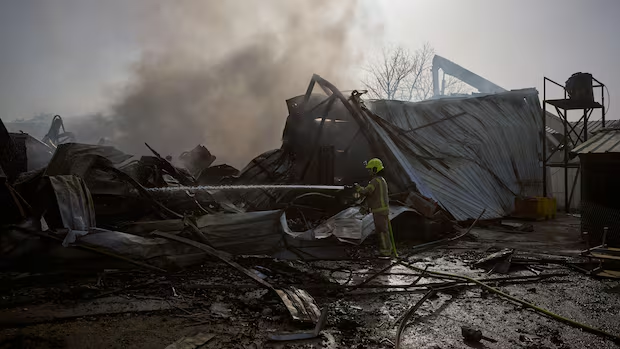
Headline: Tehran Escalates Attacks on Gulf Facilities Post-Israeli Strike
In a decisive turn of events, Tehran has ramped up its assaults on Gulf energy installations following an Israeli airstrike on an Iranian gas field late last week. The attack, which occurred on October 6 in the Khuzestan province of Iran, targeted the key facility, raising tensions in the already volatile Middle East region. Iran’s escalating military response appears aimed at deterring perceived threats from Israel and its allies, intensifying the geopolitical confrontations in the Gulf.
The Israeli airstrike is a significant escalation in ongoing conflicts between Iran and Israel, with both sides exchanging retaliatory threats. Analysts view Israel’s actions as a direct challenge to Iran’s expanding influence in the Middle East, while Tehran’s counterattacks are seen as a strategic measure to assert its dominance and protect its vital energy infrastructure.
Iran’s recent military maneuvers have included missile and drone strikes directed at various oil and gas facilities in the Gulf region, with reports indicating targets in Saudi Arabia and the United Arab Emirates. The Iranian military emphasized that these actions are justified retaliation for what they describe as "aggressive invasions" by Israel into Iranian sovereignty. Tehran’s continued military operations reflect its resolve to project power and sustain its energy supply amidst growing regional tensions.
The complexities of Tehran’s responses are rooted in a variety of factors, including internal politics, economic pressures, and its strategic goal of reshaping regional power dynamics. Domestically, Iranian leaders face mounting pressures due to economic hardships exacerbated by international sanctions and rising public discontent. This ongoing situation compels the regime to adopt a more assertive foreign policy to unite the population against external threats and to reinforce its image among the Iranian people.
Reports suggest, too, that energy facilities have been jeopardized, raising alarms over potential disruptions to oil supplies. With Iran holding the fourth-largest proven oil reserves in the world, the implications of potential disruptions are significant not only for Gulf states but also for global energy markets. Concerns are already growing regarding possible spikes in oil prices if energy supplies become limited due to escalated tensions.
In the aftermath of the Israeli strike, the U.S. and its allies have reiterated their support for Israel’s defense actions, framing them within the broader context of regional security challenges. The appointment of a new Israeli Prime Minister, who has pledged to take a harder stance against Iranian threats, adds another dimension to the ongoing conflict, signaling a potential era of heightened military readiness between these nations.
In response to these mounting tensions, the Gulf Cooperation Council (GCC) has convened an emergency summit aimed at addressing collective security concerns and formulating a coordinated response strategy. Member nations, which include Bahrain, Kuwait, Oman, Qatar, Saudi Arabia, and the UAE, have expressed their solidarity with one another while calling for de-escalation in regional hostilities. However, the GCC’s unity is often tested by individual member states’ geopolitical considerations and relationships, complicating collective responses.
Meanwhile, international observers warn that further escalation could trigger increased military engagements across the region, destabilizing a crucial area of global energy production and shipping. Diplomats are urging restraint from all parties involved, emphasizing the need for dialogue to prevent an all-out conflict that could have disastrous ramifications.
Analysts note that the interplay between regional actors is further complicated by the presence of various competing interests, including those from Russia and China, who remain cautiously supportive of Iran while also pursuing their economic agendas within the Gulf. This delicate balance of power creates a multifaceted situation that could lead to miscalculations, inciting fear of unintended consequences resulting from heightened aggression.
As the situation unfolds, the focus will increasingly turn to potential negotiations and peace talks centered on stabilizing the region. However, with both Iran and Israel locked in a cycle of retaliation, finding common ground remains an uphill battle. Diplomatic efforts have historically yielded minimal results, largely due to distrust and the long-standing ideological rift between the two nations.
In conclusion, the aftermath of the Israeli airstrike, combined with Iran’s intensified military response, represents a precarious moment in Middle Eastern politics. The stakes are high as these events could redefine power dynamics in the Gulf, influence global energy prices, and set the stage for future conflicts. Observers worldwide will be keenly watching as diplomatic channels attempt to navigate the dangerous waters of escalating tensions, all while Iranian and Israeli rivals continue to grapple with their strategic interests in an increasingly polarized region.



