Headline: Tehran Responds to Israeli Strikes with Saudi Military Attack
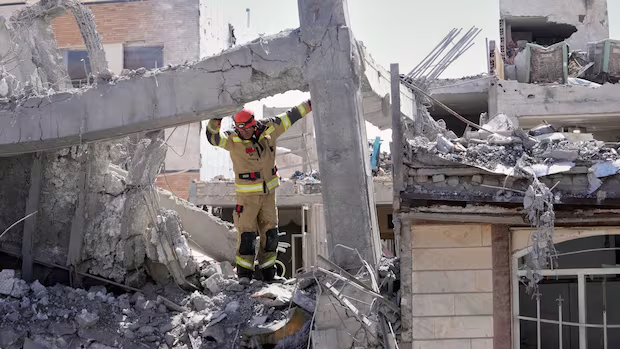
In a dramatic escalation of regional tensions, Iran launched a strike on a military base in Saudi Arabia on Tuesday, following Israel’s recent air raids on Iranian nuclear facilities. The attack, which took place near the southern city of Khobar, resulted in significant damage to the site. This response highlights the deteriorating relationships among Middle Eastern nations and underscores the potential for further conflict in an already volatile region.
The recent spike in hostilities comes as a reaction to Israel’s targeted strikes on Iran’s nuclear sites, which Israeli officials claim are part of efforts to curb Tehran’s nuclear ambitions. In a statement, the Iranian military characterized Tuesday’s response as a "necessary act of self-defense" aimed at countering Israeli aggression. The Saudi military confirmed the attack, stating that several drones were used to target the base, which serves as a crucial logistical hub for coalition forces in the region.
Witnesses reported loud explosions in the vicinity of the military base, with local authorities urging caution among residents. In the aftermath, Iranian state media claimed responsibility for the operation, which they asserted was a message to both Israel and Saudi Arabia regarding their military alliances. This development raises concerns about the potential for a broader conflict involving regional powers and their allies.

International reaction to the strikes has been swift. The United States condemned Iran’s actions, stating that it could further destabilize the region. Secretary of State Antony Blinken emphasized the need for diplomatic measures to address the rising tensions and urged all parties to avoid escalation. Meanwhile, Russia and China have reiterated their calls for dialogue, stressing the importance of regional security.
The Iranian nuclear program has long been a flashpoint for international relations. The country insists that its nuclear ambitions are for peaceful energy purposes, while many neighboring states and Western powers fear that Iran is seeking to develop nuclear weapons. Following President Biden’s intention to revive the 2015 nuclear deal, known as the Joint Comprehensive Plan of Action (JCPOA), tensions have remained high. The recent Israeli attacks have complicated these negotiations, driving Iran to assert itself militarily.
Saudi Arabia’s involvement in this crisis has been notable. Traditionally viewed as a U.S. ally, the kingdom has increasingly found itself at odds with Iranian policies. Riyadh views Iran’s nuclear advancements, along with its regional influence—aided by militia groups in Iraq, Syria, and Lebanon—as a direct threat to its national security. The Saudi government has repeatedly stated its commitment to countering Iranian influence through various means, including military operations.
In response to Iran’s strike, Saudi officials have vowed to enhance their military capabilities, possibly seeking more advanced weaponry from Western allies. Observers suggest this may lead to increased arms sales in the region, further intensifying the arms race between Sunni-majority Saudi Arabia and Shiite-majority Iran.
As the situation evolves, analysts are closely watching any potential diplomatic efforts that may emerge in the aftermath of this escalation. Regional security experts have pointed out that a military confrontation could have severe repercussions not just for the involved parties, but also for global oil supplies, as both Iran and Saudi Arabia play significant roles in the international energy market.
Moreover, the conflict could ignite broader sectarian strife within the region, further polarizing Sunni and Shia communities. Governments worldwide may be compelled to take sides, drawing major powers into the conflict and exacerbating an already unstable situation. The recent clashes could signify a shift in the regional power dynamic, with Iran demonstrating its willingness to take aggressive military action in response to perceived threats.
In light of these developments, a renewed focus on diplomacy is critical. Analysts argue that the international community must prioritize dialogue, leveraging platforms such as the United Nations and the Gulf Cooperation Council (GCC) to facilitate discussions aimed at de-escalation. While past attempts at peace negotiations have often been met with skepticism, the current crisis serves as a reminder of the urgent need for a diplomatic solution.
As the world watches this unfolding situation closely, one thing is clear: the power play between Iran, Israel, and Saudi Arabia is likely to continue shaping regional policies and international relations for the foreseeable future. With millions of lives potentially at stake and the threat of widespread conflict looming, it is imperative that all involved parties seek to establish a more stable and peaceful Middle East.
In conclusion, the latest developments in the Iranian-Saudi dynamic reveal the complexities of geopolitics in the region. With military actions intensifying, the hope for a diplomatic breakthrough that prioritizes peace rather than aggression becomes even more essential. As the situation evolves, only time will tell how these significant events will reshape the political landscape not only in the Middle East but across the globe. The world watches and waits, hoping for a path to a more peaceful resolution amid the tumult.
This article not only provides an overview of the current situation but also contextualizes the ongoing conflicts and highlights the necessity for genuine, sustained dialogue to prevent further escalation.