


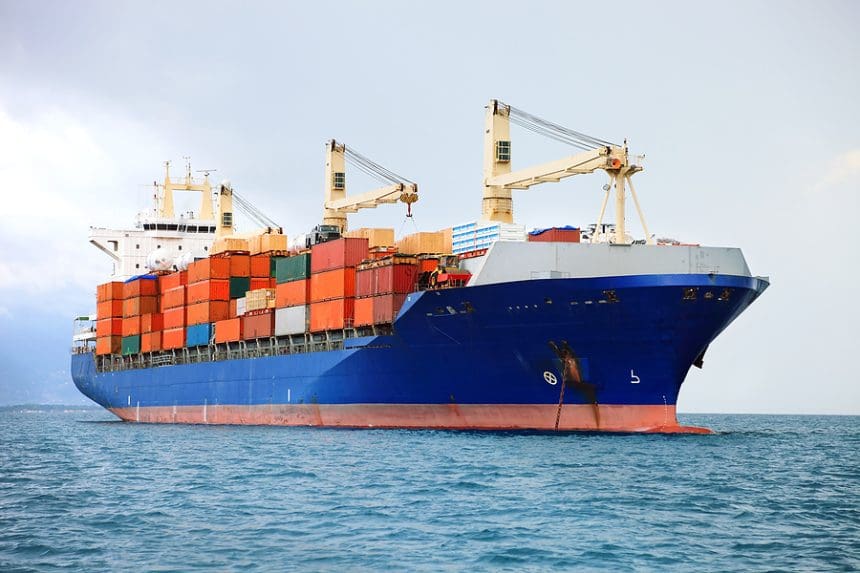

The Strait of Hormuz has emerged as the most dangerous flashpoint in the ongoing Iran conflict, with military activity intensifying despite a fragile ceasefire.
Shipping traffic remains disrupted, and global energy markets are reacting to fears of a prolonged supply crisis.
As diplomacy stalls, the risk of confrontation in one of the world’s critical waterways is rising rapidly.
A Vital Global Chokepoint Under Threat
April 12, 2026 (STL.News) The Strait of Hormuz is one of the most strategically important waterways in the world, serving as a narrow passage connecting the Persian Gulf to global shipping routes. A significant portion of the world’s supply passes through this corridor every day, making any disruption immediately impactful globally.
Today, that vital artery is operating under severe strain. While not completely closed, the flow of oil and commercial shipping has slowed dramatically. Tankers are moving cautiously, and some are delaying or canceling their transit altogether due to heightened risk.
This uncertainty has turned the Strait into a pressure point not just for the Middle East, but for the entire global economy.
Military Activity Intensifies in the Region
In response to growing disruptions, the United States has increased its naval presence in and around the Strait of Hormuz. Warships have entered the region to restore safe passage and ensure that commercial shipping lanes remain open.
Efforts are reportedly underway to clear potential hazards in the water, including mines that could threaten tanker traffic. These operations are delicate and dangerous, as even a minor incident could escalate into a broader military confrontation.
The presence of military vessels has raised the stakes significantly. What was once a tense standoff has now become an active operational zone, where miscalculations could have immediate consequences.
Iran Pushes Back with Strong Warnings
Iran has responded firmly to increased military activity in the Strait, signaling that it views certain actions as a direct challenge to its control and security interests. Officials have issued warnings that any perceived aggression could trigger retaliation.
The country has also made it clear that it believes it has a right to regulate traffic through the Strait, particularly under current conflict conditions. This stance has created a fundamental disagreement over who controls access to one of the world’s most important trade routes.
As a result, the situation remains highly volatile, with both sides maintaining firm positions and little room for compromise.
Shipping Disruptions Ripple Across Global Markets
The impact of the Strait of Hormuz crisis is already being felt across global markets. Oil prices have become increasingly volatile as traders react to the uncertainty surrounding supply routes.
Energy companies, shipping firms, and governments are all scrambling to adjust. Some oil exporters are attempting to reroute shipments through alternative pipelines, while others are holding back supply until conditions stabilize.
For businesses and consumers, the consequences are becoming more visible. Rising fuel costs are beginning to affect transportation, logistics, and everyday expenses, creating additional pressure on economies already grappling with inflation.
Failed Diplomacy Adds to Uncertainty
Recent diplomatic efforts aimed at easing tensions and reopening the Strait have failed to produce a meaningful breakthrough. Negotiations that were expected to stabilize the situation instead ended without agreement, leaving key issues unresolved.
Among the major sticking points are security guarantees, control over shipping lanes, and broader geopolitical concerns tied to the conflict. Without progress on these issues, the likelihood of a coordinated solution remains low.
The collapse of talks has added another layer of uncertainty, reinforcing fears that the situation could deteriorate further.
Oil Supply Shock Becomes a Global Concern
With shipping routes disrupted and tensions rising, the world is now facing the early stages of a potential oil supply shock. Even partial restrictions in the Strait of Hormuz can significantly reduce available supply, driving prices higher.
Countries that rely heavily on imported oil are particularly vulnerable, as they may face both higher costs and supply shortages. Meanwhile, energy markets are reacting quickly, with price swings reflecting the instsituation’sthe situation.
This has turned a regional conflict into a global economic issue, affecting everything from airline costs to food prices.
A Narrow Path Between Stability and Escalation
The situation in the Strait of Hormuz is now balanced between two possible outcomes.
On one hand, renewed diplomatic efforts could ease tensions, restore confidence, and gradually reopen the Strait to normal levels of traffic. Even a limited agreement could have a stabilizing effect on markets and reduce the risk of conflict.
On the other hand, continued military buildup and unresolved disputes could lead to confrontation. Any incident involving naval forces or commercial vessels could trigger a rapid escalation, potentially drawing in additional countries and expanding the conflict.
At this stage, the path forward remains uncertain.
The World Watches a Critical Turning Point
The Strait of Hormuz has become more than just a shipping route—it is now a symbol of the broader tensions shaping the Middle East and the global economy. Every development in the region is being closely watched by governments, investors, and industries worldwide.
The stakes are extraordinarily high. A stable Strait means steady energy supplies and manageable economic conditions. A disrupted or closed strait, however, could lead to widespread economic disruption and a deeper geopolitical crisis.
Summary: A Crisis Far From Resolved
The Strait of Hormuz remains at the center of a growing global crisis. Military activity is increasing, shipping is disrupted, and diplomatic efforts have so far failed to deliver a solution.
While the ceasefire has provided a temporary pause in broader hostilities, it has not resolved the underlying tensions that are now playing out in this critical waterway.
The coming days will be crucial. Whether the situation moves toward stability or escalation will depend on decisions made in a very narrow window. For now, the world’s most important oil route remains under threat—and the consequences are already being felt worldwide.
© 2026 St. Louis Media, LLC d.b.a. STL.News. All rights reserved. No content may be copied, republished, distributed, or used in any form without prior written permission. Unauthorized use may result in legal action. Some content may be created with AI assistance and is reviewed by our editorial team. For official updates, visit STL.News.



