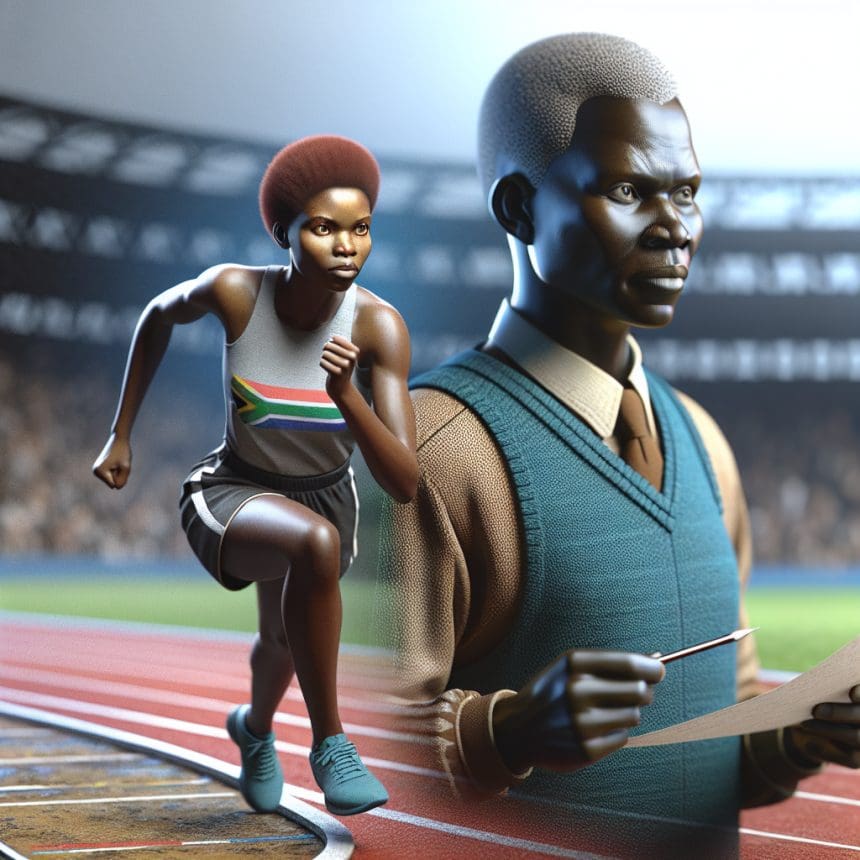
Headline: Caster Semenya Hits Back at IOC Chief Over Transgender Ban
Article:
In a recent statement, South African runner Caster Semenya criticized International Olympic Committee (IOC) President Thomas Bach following the IOC’s decision to bar transgender athletes from competing in women’s events. The announcement, made on October 12, 2023, during an IOC meeting in Lausanne, Switzerland, has sparked renewed discussions surrounding inclusivity in sports. Semenya, a vocal advocate for gender equality, asserts that the decision undermines the integrity of athletics and disregards the rights of transgender individuals.
Over the years, Semenya has been at the forefront of discussions relating to gender eligibility in sports, having faced her own battles with regulations that questioned her natural testosterone levels. In her recent remarks, she reiterated the importance of inclusivity in athletics, asserting that the sport should offer a welcoming environment for all athletes, regardless of gender identity. Semenya’s comments shed light on the increasing polarization surrounding the participation of transgender athletes in women’s sports, and her perspective highlights the complexity of these discussions.

“I am deeply disappointed by the IOC’s decision to exclude transgender athletes,” Semenya said during a press conference. “Sports are about unity, and we should embrace everyone who wants to compete. It’s crucial that we acknowledge their struggles and allow them the opportunity to participate in a fair manner.”
Transgender athletes, who have been navigating evolving regulations around their participation, now face additional hurdles following the IOC’s latest ruling. The decision has been met with mixed reactions, with some praising it as a necessary step to protect women’s categories in sports, while others argue it further marginalizes an already vulnerable community. Activists in favor of transgender rights have echoed Semenya’s concerns, positing that sports institutions must find balanced solutions that respect all athletes’ rights.
The IOC’s ruling is particularly significant given its timing, amidst ongoing global discussions regarding gender equality and inclusivity in sports. Critics, including Semenya, highlight the need for comprehensive discussions rather than blanket bans that can have wide-reaching consequences for many athletes. In recent years, several high-profile athletes have come forward to advocate for more nuanced policies that take into account the diverse experiences and backgrounds of athletes.
Amid the backlash against the IOC, a number of sports organizations have begun to evaluate their own policies regarding transgender athlete participation. In response to the growing complexity of these discussions, some federations are adopting more inclusive practices, allowing for individual assessments rather than adhering to general blanket rules. This shift reflects a growing recognition of the need to foster a competitive environment while also considering the rights and dignity of all athletes.
Semenya’s criticism is not merely a reaction to the IOC’s ruling; it also highlights the broader societal implications of exclusionary policies. As public sentiment shifts towards embracing diversity, sports entities are being called upon to lead by example. Semenya believes that athletics should serve as a reflection of society, where diversity is celebrated rather than stifled.
“It’s not just about me or my experiences,” she stated. “It’s about all athletes who aspire to compete, regardless of their identity. By pushing forward with divisive policies, we risk alienating future generations of athletes who might feel discouraged from participating.”
The conversation around transgender athletes has become increasingly polarizing, with debates often overshadowed by emotional reactions. Semenya’s comments aim to inject a sense of empathy and understanding into the dialogue, urging all stakeholders to focus on developing policies that are fair, transparent, and rooted in a commitment to human rights.
As reports from various sporting bodies emerge, it becomes evident that ongoing discussions around gender, identity, and competition are far from resolved. The path forward is likely to involve continuous exploration of ways to accommodate diverse athletes while maintaining competitive fairness. Many believe that this will require collective action from sports governing bodies, advocacy organizations, and athletes themselves.
The mixed responses to the IOC’s decision reflect the broader societal tensions surrounding gender identity and representation. As Semenya stated, these discussions must not only involve policymakers and sporting organizations but also the voices of those most affected. Engaging in open conversation, sharing personal experiences, and allowing for diverse perspectives are essential steps towards achieving a more equitable sporting landscape.
Looking ahead, Semenya remains steadfast in her commitment to advocate for change within the athletics community. She has called upon fellow athletes and advocates to unite in the fight for inclusivity, stressing that progress will only come through collective effort.
In conclusion, Caster Semenya’s recent criticism of the IOC president underscores the urgent need for dialogue on the participation of transgender athletes. Her remarks serve as a reminder of the responsibility that sports organizations have to create an inclusive environment for all competitors. As the conversation evolves, it becomes increasingly clear that finding common ground will be crucial for the future of sports and the rights of all athletes.
The discussions sparked by the IOC’s recent ruling will likely have lasting implications for the world of athletics, making it imperative for all stakeholders to advocate for policies that honor both competitive fairness and the rights of individuals. As the landscape continues to change, one thing is certain: the future of athletics will require empathy, understanding, and a commitment to inclusivity.