Rising Tensions on the Thailand–Cambodia Border Expose Deep-Rooted Regional Fault Lines
(STL.News) Tensions between Thailand and Cambodia have escalated sharply in recent weeks, reigniting a long-standing border dispute that has periodically flared for decades but now threatens to destabilize a broader swath of Southeast Asia. What began as localized clashes along disputed frontier areas has expanded into military operations, border closures, population displacement, and diplomatic strain, underscoring how unresolved historical grievances can quickly evolve into modern geopolitical crises.
The current standoff is not merely a sudden outbreak of violence. Instead, it is the culmination of unresolved territorial claims, nationalist pressures, domestic political dynamics, and regional security challenges that have simmered beneath the surface for years. As fighting intensifies and civilians flee border regions, the conflict raises urgent questions about regional stability, humanitarian consequences, and the limits of diplomacy in preventing escalation.
A Border Defined by Ambiguity
At the heart of the dispute lies a poorly demarcated border stretching hundreds of miles between Thailand and Cambodia. The roots of the disagreement trace back to colonial-era mapping, when borders were drawn with limited geographic precision and conflicting interpretations. Over time, these ambiguities hardened into competing claims of sovereignty, particularly around culturally and historically significant areas near the frontier.
For both nations, the border is not just a line on a map. It represents national identity, historical memory, and political legitimacy. Disputed areas have symbolic importance that far outweighs their geographic size, making compromise politically sensitive and, at times, domestically unpopular.

These unresolved claims have led to repeated confrontations over the past several decades. While diplomatic agreements and temporary ceasefires have reduced violence at various points, none have definitively settled the core disagreements. As a result, tensions have remained latent, ready to resurface when political or military conditions align.
From Skirmishes to Escalation
The most recent escalation began with a series of confrontations between military units operating near disputed zones. Initial incidents were described as limited exchanges, but they quickly intensified as both sides reinforced their positions. Within days, artillery fire, rocket attacks, and air operations were reported, marking a significant escalation from prior border standoffs.
Thailand accused Cambodian forces of crossing into contested territory, while Cambodia countered that Thai military actions constituted violations of its sovereignty. As accusations mounted, both governments framed their responses as defensive, emphasizing the need to protect territorial integrity and national security.
The rapid escalation highlights how fragile ceasefire arrangements can be in regions where lines of control are disputed and communication between military commands is strained. Once hostilities began, momentum quickly overtook restraint, making de-escalation increasingly difficult.
Civilian Impact and Humanitarian Strain
Perhaps the most immediate and troubling consequence of the renewed fighting has been its impact on civilians. Villages near the border have been evacuated as residents flee shelling, airstrikes, and the fear of further violence. Families have sought refuge in temporary shelters, often with limited access to food, clean water, and medical care.
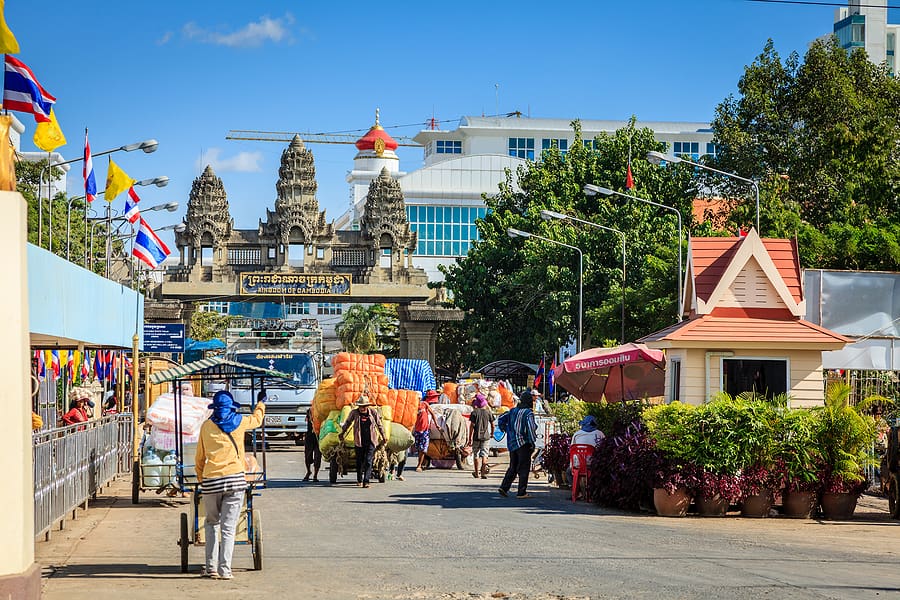
The displacement of civilians has placed significant pressure on local authorities and humanitarian organizations. Border closures have complicated aid delivery, while ongoing military operations have made some areas inaccessible. For many affected communities, livelihoods based on agriculture, cross-border trade, and tourism have been abruptly disrupted.
The humanitarian toll extends beyond physical displacement. Prolonged uncertainty, trauma, and economic disruption threaten to leave lasting scars on border communities that have already endured cycles of instability. As fighting continues, the risk of a deepening humanitarian crisis grows.
Economic Consequences Beyond the Border
The conflict has also begun to reverberate through regional economies. Border closures have halted the movement of goods and labor, disrupting supply chains linking rural producers to urban markets. Fuel, agricultural products, and manufactured goods that once crossed the border freely are now stalled, raising costs and uncertainty for businesses on both sides.
Tourism, a vital sector for both Thailand and Cambodia, has been particularly affected. Border regions that once attracted visitors for cultural heritage and natural beauty have seen cancellations and travel advisories. Even areas far from the fighting are experiencing ripple effects as perceptions of regional instability dampen traveler confidence.
In a region where economic growth is closely tied to cross-border cooperation, prolonged disruption could have consequences that extend well beyond the immediate conflict zone.
National Politics and Domestic Pressures
Domestic political considerations play a critical role in shaping the conflict’s trajectory. In both Thailand and Cambodia, leaders face pressure to appear strong in defending national interests. Border disputes often resonate deeply with the public, making compromise politically risky.
Nationalist rhetoric has intensified as leaders seek to rally domestic support. Statements emphasizing sovereignty, territorial integrity, and historical rights have dominated official communications, narrowing the space for diplomatic flexibility. In such an environment, even small concessions can be portrayed as weakness, further entrenching hardline positions.
At the same time, internal political dynamics may incentivize escalation. Military institutions, political factions, and public opinion can all influence decision-making, sometimes pushing governments toward more assertive postures than they might otherwise adopt.
Regional and International Implications
The Thailand–Cambodia conflict carries implications beyond the two countries involved. Southeast Asia has long emphasized regional stability and cooperation, recognizing that conflict in one area can undermine economic integration and collective security.
Neighboring countries and regional organizations are closely watching developments, concerned that prolonged fighting could set a destabilizing precedent. The conflict also tests the effectiveness of existing regional mechanisms for preventing and resolving disputes peacefully.
From a broader perspective, the standoff highlights the challenges faced by international diplomacy in addressing disputes rooted in history, identity, and sovereignty. External mediation can encourage dialogue, but lasting solutions ultimately depend on the parties’ willingness to compromise.
The Limits of Ceasefires
Past efforts to manage tensions through ceasefires have provided temporary relief but failed to resolve underlying issues. Ceasefires can reduce immediate violence, but without precise mechanisms for enforcement and dispute resolution, they remain fragile.
The current escalation demonstrates how quickly ceasefires can unravel when trust is low and communication breaks down. Each side accuses the other of violations, creating a cycle of retaliation that erodes confidence in diplomatic agreements.
For any future ceasefire to hold, it would need to be accompanied by concrete steps to clarify border arrangements, improve military communication, and address civilian concerns. Without such measures, the risk of renewed violence will remain high.
Information Warfare and Public Perception
In the modern era, conflict is shaped not only by military action but also by information. Competing narratives about responsibility, legality, and intent have flooded domestic and international media, influencing public perception and diplomatic positioning.
Both sides have sought to frame their actions as justified responses to aggression, while portraying the other as the instigator. This battle over narrative complicates efforts to establish a shared understanding of events, which is essential for effective mediation.
Public perception, fueled by social media and national news outlets, can harden attitudes and narrow the political space for compromise. Once a conflict becomes framed as a matter of national honor, backing down becomes increasingly tricky.
Paths Toward De-Escalation
Despite the severity of the current situation, pathways toward de-escalation still exist. Dialogue, confidence-building measures, and third-party facilitation could help reduce tensions and prevent further violence.
Key steps might include reopening communication channels between military commanders, establishing precise mechanisms for incident investigation, and allowing humanitarian access to affected areas. Even small measures can help rebuild trust and reduce the risk of accidental escalation.
Longer-term solutions will require addressing the core territorial disputes that have fueled repeated confrontations. This may involve renewed negotiations, joint border commissions, or international arbitration, all of which demand political courage and sustained commitment.
A Test of Regional Stability
The Thailand–Cambodia border conflict serves as a stark reminder that unresolved disputes can quickly resurface, even in regions known for relative stability. It underscores the importance of proactive diplomacy, clear communication, and the willingness to confront complex historical issues before they erupt into violence.
As the situation continues to evolve, the choices made by leaders in Bangkok and Phnom Penh will shape not only the immediate outcome of the conflict but also the broader regional environment. Whether the crisis deepens or gives way to renewed dialogue will depend on their ability to balance national interests with the realities of interdependence and shared regional responsibility.
For now, the world watches as tensions remain high, civilians bear the brunt of the conflict, and Southeast Asia faces another test of its capacity to manage disputes peacefully. The hope remains that diplomacy will ultimately prevail over escalation, but the path forward is fraught with challenges that demand careful and decisive leadership.
© 2025 STL.News/St. Louis Media, LLC. All Rights Reserved. Content may not be republished or redistributed without express written approval. Portions or all of our content may have been created with the assistance of AI technologies, like Gemini or ChatGPT, and are reviewed by our human editorial team. For the latest news, head to STL.News.